
Commercial-First Planning
Projects are planned around property operations, infrastructure and the people responsible for the system.
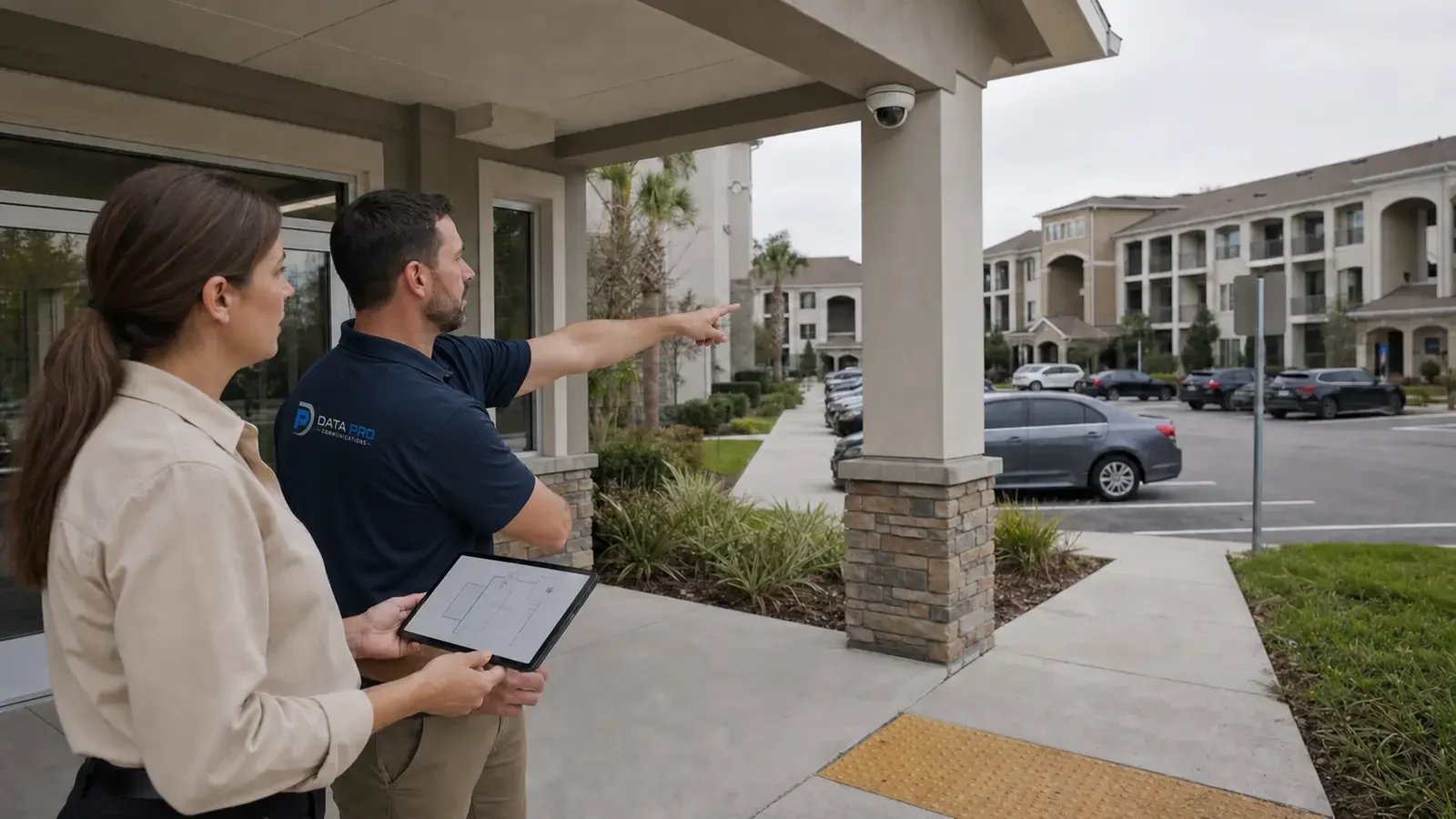
Commercial Camera Resource | Installation planning
A multi-site camera rollout should define repeatable device and naming standards, network and credential policy, rollout sequencing, centralized review roles and a controlled way to document site exceptions.
A retailer can standardize recorder naming and user roles while allowing different entrance lenses for wide storefronts and narrow vestibules. Standardization simplifies support, but forcing identical designs onto different properties can leave local lighting, pathways and workflows unresolved.
Projects are planned around property operations, infrastructure and the people responsible for the system.
Data Pro Communications operates under FL License #EC13016138.
Testing, labeling, credentials and known limitations are organized for the people who will operate and support the system.
A multi-site camera rollout should define repeatable device and naming standards, network and credential policy, rollout sequencing, centralized review roles and a controlled way to document site exceptions.
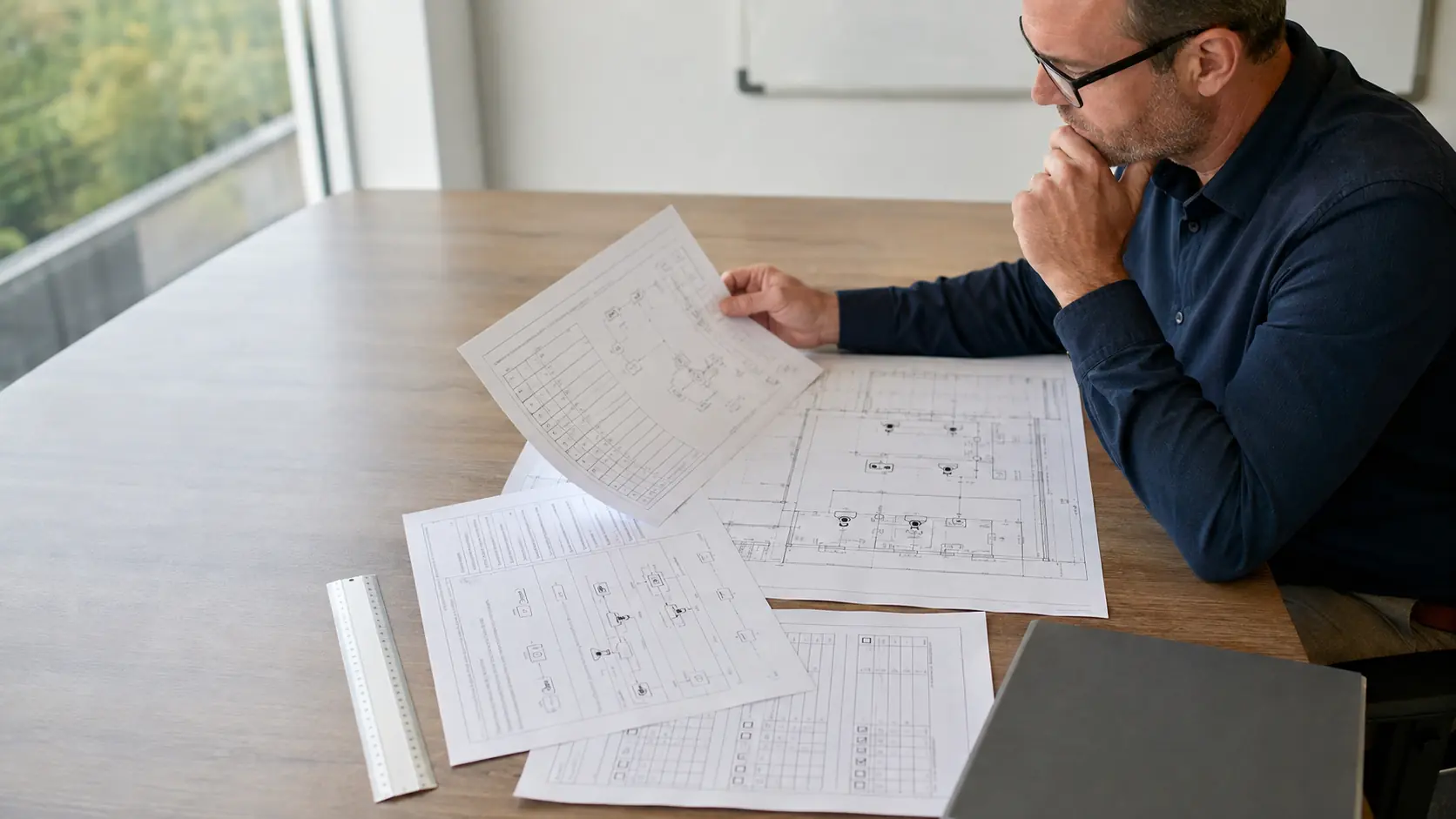
A single walkthrough cannot reveal whether two sites belong in the same deployment tier when their access, pathways and operating hours differ.
A portfolio standard loses value when camera names, mounts, firmware, accounts or recorder settings vary without a recorded reason.
Camera accounts can become an IT security exception when network access and credential rules are not coordinated.
Rolling out sites by geography alone can send crews to properties that lack access, pathways, network readiness or approved scope.
Portfolio access can expose multiple properties to a single user when centralized roles are broader than the person’s real responsibility.
Exceptions discovered only during installation are easy to lose unless the reason and final site condition are captured with the location record.
Group locations by property size, operating pattern, coverage need and infrastructure readiness before assigning a standard camera package.
Standardize camera families, naming, mounting conventions and recorder settings where consistency helps support, while allowing exceptions when a site condition requires a different design.
Coordinate camera network access with account policy so support access is controlled without exposing management interfaces broadly.
Group sites by readiness, equipment needs and access constraints, then schedule rollout waves that allow lessons from early locations to improve later work.
Define which portfolio or management roles can review multiple sites and which local users remain limited to their own property.
Record each location where the portfolio standard changes, why it changes and what support impact the exception creates.
A retailer can standardize recorder naming and user roles while allowing different entrance lenses for wide storefronts and narrow vestibules.
A three-site warehouse rollout may phase network upgrades first at the location with inadequate PoE and uplink capacity.
Apply the portfolio's network and credential policy while recording warehouse-specific pathways, lifts, shifts and equipment-room constraints.
Place customer-hour and service-area restrictions in the rollout schedule rather than assuming the same work window as an office site.
Give central reviewers consistent site and camera names while limiting local users to the locations and functions they manage.
Keep a site-exceptions log for retained equipment, finished surfaces, unavailable pathways and approved departures from the standard.
Group locations by property size, operating pattern, coverage need and infrastructure readiness before assigning a standard camera package.
The device standard should define approved performance, mounting and naming rules, account roles, supported configurations and the process for documenting a site exception.
Administration of network and credential policy requires account ownership, least-privilege roles, approval, revocation, export rights and audit history, with separate permissions for viewing, export and system changes.
Sequence locations by operating priority and readiness, with site contacts, material needs, access windows, tests and exception records prepared before mobilization.
Administration of centralized review roles requires account ownership, least-privilege roles, approval, revocation, export rights and audit history, with separate permissions for viewing, export and system changes.
Record each location where the portfolio standard changes, why it changes and what support impact the exception creates.
The operating workflow for planning camera installation across multiple orlando business locations may rely on repeatable device standards, network and credential policy and regional rollout sequencing. Define which team owns configuration, connectivity and event response so a system alert reaches someone able to act.

For organizations with multiple Orlando-area locations, one camera standard can simplify support, but each property still needs its own record of network conditions, pathways, access constraints and approved exceptions. Site tiers, credential ownership and rollout sequencing should be defined so a repeatable design does not hide differences that affect installation or later service.
Multi-site planning connects naturally to device standards, remote administration, network policy and rollout guidance when the same camera program must work across different properties.
Camera Services supports site surveys, installations and upgrades after the portfolio standard identifies work at an individual location.
A multi-site review can separate repeatable standards from locations that need surveys, infrastructure work or approved exceptions.
The operating model succeeds when ownership for portfolio site tiers, repeatable device standards and network and credential policy is clear and the records represented by centralized review roles and site-by-site exceptions log remain usable after handoff.
Inventory each location by camera platform, network readiness, pathways, access constraints and operating schedule. Sites with similar conditions can share standards, while locations with major infrastructure gaps should be planned separately.
Define the camera families, naming conventions, recorder or VMS requirements and user roles that should remain consistent across the portfolio. Standardization should simplify support without forcing every building into the same physical layout.
Begin with locations that have confirmed access and infrastructure, then use early installations to validate standards before moving to sites that need cabling, network or mounting remediation. This reduces the cost of repeating a flawed assumption across the portfolio.
Document which locations deviate from the standard, why they differ and who owns ongoing administration. Central support is more effective when exceptions are visible rather than hidden behind a nominally identical deployment.
Cameras Orlando is operated by Data Pro Communications. Florida low-voltage work is performed under FL License #EC13016138.
Group sites by operating priority, infrastructure readiness, property type and system condition so standards and rollout sequencing reflect real differences.
The repeatable device standards record should identify the naming rule, approved roles, required equipment or configuration, permitted exceptions and who maintains the standard after turnover.
Use named accounts, consistent role definitions, multifactor authentication where supported and a documented revocation process. Site access should follow responsibility rather than giving every user portfolio-wide permissions.
Order sites by operational priority, infrastructure readiness, access windows and the risk of taking an existing system offline; define acceptance before moving to the next location.
Assign access by region, property and job function. Central reviewers may need playback across locations, while local managers should generally see only their own site and administrators retain configuration rights.
Record the site, standard that cannot be followed, field condition, approved alternative, responsible approver and effect on support or future upgrades.
Use consistent camera naming, account roles, export procedures, health monitoring and documentation while allowing lenses, views and pathways to follow each site.
Approve an exception when local light, distance, construction, network ownership or operating workflow makes the standard unsuitable.
Sequence sites by operational priority, infrastructure readiness, access windows and the risk of taking an existing system offline.
Provide a site inventory, consistent names, account ownership, test records, support contacts and a clear record of approved exceptions.
If ownership for portfolio site tiers, repeatable device standards or network and credential policy remains unclear, request a project review that includes the operating manager and the responsible IT or facilities contact.