Built for Commercial Project Requests
The contact flow is designed for businesses, property teams, contractors and other buyers who need a professionally scoped security or low-voltage project.
Contact the Orlando Team
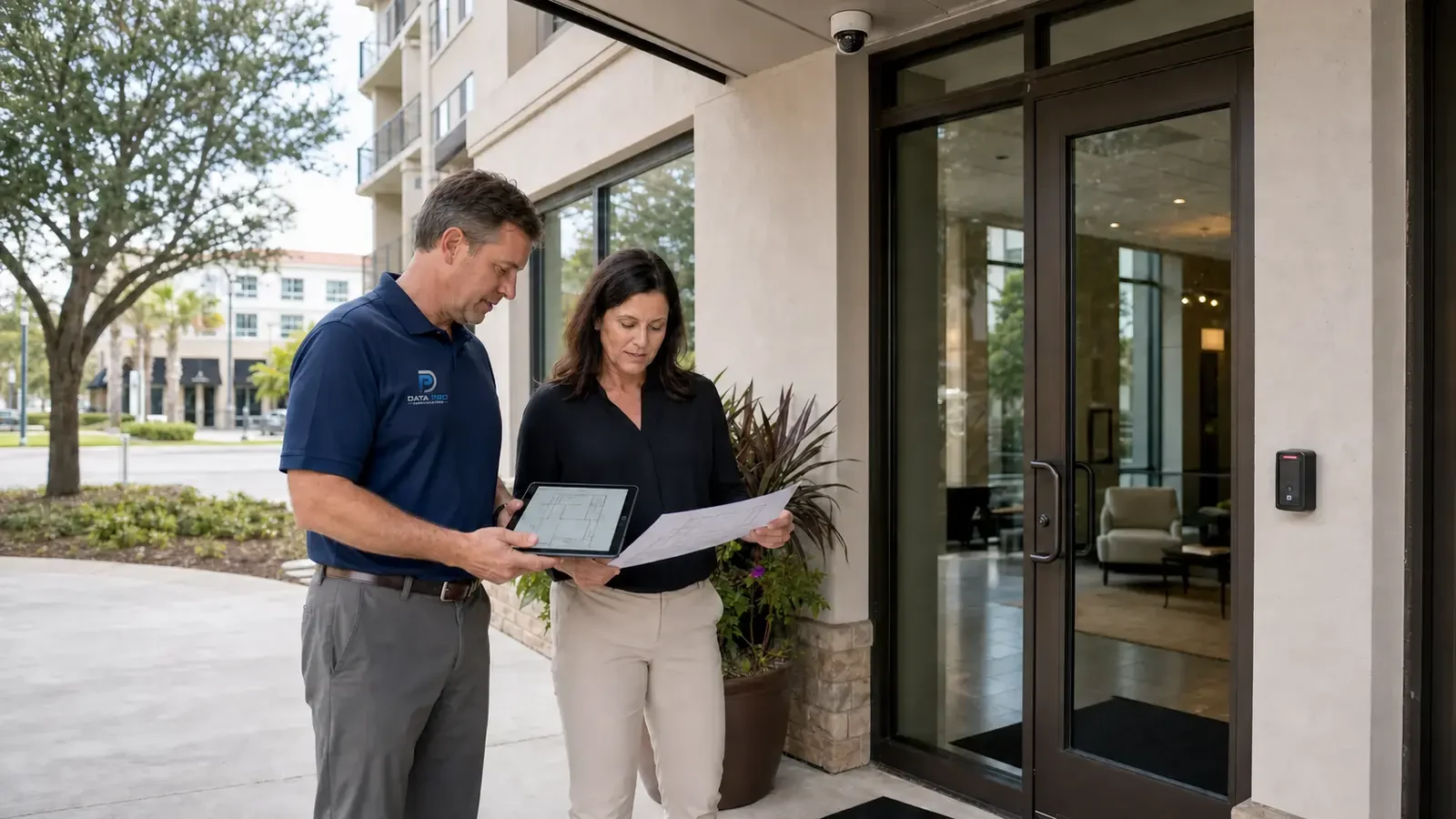
Contact Data Pro Communications - South Orlando about a commercial security camera, low-voltage or infrastructure project in the Orlando area. The more context you provide up front, the easier it is to route the request to the right next step.
Use the form for new projects, system upgrades, troubleshooting requests and professionally scoped installations. Include the property address, your role, the system or service involved, what is already installed and any access or scheduling constraints you already know.
The contact flow is designed for businesses, property teams, contractors and other buyers who need a professionally scoped security or low-voltage project.
Data Pro Communications operates under FL License #EC13016138.
An address, property type, current system and short description of the problem or desired outcome give the Orlando team a practical starting point for the conversation.
Start with the basics: where the property is, what type of property it is, your role in the project, the service you need and what you want to change or solve. If there is an existing system, mention the camera, recorder, access, network or cabling equipment involved when you know it.
The property address tells us which Orlando service context applies, while the property type helps frame likely access, operating and installation conditions. A warehouse, office, retail store and hotel can require very different site planning.
Tell us whether you are the owner, property manager, facility contact, general contractor, IT contact or another stakeholder. That helps identify who can answer site questions and who may need to approve the final scope.
Describe whether the request involves security cameras, CCTV, an NVR, remote viewing, access control, cabling, fiber, networking, intercom or another low-voltage system. If you are unsure, describe the problem rather than guessing at the service category.
For an existing system, note what is working, what is not, and any equipment information you have. Photos of the recorder, rack, camera locations or damaged components can be useful when available.
Share known access windows, tenant restrictions, construction milestones or other timing constraints. This does not create a response-time guarantee, but it helps the team understand whether scheduling conditions may affect the next step.
Provide a working phone number and email address and indicate your preferred contact method. That keeps follow-up straightforward if the team needs clarification before recommending a site visit or project consultation.
A clear project description helps determine whether the request belongs with camera installation, troubleshooting, an upgrade, an integrated solution or another specialist service page.
A site survey is usually most useful when the recommendation depends on camera views, mounting, pathways, cable distances, equipment rooms, door hardware, network conditions or other physical details that cannot be confirmed from the form alone.
For planning-stage projects, the information you submit gives the team a starting point for discussing the property, intended system, existing infrastructure and project constraints without making assumptions about the final design.
If the request is primarily a system issue, describe the symptoms and affected equipment. That helps distinguish a troubleshooting visit from a replacement or modernization project.
Commercial projects often involve owners, facility teams, IT, property management or general contractors. Identifying the right contacts early helps avoid repeated discovery later in the process.
Good project details reduce the need for generic back-and-forth. The team can ask more specific questions about the property and the requested outcome when the initial submission already covers the essentials.
Use the form for a new security camera system when you can describe the property and the areas that need coverage, even if the final camera count or equipment has not been selected yet.
Existing systems can be reviewed for added cameras, recorder replacement, remote viewing, analytics or broader modernization. Include the current platform or equipment information when available.
For offline cameras, recording problems, PoE or network issues, remote-access failures or physical damage, describe what changed and which parts of the system are affected.
Low-voltage infrastructure requests are appropriate when the project needs structured cabling, fiber, network distribution or connectivity that supports cameras or other business systems.
Door, credential, intercom or entry-system requests should include the number and type of openings involved, the current hardware if known and the operating workflow the property needs to support.
General contractors and project partners can use the form to identify the site, project phase, requested low-voltage scope and any drawings, schedule milestones or coordination requirements already available.
A working system that needs expansion is a different starting point from a system with unknown credentials, failed recording or damaged infrastructure. Describe the current condition as specifically as you can.
Ceiling access, locked rooms, tenant areas, active customer spaces and after-hours restrictions can affect whether a site survey or installation visit needs additional coordination.
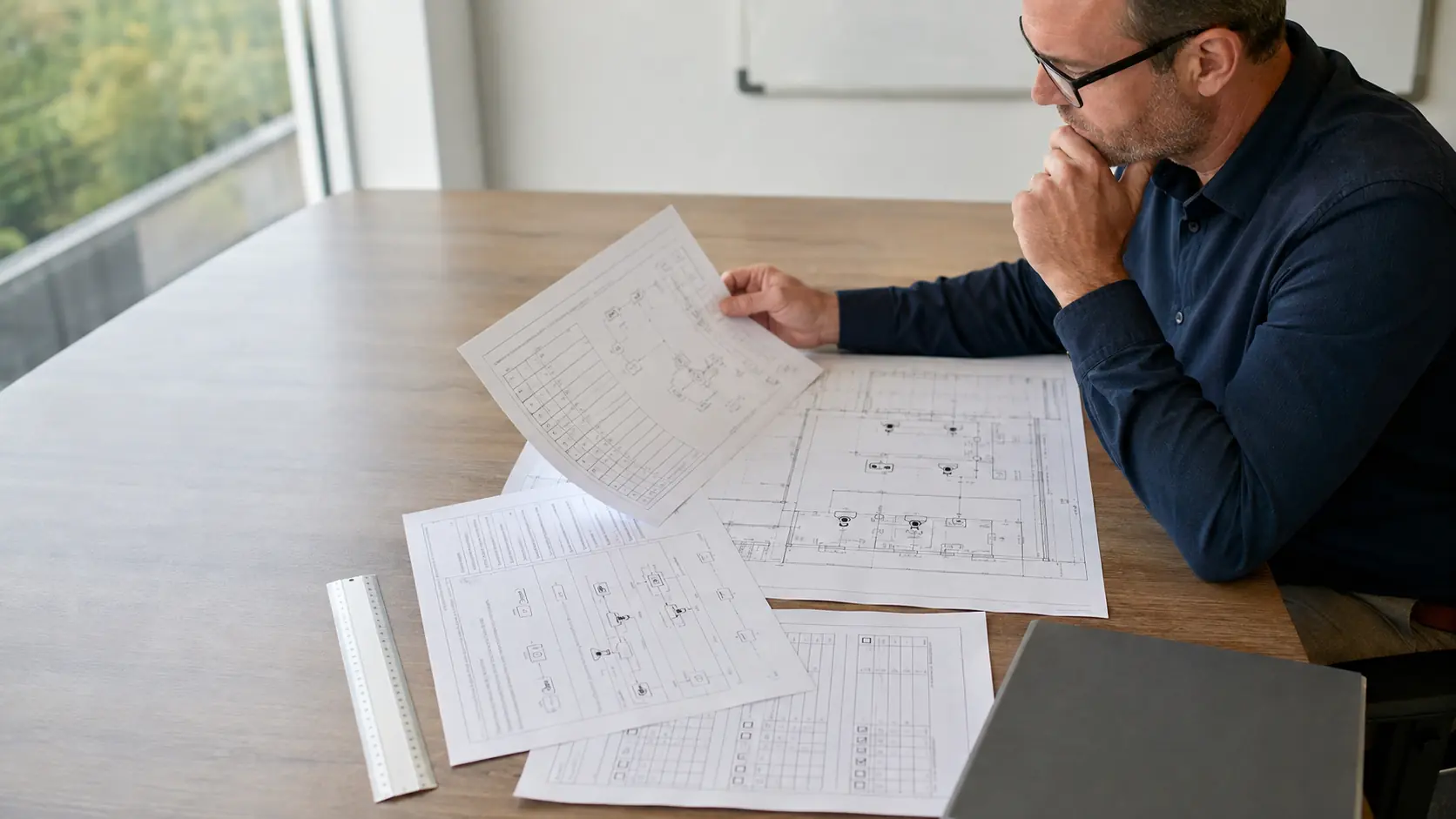
Floor plans, camera layouts, rack photos, device labels or equipment model numbers can make the first conversation more productive, especially for existing-system work.
If the project uses the customer network, identify the IT contact or managed-service provider when possible. Camera remote access, VLANs, switching and IP addressing may require coordination with whoever owns that environment.
Rough-in, ceiling close-in, inspections, turnover and other construction milestones can affect when low-voltage work should occur. Share known dates so the project can be discussed in the correct phase.
If multiple people are involved, identifying the person responsible for technical questions and the person responsible for approval can make subsequent planning more efficient.
Submitting the form starts a project conversation; it does not by itself establish emergency response, a guaranteed response time, a final price or a confirmed installation date. Those items depend on the request, field conditions, availability and the scope ultimately agreed with the customer.
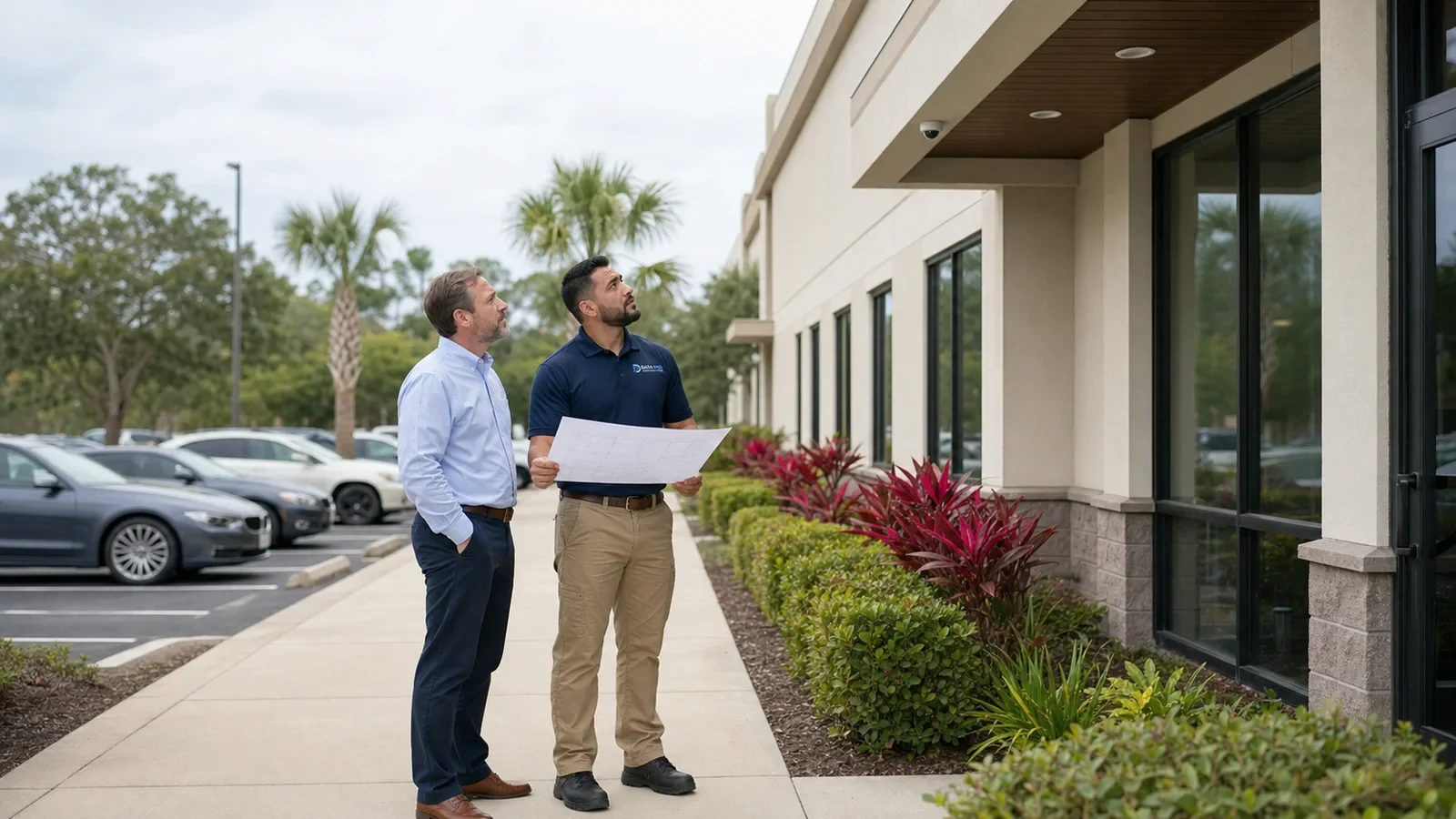
The South Orlando Branch is the Orlando contact point represented on this site. Use the form or the published phone number for commercial camera and low-voltage requests tied to properties in the Orlando service market.
Review Camera Services when you want to compare surveillance-specific options such as IP video, CCTV, NVRs, remote viewing, analytics, upgrades or troubleshooting.
Review Solutions when the project extends beyond cameras into structured cabling, fiber, network infrastructure, access control, intercom or other coordinated low-voltage systems.
Review Industries when the property type is central to the project and you want examples of how system priorities change across different commercial environments.
The same service request can mean different things on an occupied office, a busy retail location, a warehouse, a hotel or an active construction site. Including the property type and operating constraints helps the next conversation focus on the conditions that actually matter.
The team reviews the property, service need and information provided so the request can be routed appropriately.
If important information is missing, the next conversation can focus on the specific details needed to understand the request rather than repeating the entire project description.
Depending on the project, the next step may be a site survey, project consultation, troubleshooting visit or service-specific discussion. The form itself does not pre-commit the project to one path.
When the project moves forward, field conditions and customer requirements are used to develop the applicable scope rather than treating the initial form submission as a final design.
Data Pro Communications - South Orlando is operated by Data Pro Communications. Florida low-voltage work is performed under FL License #EC13016138.
Include the property address, property type, your role, the service or system involved, what you want to accomplish and any known access or scheduling constraints. For an existing system, equipment details or photos can also help.
No. If the final camera count is not known, describe the areas you need to cover and the problem you are trying to solve. A site survey can help turn those goals into a practical layout when field verification is needed.
Request a site survey when the recommendation depends on physical conditions such as camera views, mounting, pathways, cable distances, existing equipment, network rooms, door hardware or other site-specific details.
Yes. Describe the symptoms, affected devices, recorder or platform if known, and anything that changed before the problem started. That information helps determine whether troubleshooting is the right next step.
Yes. Contractors, property managers, facility contacts, owners and other project stakeholders can submit requests. Identifying your role helps the team understand who will provide site information and who may approve the scope.
They can be helpful, especially for existing-system work, equipment rooms, construction projects or locations where access and pathways may affect the scope. They do not replace field verification when a site survey is needed.
No. The form starts a project conversation but does not create a response-time, scheduling or completion guarantee. Timing depends on the request, project conditions and the scope ultimately agreed with the customer.
Yes. The site supports professionally scoped low-voltage projects in addition to commercial camera systems. Describe the system involved and how it relates to the property so the request can be routed appropriately.
Describe the problem in plain language. Explain what is not working or what you want the property to be able to do. The team can use that context to identify the most relevant service path.
The information is reviewed to determine the appropriate next conversation. Depending on the project, that may involve clarifying questions, a site survey, a project consultation or a service-specific discussion.
Tell us about the property, the system involved and the result you need. Clear project details help the Orlando team focus the next conversation on the right technical and site questions.