
Commercial-First Planning
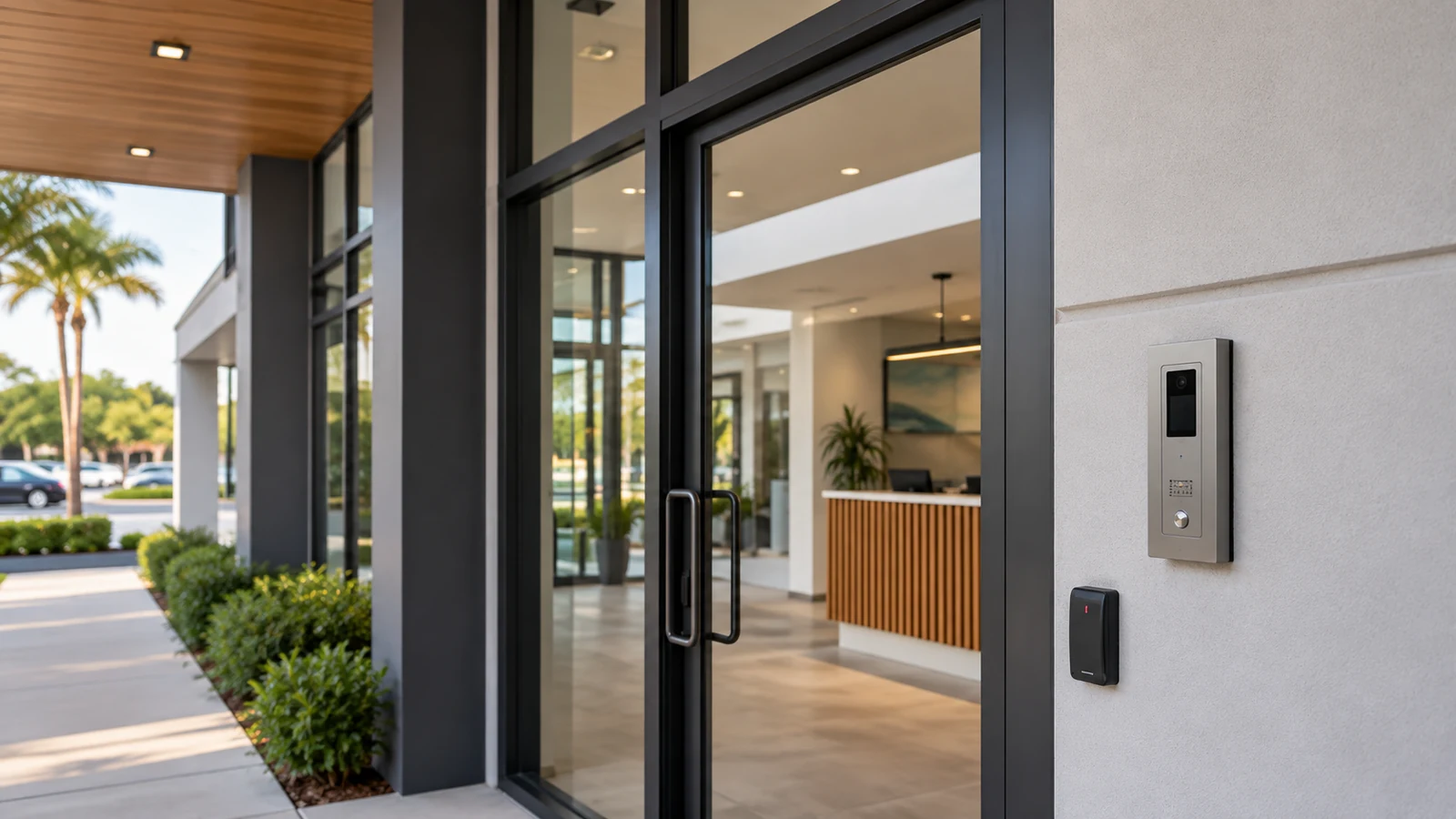
Intercom planning starts with the visitor and staff workflow, then maps stations, call routing and entry-release interfaces to that process.
Commercial Low-Voltage and Security Systems
Commercial intercom systems let visitors communicate with staff before entry and can support an authorized door or gate release when integrated with the appropriate access-control or locking interface. The design starts with who calls, who answers, where calls should ring and what entry action is allowed.
Audio-only, video and network-based intercoms have different station, transport and connectivity requirements. The property should define visitor flow, call handling, user roles and release responsibility before equipment is selected.
Intercom planning starts with the visitor and staff workflow, then maps stations, call routing and entry-release interfaces to that process.
Data Pro Communications operates under FL License #EC13016138.
Handoff verifies call quality, video where included, routing behavior and approved release functions so staff know how the entry workflow operates.
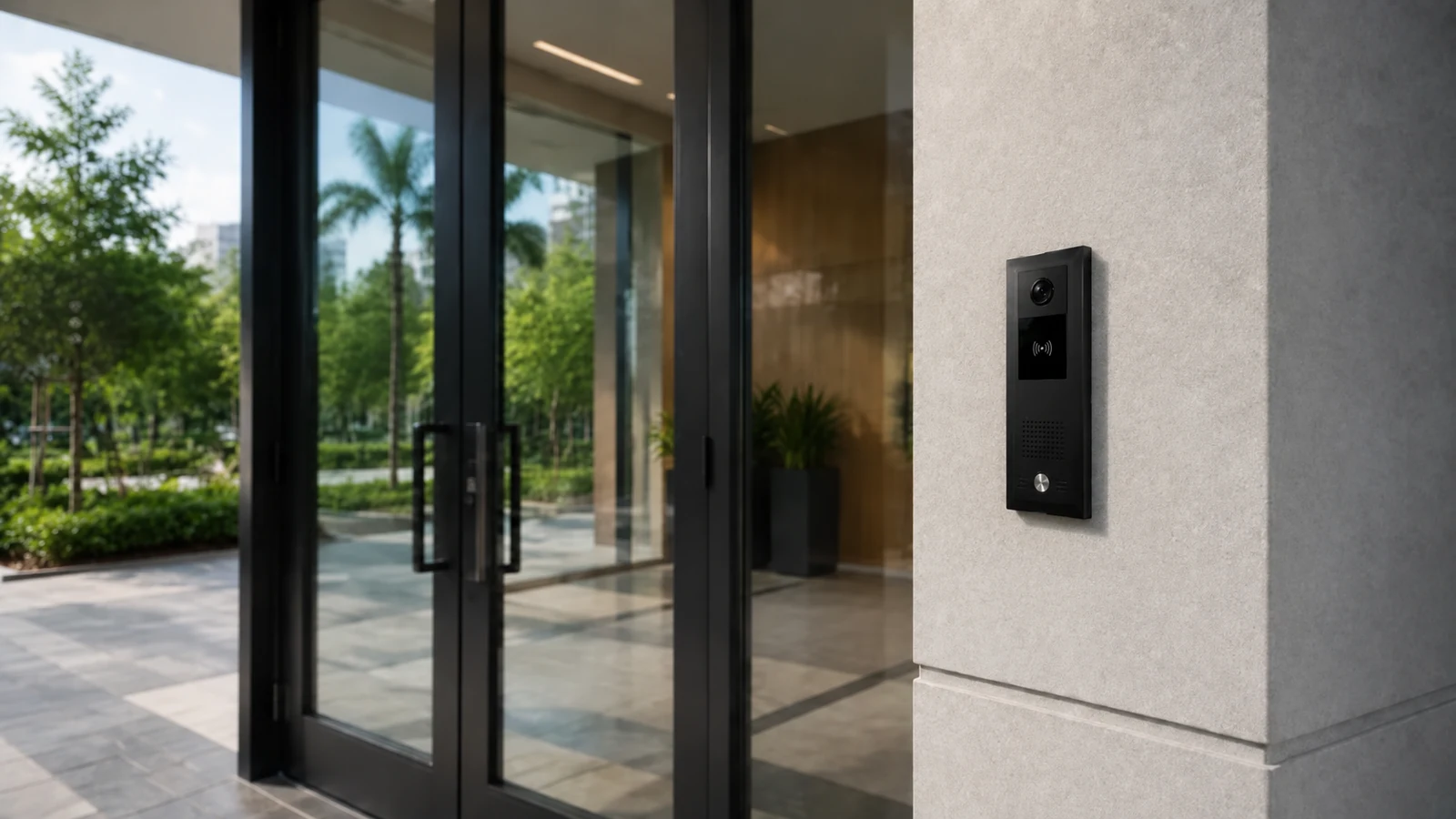
Commercial intercom systems can include entry stations, indoor or desk stations, mobile/soft clients, audio/video communication, call routing and an interface to a door or gate release. Intercom confirms and communicates with a visitor; access-control hardware or another approved interface performs the actual entry action when included.
If the property has not defined who visitors contact and what happens after a call, the system can create delays even when audio and video work correctly.
Entry stations need appropriate mounting, weather/environment suitability, camera view and audio placement; staff endpoints must fit how and where calls are answered.
IP and analog intercoms use different cabling and infrastructure. Existing wiring cannot be assumed reusable until the selected platform and route are confirmed.
A release function needs a specific interface to a lock, gate operator or access-control system. The intercom itself should not be treated as the complete door-control design.
Reception, security, property management and tenants may need different call-routing rules. User roles should be defined before station and license counts are finalized.
Evening, weekend and overflow calls may need a different destination or no release capability. After-hours behavior should be intentional, not the result of a default configuration.
Define visitor arrival points, answering roles and the allowed next step after identity is confirmed.
Select entry and answering stations based on video need, environment, mounting and user workflow.
Use the cabling, PoE, network or analog transport appropriate to the selected intercom platform.
Connect the approved door or gate release through the correct access-control, relay or operator interface with responsibilities documented.
Configure call groups, destinations, tenant/staff assignments and time-based routing within the agreed platform boundary.
Place calls from real entry stations, verify audio/video quality, confirm routing and test authorized release behavior before handoff.
Office intercoms can connect a lobby or exterior entry to reception or designated staff before a visitor is admitted.
Managed properties may route entry calls to different tenants or management staff depending on building and visitor destination.
Campuses can use multiple entry stations while routing calls to centralized or building-specific staff groups.
Video intercom can give staff visual context before an entry decision, but the camera view should be positioned for the actual visitor approach.
Gate intercoms may interface with a gate operator or access-control system after the call is answered and entry is authorized.
Central answering can simplify operations across several entrances if network, licensing and call-routing architecture support the required scale.
Confirm where visitors initiate calls and where staff or tenants need to answer them.
Determine whether audio-only or video is required and whether camera view, lighting or privacy conditions affect placement.
Verify existing cable, PoE, switching, IP addressing or analog pairs required by the selected platform.
Identify the lock, access-control panel, relay or gate operator that will perform the authorized release and who owns that interface.
Define users, call groups, tenant assignments and administrative responsibility for directory changes.
Decide how calls behave outside normal hours, during overflow or when the primary answering location is unavailable.
Intercom and access control can complement each other without becoming the same system. The intercom handles visitor communication and verification; access control or the gate/door interface performs the authorized release. Video surveillance may provide additional context, and IP intercoms may rely on customer switching or remote connectivity.
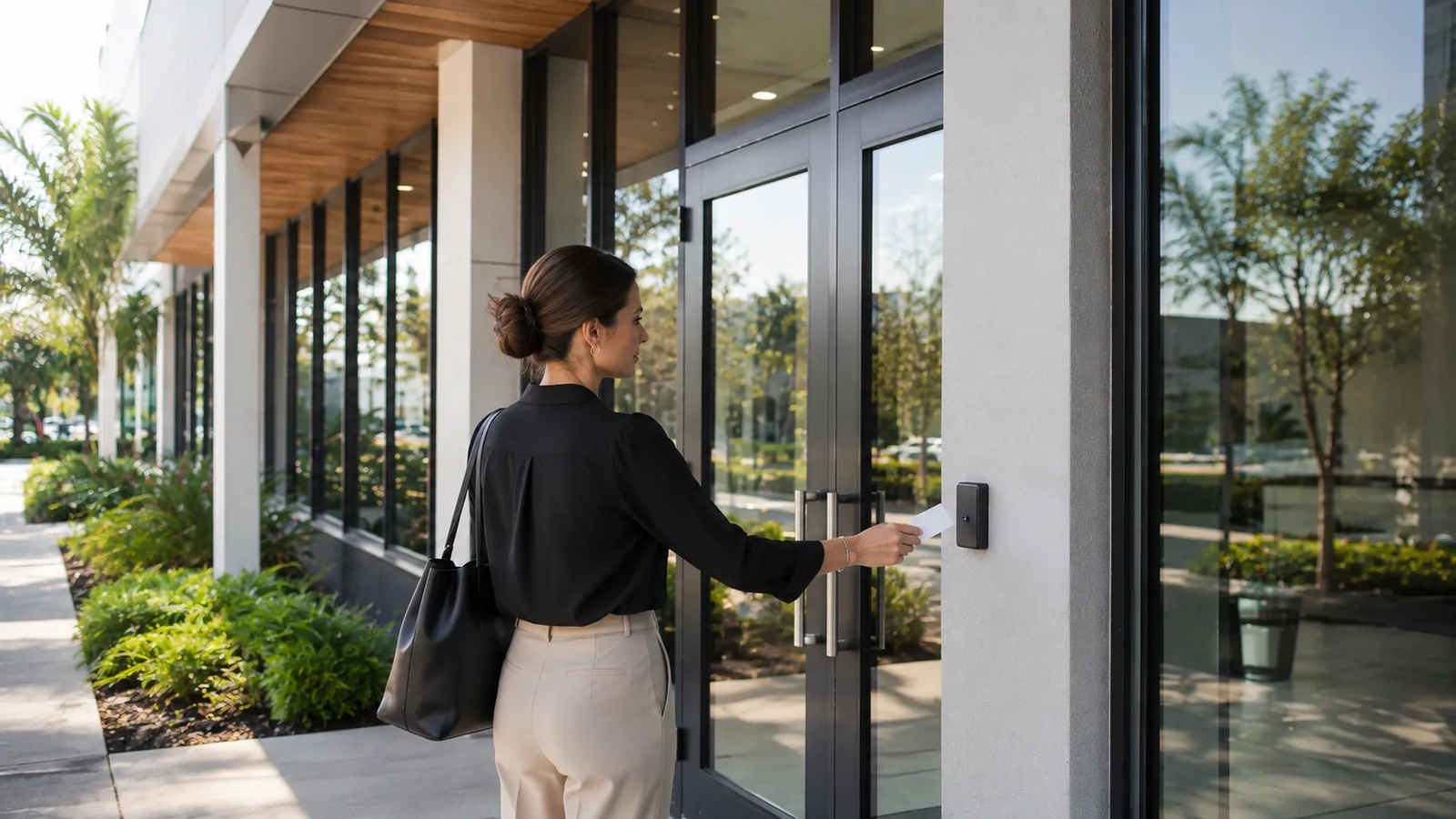
For Orlando commercial properties, intercom design should follow the actual visitor approach and staff workflow at the property. A lobby entry, vehicle gate and multi-tenant entrance have different call-routing and release needs even when they use the same intercom platform.
Use the Solutions hub when visitor communication is part of a broader access, network or low-voltage project.
A site survey can verify station mounting, cabling, network conditions and the door/gate release interface before equipment is finalized.
Access Control is directly related when an intercom call needs to result in an authorized door or gate release through a controlled opening.
Offices may route calls to reception; managed properties may route by tenant; gated or multi-building sites may centralize several entry points. User roles and call flow determine station count, licensing and release integration.
Document visitor entry points, answering roles, call flow, video needs and any approved door or gate release.
Select stations, transport, network requirements, call-routing design and the interface to access control or gate hardware.
Install entry and answering devices, connect transport and release interfaces, and configure users/routing within the approved boundary.
Test calls, audio/video quality, routing, after-hours behavior and authorized release scenarios, then provide the operator handoff.
Cameras Orlando is operated by Data Pro Communications. Florida low-voltage work is performed under FL License #EC13016138. Final recommendations depend on the approved scope, site conditions and the responsibilities stated in the project documents.
Yes, when the design includes an approved interface to access control, locking hardware or a gate operator. The release path and responsibility should be defined before installation.
Many platforms support multiple indoor stations, desk clients or mobile/soft clients. The exact options depend on the selected system and network or licensing requirements.
Yes. Video can help staff verify a visitor, while the access-control or door interface performs the authorized release and records access events as designed.
Many IP intercom stations use PoE, but requirements vary by model. Switch capacity, cable distance and network configuration should be checked for the selected platform.
Sometimes. Reuse depends on whether the existing cable type, route and condition are compatible with the new analog or IP intercom architecture.
The property should define whether after-hours calls go to security, property management, another user group or remain unanswered. Release permissions can also differ by schedule.
Placement should match the visitor approach, accessibility needs, weather exposure, audio conditions and camera view when video is included.
Yes, on platforms designed for directory and tenant routing. The owner should define how tenant records are administered and updated.
Test calls from each entry point, audio and video quality, routing destinations, directory behavior and any approved door or gate release.
Provide entry locations, answering roles, tenant or user count, release requirements and information on existing intercom, access-control and network infrastructure.
Tell us where visitors arrive, who should answer and whether a door or gate needs an authorized release. A site review can confirm station placement, transport and integration requirements.