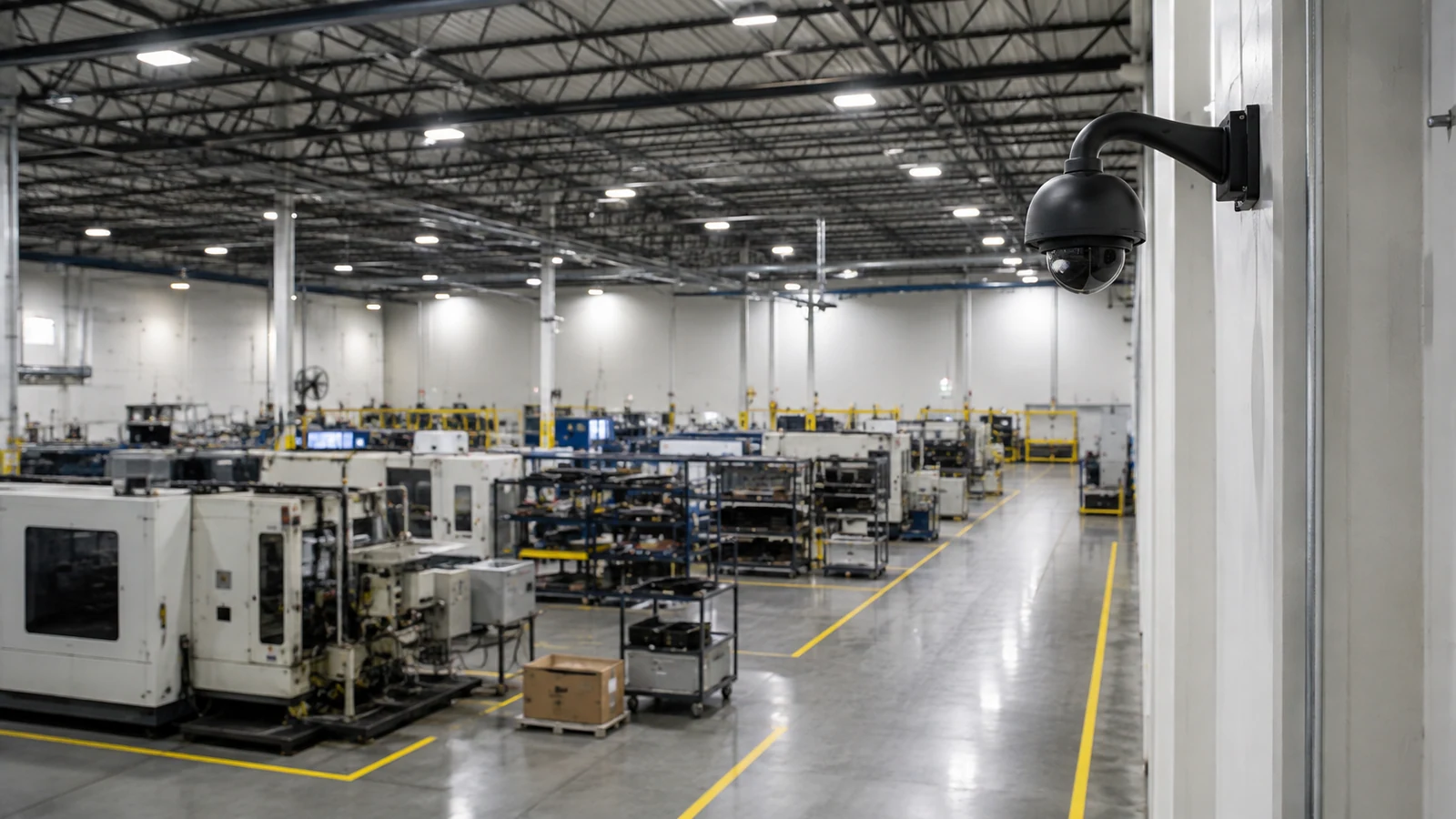
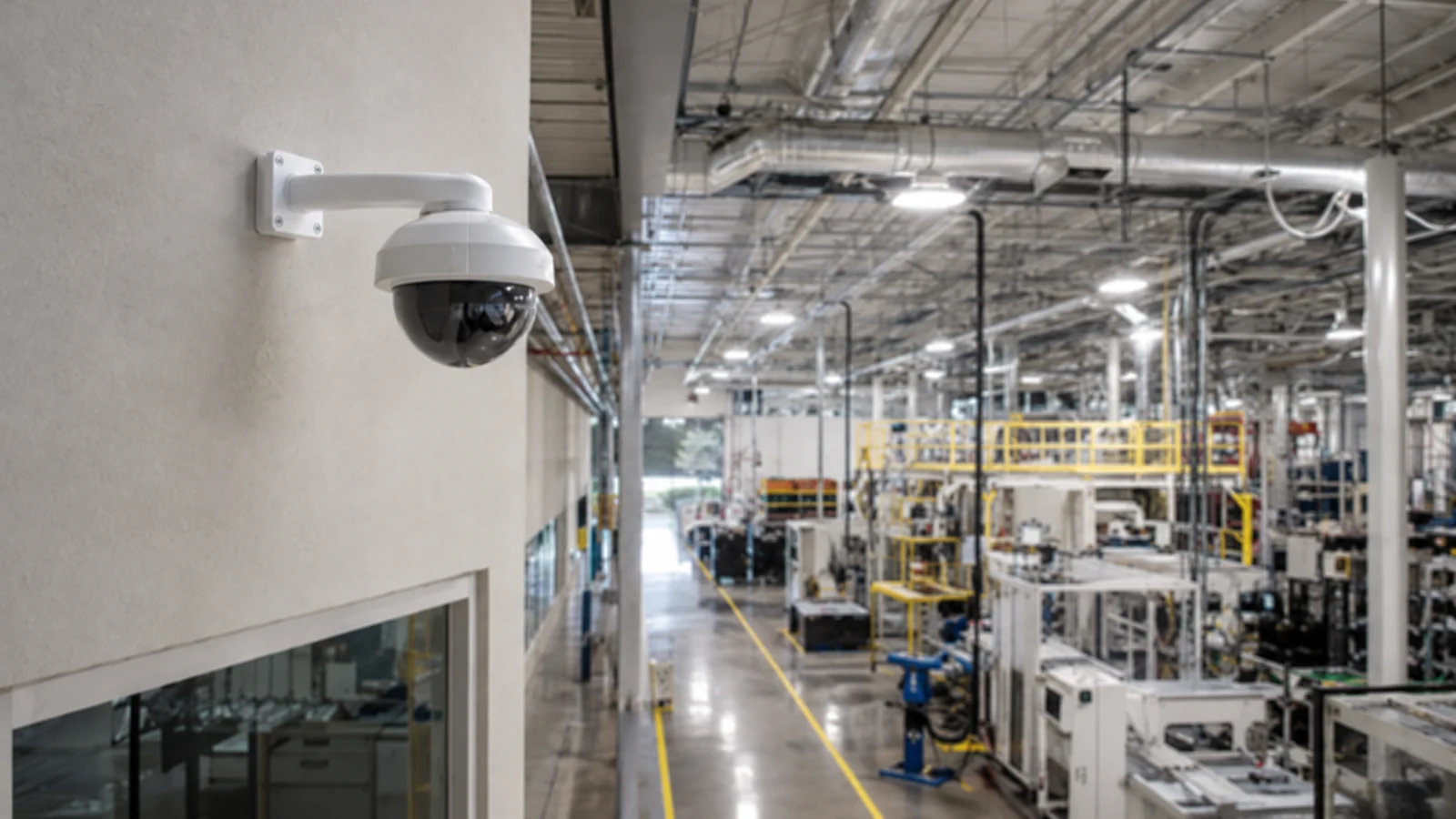
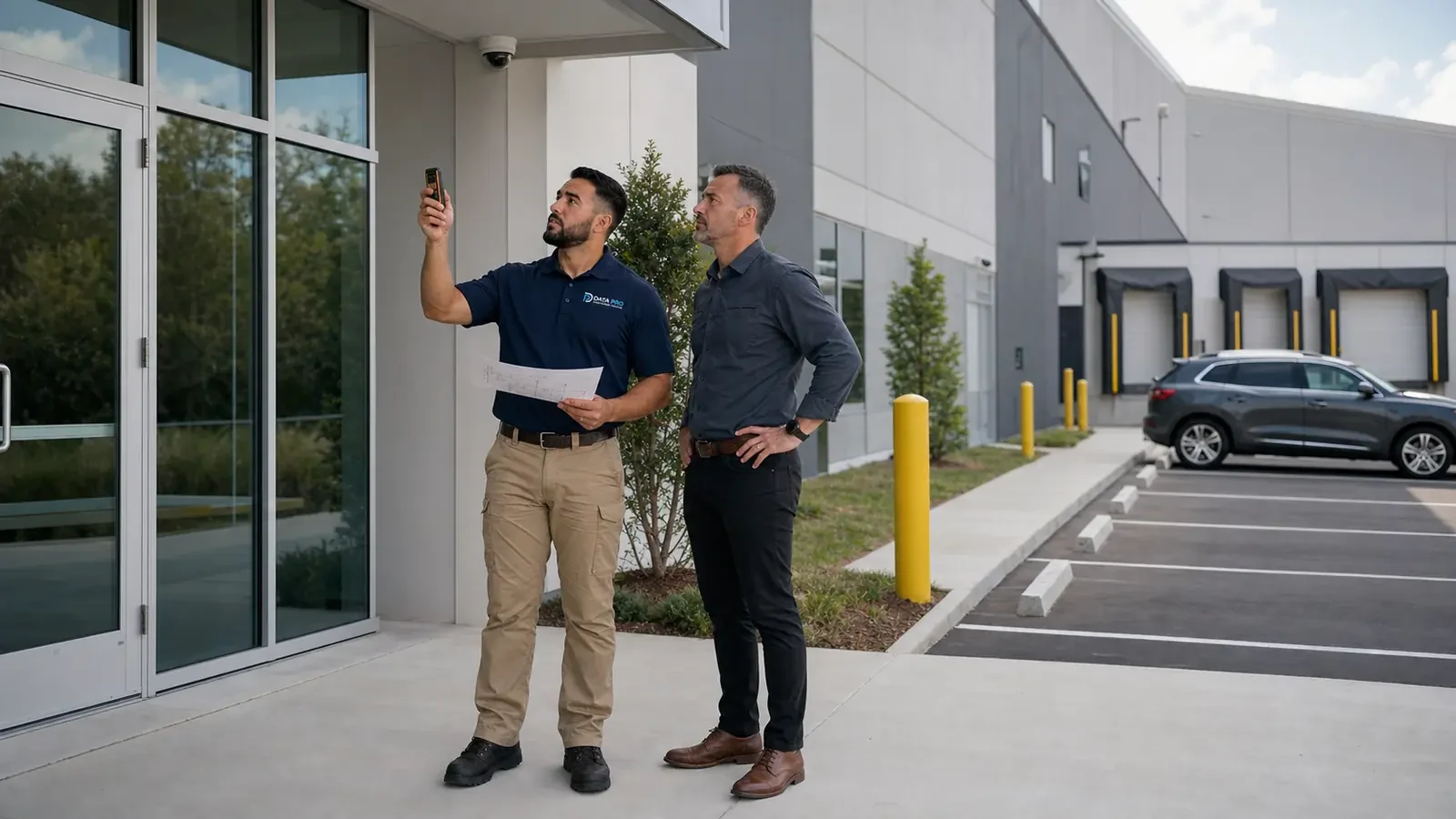
Commercial Security Camera Systems for Manufacturing in Orlando
Manufacturing projects should reflect how production staff, quality teams, vendors and maintenance personnel move through and operate production and assembly facilities. The useful design starts with the real property areas and workflows, not a generic commercial layout.
A site survey should verify production-line approaches, shift entrances, loading docks, the supporting infrastructure and the periods when work can occur. The project should also account for equipment blocking sightlines and shift changes and uptime.
Planning follows the way production staff, quality teams, vendors and maintenance personnel use production and assembly facilities, including access patterns, operating periods and the teams responsible for the systems.
Florida Low-Voltage License
Data Pro Communications operates under FL License #EC13016138.
Documented System Handoff
Manufacturing turnover records should tie device names to production, loading and quality areas and identify which systems belong to security, facilities, IT or production teams.
Planning Security and Low-Voltage Systems for Manufacturing
Production and assembly facilities require different decisions around production-line approaches, shift entrances and loading docks. The technical plan should also confirm quality or restricted zones, plant network interfaces and high-bay service access while accounting for equipment blocking sightlines and production and maintenance scheduling.
Operational Risks to Address for Manufacturing
Unclear Production-Line Approaches
Production-line approaches change with equipment, work-in-process and operator movement. Validate camera or device positions while the line is running so machinery, guards and material do not hide the exact activity the system is intended to document.
Incomplete Shift Entrances
Shift entrances can experience concentrated traffic at start, break and end times that is not visible during a quiet survey. Check pedestrian flow, credential use, lighting and adjacent vehicle movement during a shift change before finalizing coverage or reader placement.
Uncoordinated Loading Docks
Loading docks can be obscured by trailers, dock plates and staging activity for much of the day. Confirm the required views with doors occupied and trucks in position, and account for exterior exposure, mounting protection and service access.
Unsupported Quality Or Restricted Zones
Quality, tool, ingredient or other restricted zones often sit inside larger production areas and need different permissions from the surrounding floor. Verify the precise boundary, authorized groups and required event history so access control does not rely on broad plant-wide credentials.
Poorly Located Plant Network Interfaces
Plant network interfaces can cross between business IT, production systems and dedicated security infrastructure. Identify the approved switch, VLAN or network segment, available PoE and uplink capacity, and the team responsible for changes before devices are connected.
Undocumented High-Bay Service Access
High-bay equipment may look well placed from the floor but be difficult to clean, aim or replace once production is active. Confirm lift access, shutdown constraints, mounting clearance and maintenance reach before approving elevated device locations.
What the Manufacturing Project Should Coordinate
Plan Production-Line Approaches
For Production-Line Approaches, start with the people who use production plants, assembly facilities, processing operations: plant managers, EHS leaders, operations teams and facility engineers. The implementation should support their real workflow and remain serviceable after installation. For manufacturing, check the decision against production equipment, shift changes, loading activity and the maintenance window needed to protect uptime.
Validate Shift Entrances
Make Shift Entrances specific enough to test in the field. Record the approved location or configuration, then verify it under representative property conditions. For manufacturing, check the decision against production equipment, shift changes, loading activity and the maintenance window needed to protect uptime.
Coordinate Loading Docks
Coordinate Loading Docks with the existing infrastructure and the production team. If a field condition changes the approved approach, document the decision before concealed or irreversible work continues. For manufacturing, check the decision against production equipment, shift changes, loading activity and the maintenance window needed to protect uptime.
Define Quality Or Restricted Zones
The project should leave Quality Or Restricted Zones understandable to operations, not only to the installer. Use clear naming, ownership and acceptance criteria tied to the property. For manufacturing, check the decision against production equipment, shift changes, loading activity and the maintenance window needed to protect uptime.
Test Plant Network Interfaces
Use Plant Network Interfaces as a defined operating requirement, not a generic checklist item. The production team should be able to point to the location, user group and expected result. For manufacturing, check the decision against production equipment, shift changes, loading activity and the maintenance window needed to protect uptime.
Document High-Bay Service Access
Tie High-Bay Service Access to material and shift flow. That means confirming the physical location, supporting pathway or network and the person responsible after turnover. For manufacturing, check the decision against production equipment, shift changes, loading activity and the maintenance window needed to protect uptime.
Manufacturing Use Cases and Operating Areas
Production Plants: Production-Line Approaches
Production Plants can change how Production-Line Approaches is used because access patterns and staffing are not identical across the property. The design should reflect material and shift flow. For manufacturing, check the decision against production equipment, shift changes, loading activity and the maintenance window needed to protect uptime.
Assembly Facilities And Processing Operations: Shift Entrances
Shift Entrances matters differently in assembly facilities and processing operations when the area is busy, obstructed or used after hours. The field review should reproduce those conditions before final acceptance. For manufacturing, check the decision against production equipment, shift changes, loading activity and the maintenance window needed to protect uptime.
Production Plants: Loading Docks
Production Plants should use Loading Docks to answer a specific operational question. Define that question first, then choose the view, pathway, permission or network interface needed to support it. For manufacturing, check the decision against production equipment, shift changes, loading activity and the maintenance window needed to protect uptime.
Assembly Facilities And Processing Operations: Quality Or Restricted Zones
Assembly Facilities And Processing Operations can change how Quality Or Restricted Zones is used because access patterns and staffing are not identical across the property. The design should reflect material and shift flow. For manufacturing, check the decision against production equipment, shift changes, loading activity and the maintenance window needed to protect uptime.
Production Plants: Plant Network Interfaces
Plant Network Interfaces matters differently in production plants when the area is busy, obstructed or used after hours. The field review should reproduce those conditions before final acceptance. For manufacturing, check the decision against production equipment, shift changes, loading activity and the maintenance window needed to protect uptime.
Assembly Facilities And Processing Operations: High-Bay Service Access
Assembly Facilities And Processing Operations should use High-Bay Service Access to answer a specific operational question. Define that question first, then choose the view, pathway, permission or network interface needed to support it. For manufacturing, check the decision against production equipment, shift changes, loading activity and the maintenance window needed to protect uptime.
Technical Conditions to Confirm Before Installation
Production-Line Approaches
Check Production-Line Approaches before procurement or concealed work. A mismatch here can change mounting, cabling, network capacity, storage or service access at production plants, assembly facilities, processing operations. For manufacturing, check the decision against production equipment, shift changes, loading activity and the maintenance window needed to protect uptime.
Shift Entrances
Validate Shift Entrances under representative material and shift flow, not only from drawings. The final record should capture the installed condition and any limitation that remains. For manufacturing, check the decision against production equipment, shift changes, loading activity and the maintenance window needed to protect uptime.
Loading Docks
For Loading Docks, document the supporting infrastructure and acceptance method so a future technician can distinguish a design choice from an unresolved field condition. For manufacturing, check the decision against production equipment, shift changes, loading activity and the maintenance window needed to protect uptime.
Quality Or Restricted Zones
Before installation, verify the physical and technical requirements behind Quality Or Restricted Zones: location, pathway, power/network interface and the person who owns changes after handoff. For manufacturing, check the decision against production equipment, shift changes, loading activity and the maintenance window needed to protect uptime.
Plant Network Interfaces
Confirm Plant Network Interfaces in the field against uptime and equipment layout. Record any distance, capacity, environmental or access condition that can change the proposed design. For manufacturing, check the decision against production equipment, shift changes, loading activity and the maintenance window needed to protect uptime.
High-Bay Service Access
High-Bay Service Access needs an explicit technical owner. The production team should know which infrastructure it depends on and what test will show that the requirement is satisfied. For manufacturing, check the decision against production equipment, shift changes, loading activity and the maintenance window needed to protect uptime.
System Integration and Ownership Boundaries
Manufacturing sites can share telecom rooms between business and security systems while production networks remain separately governed. Any camera, access or wireless interface near production should be approved by IT/OT and documented for maintenance.
Planning for Orlando Properties
For Orlando production and assembly facilities, the meaningful design inputs come from the property itself: production-line approaches, shift entrances, loading docks, infrastructure ownership and operating schedule. Orlando identifies the service market; it does not replace a field review.
Operational Recommendations
Prioritize production-line approaches and shift entrances first, then confirm plant network interfaces before equipment is finalized. Plan installation around shift changes and uptime so the project fits normal operations.
Document responsibilities for quality or restricted zones and high-bay service access so operations, IT and service teams know who owns changes after handoff.
Related Services and Next Decisions
Explore Industry Solutions
Use the hub to distinguish manufacturing needs from warehouse, industrial and transportation workflows.
Request a Site Survey
A manufacturing survey can verify production equipment, docks, quality areas, shift patterns and plant network ownership.
View Camera and Integrated Solutions
Network and Cabling solutions matter when new devices require additional PoE, uplinks, telecom-room capacity or protected pathways.
Property Contexts That Change the Recommendation
Production plants, assembly facilities and processing operations can use similar equipment but differ in layout, operating schedule and infrastructure ownership. The recommendation should follow those differences, especially equipment blocking sightlines and production and maintenance scheduling.
A Four-Step Project Path
1. Review Property Workflows
Walk the property with the responsible manufacturing stakeholders and document production-line approaches, shift entrances, loading docks and the existing systems that may be reused.
2. Confirm Technical Requirements
Confirm the technical plan for quality or restricted zones, plant network interfaces and high-bay service access, including ownership, pathways and the acceptance checks needed before field work begins.
3. Coordinate Installation
Coordinate installation with shift schedules, line access and planned maintenance. Work above or adjacent to production should be sequenced so cameras, pathways and network connections can be completed without interfering with active processes.
4. Test and Hand Off
Validate production-line approaches, shift entrances and representative loading docks conditions, then confirm recording or connectivity, user permissions and the documentation the manufacturing operating team will use after turnover.
Licensed Low-Voltage Planning and Installation
Data Pro Communications - South Orlando is operated by Data Pro Communications. Florida low-voltage work is performed under FL License #EC13016138. Final recommendations depend on the approved scope, site conditions and the responsibilities stated in the project documents.
Manufacturing Project Questions
How should cameras be positioned around a production line?
The view should answer a defined security or operational-review need without interfering with production or employee safety. Check machine obstructions, lighting, motion and maintenance access before choosing the mounting point.
How do shift changes affect manufacturing security planning?
Entrances, parking, loading and interior circulation can become much busier at shift changes. Reviewing those periods helps confirm whether camera views and access workflows remain useful at peak activity.
What should be considered for loading docks at a manufacturing plant?
Review trailer positions, dock doors, pedestrian paths, lighting and the relationship to receiving or shipping workflows. Mounting should remain serviceable without interfering with dock equipment.
How should quality or restricted zones be handled?
Define who is authorized to enter and what event needs review. Video and access controls should support that workflow while respecting process confidentiality and any internal restrictions.
Can plant security devices use the same network as production equipment?
Only if the customer’s network architecture explicitly allows it. Security, business and production networks may have different owners and controls, so interfaces should be documented rather than assumed.
What does high-bay service access change in the design?
It affects mounting height, lens choice, lift requirements and future maintenance. A technically good view can still be a poor choice if routine service requires an impractical production shutdown.
How can installation be coordinated with active manufacturing?
Plan pathway pulls, lifts and network cutovers around shifts, maintenance windows and line access. Work near active equipment should follow the facility’s safety and operational rules.
What should be documented when a manufacturing system is upgraded?
Record reused and replaced devices, network ports, recorder or VMS connections, account ownership, final names and any limitations. This gives facilities and IT a reliable post-upgrade baseline.
What should be tested before production-area cameras are accepted?
Check views under representative line conditions, recording, playback, permissions and network connectivity. Test during the lighting and activity conditions that matter to the stated use case.
What should a manufacturing site survey cover?
Review production approaches, shift entrances, docks, restricted or quality areas, plant network interfaces, high-bay access and the operating windows available for installation.
Plan Your Manufacturing Project
Describe the production areas, loading zones, shift schedule and existing telecom infrastructure that are in scope. We can use that information to coordinate a manufacturing-focused site survey.