
Commercial-First Planning
Projects are planned around property operations, infrastructure and the people responsible for the system.
Commercial Camera Resource | Camera-system comparisons
IP cameras send digital video over a network and commonly use PoE; analog CCTV sends video over coax to a compatible recorder. The better choice depends on existing cabling, resolution needs, recorder compatibility, network readiness and migration plans.
A building with tested coax can use a hybrid recorder to replace cameras gradually without opening finished ceilings at once. IP offers higher flexibility and network management, while analog reuse can lower disruption during a phased upgrade but may preserve cable or recorder limitations.
Projects are planned around property operations, infrastructure and the people responsible for the system.
Data Pro Communications operates under FL License #EC13016138.
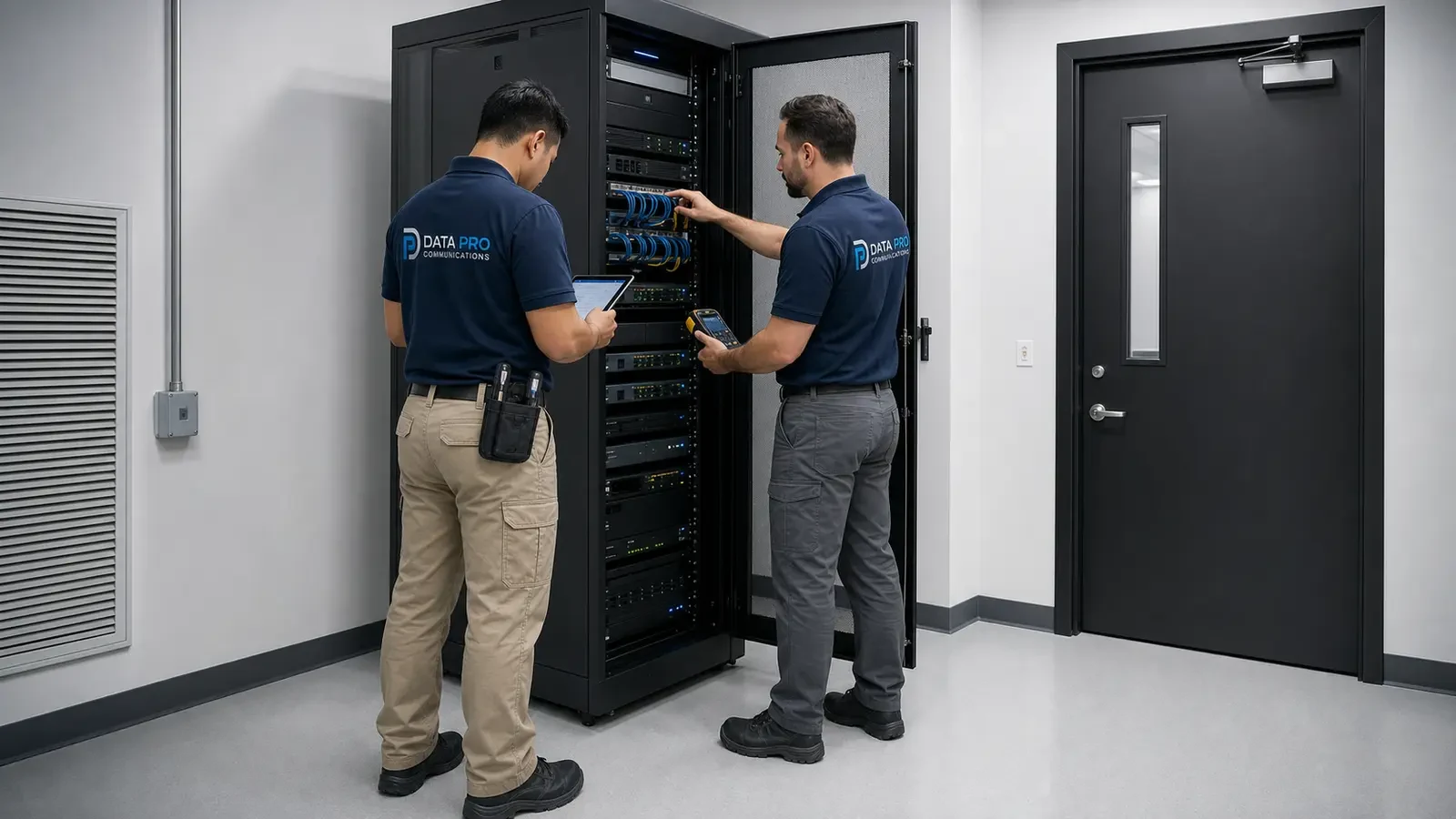
Testing, labeling, credentials and known limitations are organized for the people who will operate and support the system.
IP cameras send digital video over a network and commonly use PoE; analog CCTV sends video over coax to a compatible recorder. The better choice depends on existing cabling, resolution needs, recorder compatibility, network readiness and migration plans.
Assuming the wrong transport can lead to incompatible cameras, missing conversion hardware or an unusable recorder path.
Higher resolution or a newer codec is useful only if the recorder can decode, record and export it at the required frame rate without exhausting channel or storage capacity.
An undersized or unstable PoE switching can restart cameras, disable auxiliary features or drop devices after an outage.
Reused coax can constrain camera technology and distance if cable type, connectors and signal path are not verified channel by channel.
An existing recorder can limit a migration when camera protocol, codec, resolution, channel capacity or licensing does not support the proposed devices.
Removing old channels before new recording paths are proven can leave priority areas without usable coverage during an analog-to-IP transition.
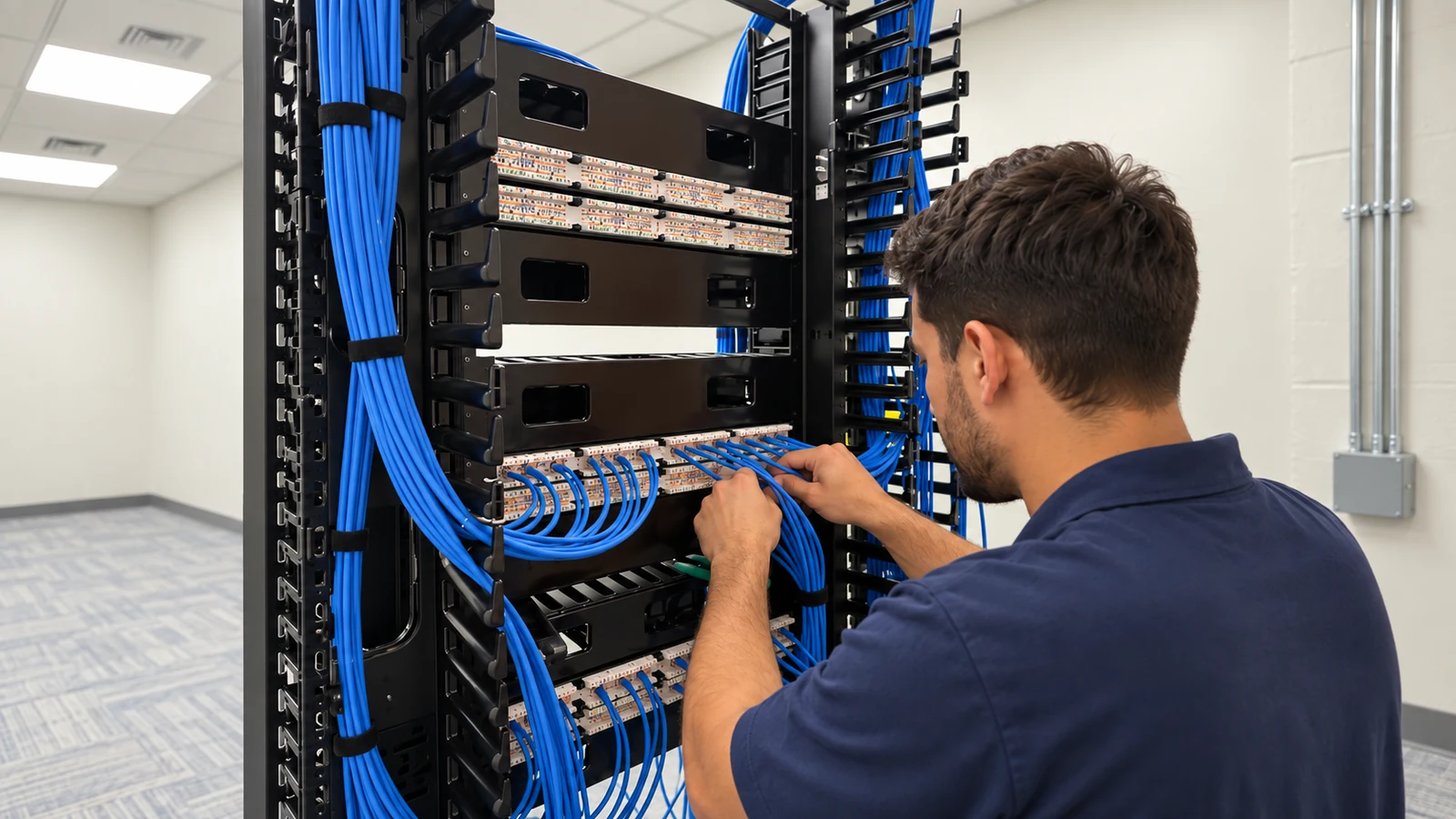
Trace each camera path to identify whether it is Ethernet, coax or converted transport before selecting replacement equipment.
Verify the recorder accepts the selected resolution and codec at the required frame rate; unsupported stream settings can change both quality and storage use.
Calculate PoE switching from device class, startup and auxiliary load, switch or local capacity, cable loss and backup-power requirements; then test a restart.
Test and label each coax channel and confirm the proposed camera/encoder technology supports its real distance and condition.
Compare camera protocol, codec, channel limits and licensing with the existing recorder so a phased migration does not strand new cameras on an unsupported platform.
Decide which analog cameras, coax runs and recorder channels remain temporarily, how new IP cameras are introduced and when legacy components can be retired without losing required coverage.
A building with tested coax can use a hybrid recorder to replace cameras gradually without opening finished ceilings at once.
A new warehouse may favor PoE IP cameras because network switching, high resolution and centralized management are part of the design from the start.
A lobby view must handle doorway backlight, finished mounting surfaces and the balance between an obvious camera and a discreet housing. An office may use PoE IP cameras for new views while a tested analog path remains in service, provided channel and user responsibilities are clear.
Outdoor parking exposes cameras to weather, glare, vehicle obstruction and longer service distances than an interior scene. Outdoor parking may justify IP transport or tested coax reuse depending on route condition, power method, recorder compatibility and required detail.
A renovation may preserve some pathways or recording equipment while changing mounting surfaces, scene geometry and support responsibility. Inspect legacy coax, connectors and mounts before assuming a renovation can retain them for higher-resolution or network cameras.
A phased upgrade should keep priority coverage available while old and new cameras, signal paths and recorder channels are verified together. Move channels in stages, verify each new recording and export path, and keep a rollback plan for priority coverage.
Approval of digital versus coax transport requires route length, test results, protection, termination, environmental exposure and service access, plus a test result appropriate to the copper or fiber medium.
Calculate resolution and codec support with camera count, resolution, codec, bitrate, recording schedule, usable capacity and retrieval period, using usable rather than headline capacity and a verification from the running recorder.
Engineering inputs for PoE switching include device power class, startup load, switch budget, cable loss, backup power and port behavior; confirm both per-port and total capacity and document restart behavior.
Approval of legacy coax reuse requires route length, test results, protection, termination, environmental exposure and service access, plus a test result appropriate to the copper or fiber medium.
Check camera protocol, codec, resolution, channel capacity and licensing before reusing a recorder in an IP, analog or hybrid design.
Each migration stage should identify channels moving, equipment remaining, temporary compatibility, rollback steps and the playback and export tests required before the old path is removed.
The comparison for ip cameras vs. analog cctv systems should include compatibility with legacy coax reuse and recorder compatibility only where those systems change reuse, migration or support.
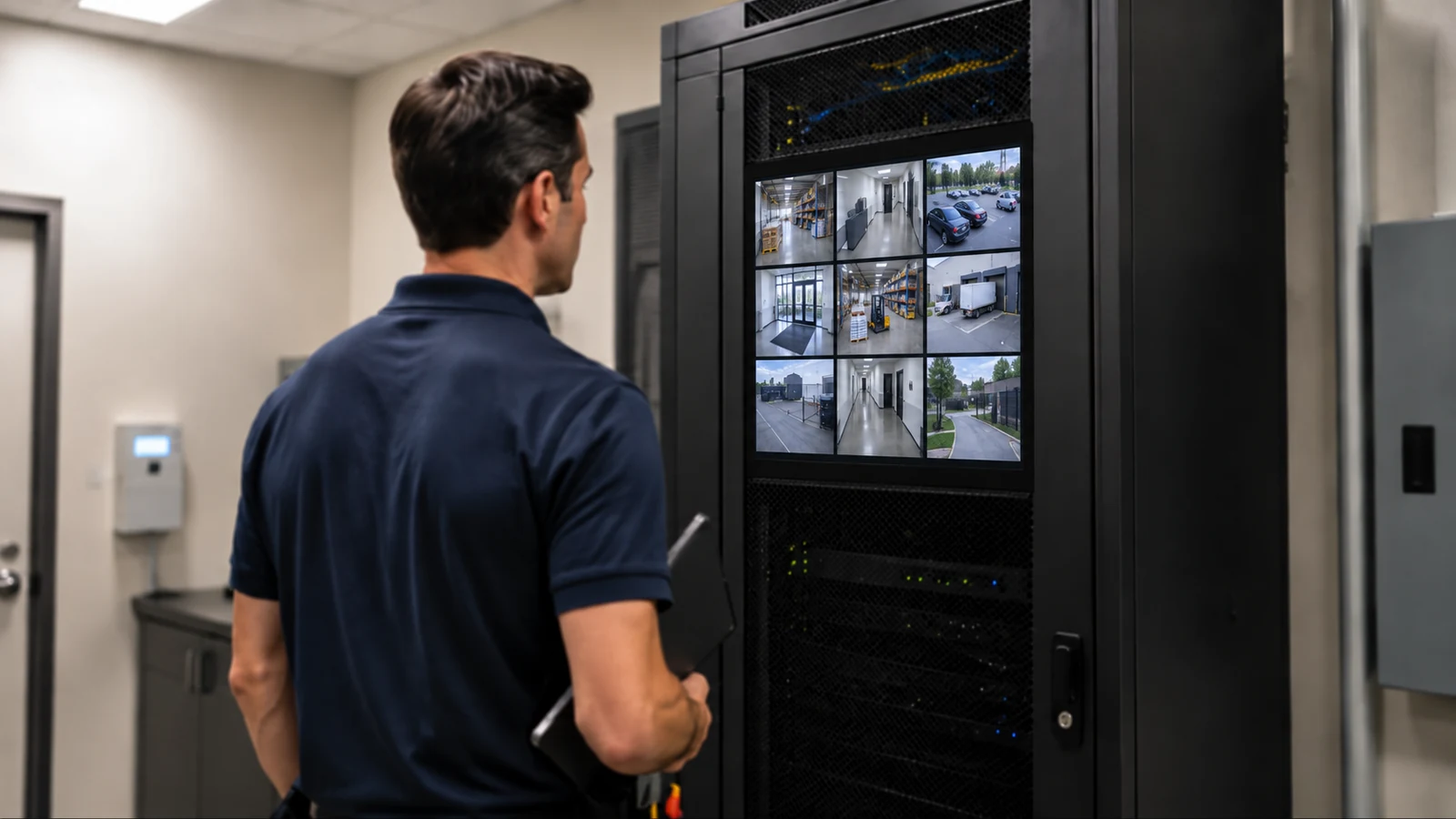
For an Orlando property with existing CCTV, the IP-versus-analog decision should account for what is already installed and what the next system must support. Coax condition, PoE switching, recorder compatibility, resolution needs and future expansion can determine whether reuse, a hybrid stage or a full IP migration is the more practical path.
PoE, recorder, cabling and upgrade guides provide the supporting detail needed when an IP-versus-analog comparison turns into a phased migration decision.
Camera Services can translate the ip cameras vs. analog cctv systems decision into camera locations, mounts, pathways, recorder compatibility and accepted views.
A site review is useful when the actual mounting, exposure, scene or compatibility conditions cannot be settled from the ip cameras vs. analog cctv systems comparison alone.
Neither option is universally better. Choose after comparing digital versus coax transport, resolution and codec support, recorder compatibility and the actual mounting, infrastructure and support conditions.
Document camera types, coax or Ethernet paths, power methods and recorder channels before deciding whether to retain or replace equipment. Existing analog infrastructure can have value when its condition and limitations are understood.
Evaluate required resolution, analytics, remote access, channel capacity and network dependence for both architectures. IP systems can offer more flexibility, while analog or hybrid approaches may reuse installed coax in some properties.
Connect a typical retained camera or path to the proposed recorder or encoder and verify image format, resolution, recording and controls. Component-level compatibility should be proven before assuming every legacy channel will behave the same way.
Decide whether the property should remain analog, move directly to IP or use a phased hybrid migration. Sequence changes so required views remain available and known legacy limitations are not carried into the new recording platform unnoticed.
Cameras Orlando is operated by Data Pro Communications. Florida low-voltage work is performed under FL License #EC13016138.
For digital versus coax transport, trace and label the route, inspect protection and termination, measure distance, use the appropriate copper or fiber test and confirm future service access.
They determine which cameras and recorders can operate together, the detail available in playback and the network and storage load created by each channel.
For PoE switching, add device and auxiliary load, compare it with switch or local-power capacity, account for cable loss and backup power, and observe restart behavior in ip cameras vs. analog cctv systems.
For legacy coax reuse, trace and label the route, inspect protection and termination, measure distance, use the appropriate copper or fiber test and confirm future service access.
For recorder compatibility, compare camera signal or protocol, resolution, codec, channel limits, firmware support and recording features, then test live view, playback and export on the proposed recorder.
For phased migration, move channels or areas in controlled stages, verify each new path before removing the old one and keep a rollback plan for priority views.
No. The better fit depends on digital versus coax transport, resolution and codec support, PoE switching and the property conditions described in the comparison.
Yes, when legacy coax reuse, recorder compatibility and ownership are compatible and each scene has a documented reason for the choice.
Buyers often overlook how recorder compatibility and phased migration affect support, migration or recorded results after installation.
For ip cameras vs. analog cctv systems, test both options against the same required scene, operating condition, recorded playback and service-access expectation.
If the choice between the compared approaches remains unclear, bring the actual scene, existing transport and recorder constraints so digital versus coax transport and recorder compatibility can be evaluated together.