
Commercial-First Planning
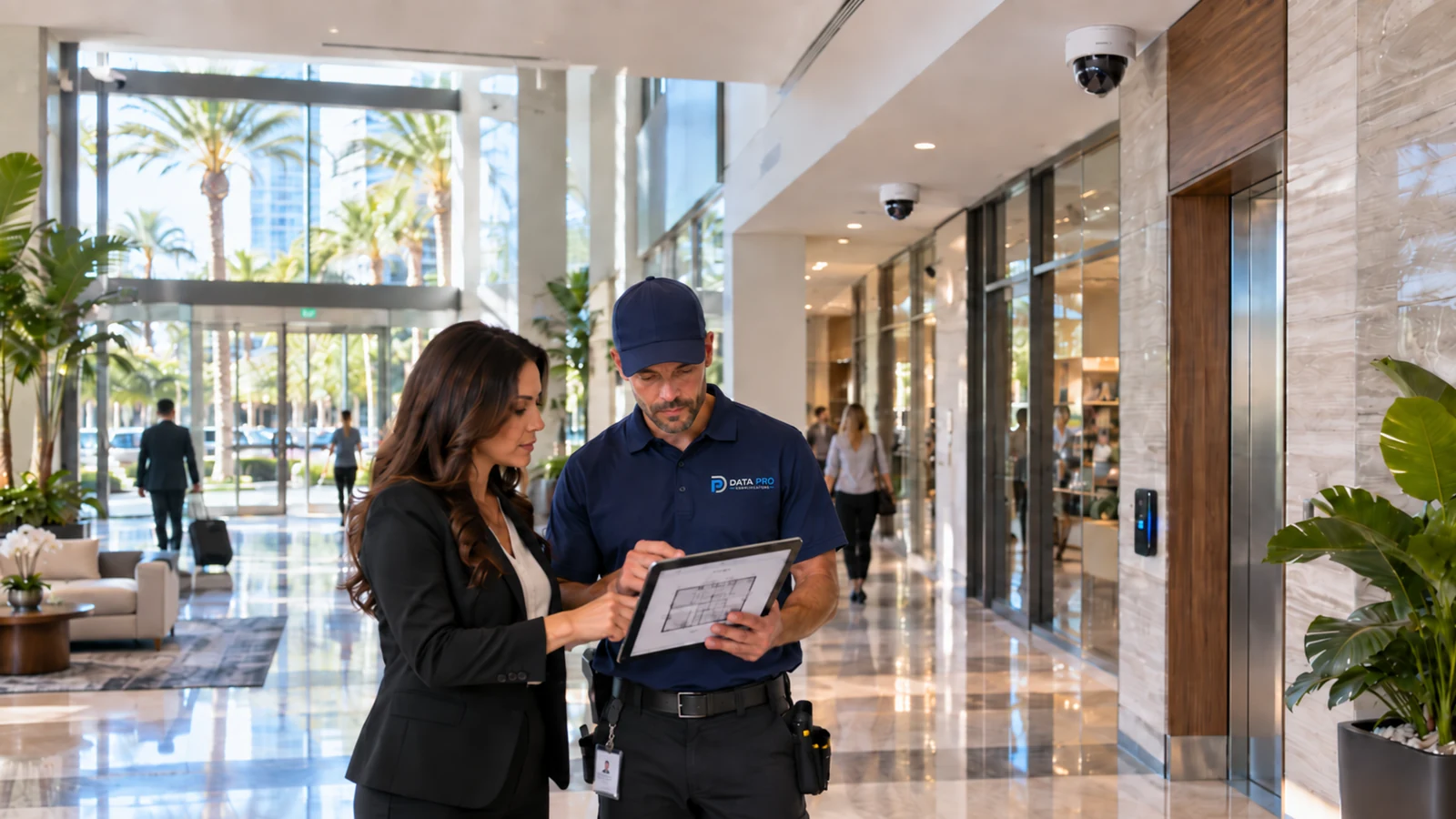
Projects are planned around property operations, infrastructure and the people responsible for the system.
Commercial Camera Resource | Coverage strategy
Improving coverage starts by finding operational blind spots, weak angles, lighting problems and response gaps, then repositioning or adding only the views that improve a defined incident review.
A loading dock may need a close handoff view rather than another wide yard camera. More cameras can add context, but they also add storage, network traffic and review effort; repositioning or improving light may solve the actual problem more efficiently.
Projects are planned around property operations, infrastructure and the people responsible for the system.
Data Pro Communications operates under FL License #EC13016138.
Testing, labeling, credentials and known limitations are organized for the people who will operate and support the system.
Improving coverage starts by finding operational blind spots, weak angles, lighting problems and response gaps, then repositioning or adding only the views that improve a defined incident review.
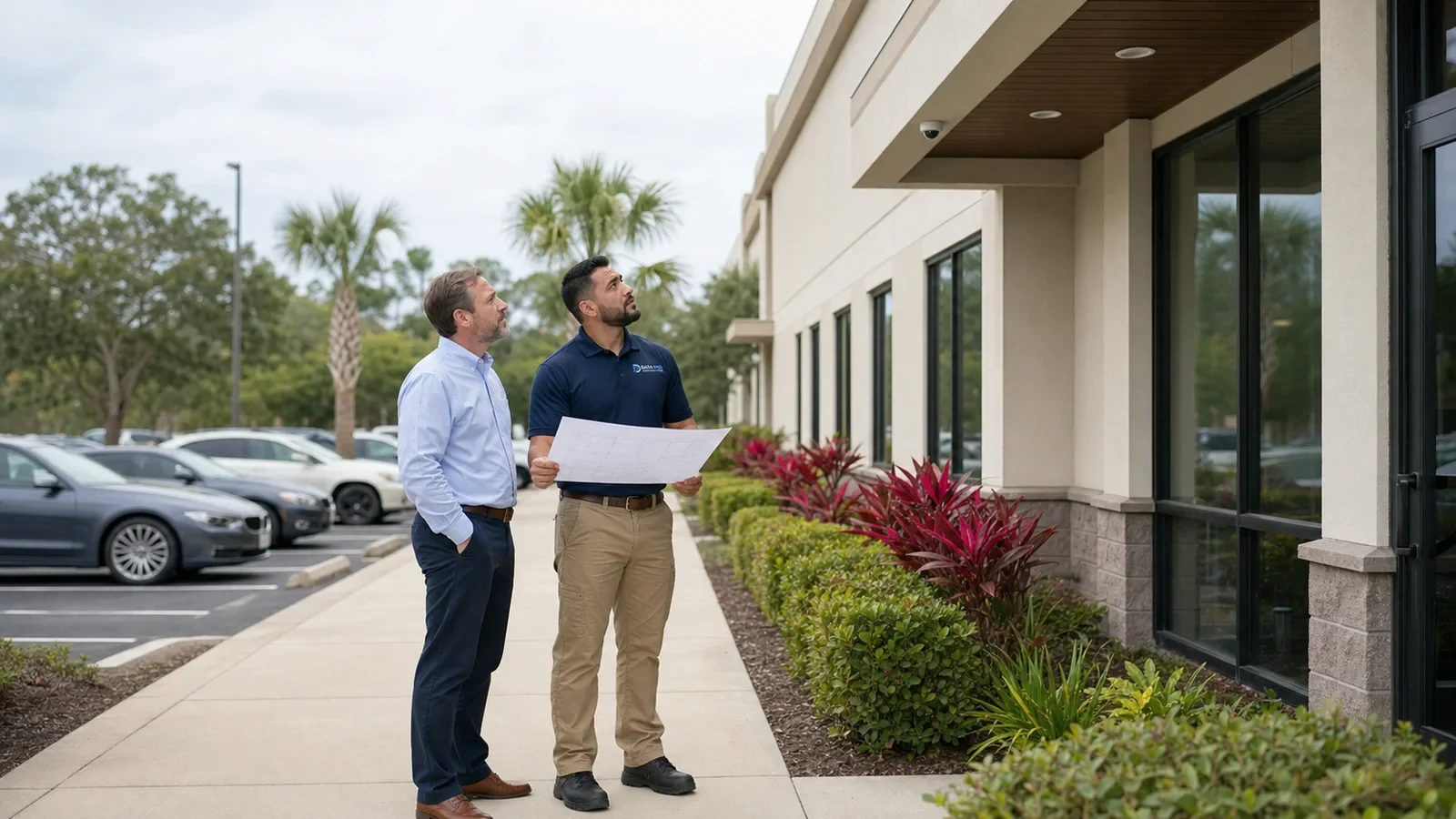
A blind-spot review that ignores how people and vehicles actually move can relocate coverage without fixing the event the property needs to see.
Moving an existing camera may improve one angle while creating a new gap or reducing identification detail at the original target.
Exterior glare, backlighting and low-light motion can make a nominally covered area unusable during the hours when incidents are most likely to be reviewed.
Coverage alone does not create a response; staff need a clear path for reviewing footage, contacting the right person and preserving the relevant clip.
Different areas may justify different recording schedules or retention priorities, but the recorder must still be sized from the combined real workload.
An upgrade cannot be judged by camera count alone; if the revised views do not improve the required event detail, the property has added equipment without solving the coverage problem.
Walk the actual movement routes and compare them with recorded views to identify where incidents leave or enter coverage.
Review the current and proposed angles side by side so improving one target does not remove useful context from another.
Review recorded footage during backlight, darkness and motion, then adjust placement, exposure, IR or supplemental lighting to the actual failure condition.
Staff should know which camera events require action, who reviews footage, when a supervisor is contacted and how the incident is documented.
Apply longer retention only to cameras or events that justify it when uniform retention would consume capacity without operational benefit.
Compare before-and-after footage at the same target and operating condition to confirm the change produces more useful evidence.
A loading dock may need a close handoff view rather than another wide yard camera.
A lobby with strong backlight may improve more from a new angle and exposure setup than from replacing every camera with higher resolution.
Review approach direction, glare, vehicle obstruction and the difference between overview and identification before moving or adding a camera.
A handoff view should show the item, people involved and transfer area with synchronized time and enough detail to reconstruct custody. Place a view where the item and people involved in the transfer are visible and connect it to the staff review process.
An outdoor camera needs a view and mounting position that remain usable through weather, changing light, vegetation and vehicle obstruction. Correct lighting, lens and mounting position against actual weather and nighttime playback rather than judging the live image at midday.
At a restricted transition, the camera should connect the approach, controlled opening and authorized review workflow without covering unrelated private space. Measure the revised view during normal movement and document whether the required person, vehicle or event detail actually improved.
Evaluate operational blind-spot review through scene width, target distance, lens, pixel density, light, compression and required detail; the accepted result should come from recorded playback in the actual scene.
Evaluate camera repositioning through scene width, target distance, lens, pixel density, light, compression and required detail; the accepted result should come from recorded playback in the actual scene.
Evaluate lighting and scene quality through scene width, target distance, lens, pixel density, light, compression and required detail; the accepted result should come from recorded playback in the actual scene.
Staff should know which camera events require action, who reviews footage, when a supervisor is contacted and how the incident is documented.
Calculate targeted retention with camera count, resolution, codec, bitrate, recording schedule, usable capacity and retrieval period, using usable rather than headline capacity and a verification from the running recorder.
Evaluate measured coverage improvement through scene width, target distance, lens, pixel density, light, compression and required detail; the accepted result should come from recorded playback in the actual scene.
For camera-coverage improvement, coordinate camera views with the pathways, power, network and recording services that actually support operational blind-spot review and camera repositioning.
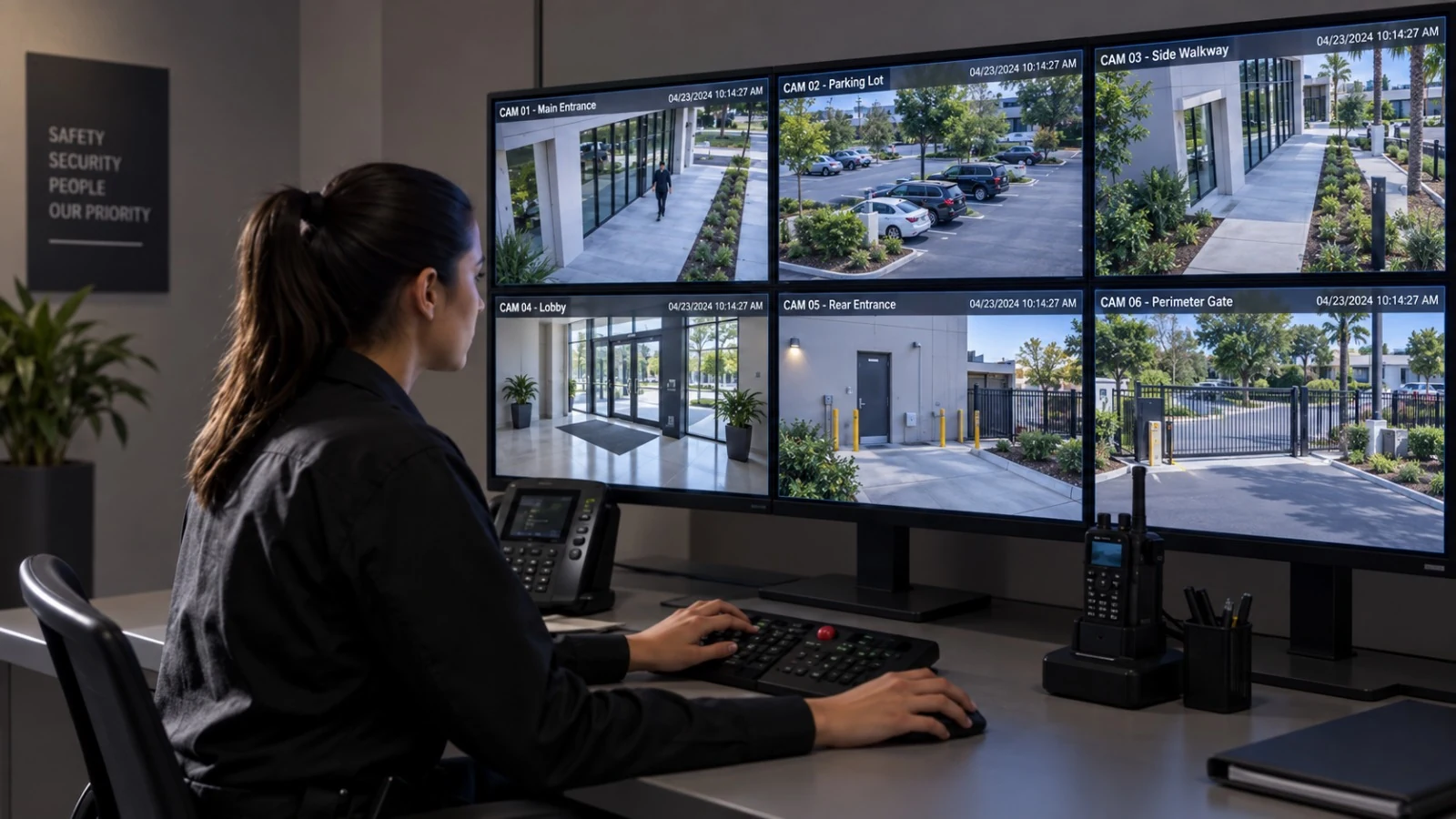
Improving camera coverage at an Orlando commercial property should begin with the incidents that current views fail to explain. Repositioning, lens choice, lighting conditions and nearby obstructions should be checked at the affected entrances, parking areas, service points or interior routes before adding cameras simply to increase device count.
Placement, low-light, resolution and retention guides can help diagnose why an existing camera view is weak before another device is added.
Camera Services can reposition or replace cameras, adjust lenses and recording settings, or add coverage after the blind-spot review identifies a field change that will improve the recorded result.
A site review can compare existing views with actual light, obstructions and staff review needs when the reason for weak coverage is not clear from recorded clips alone.
Coverage should improve the recorded answer at operational blind-spot review and camera repositioning, not merely add devices; verify the change under the conditions represented by targeted retention and measured coverage improvement.
Start with footage that fails to answer an incident question, such as an entrance with backlight, a blocked parking view or a loading area with insufficient detail. The problem should be visible in recorded footage, not described only as a desire for more cameras.
Inspect the camera angle, target distance, field of view, lighting and physical obstructions before adding hardware. A small repositioning or lens change may solve a scene problem that an additional camera would simply duplicate.
If the existing view cannot be corrected, select a new position or camera that addresses the missing detail without creating unnecessary overlap. Confirm the network, power and recording system can support the change.
Review the same incident scenario using the corrected scene and confirm that the missing detail is now visible in recorded footage. Keep the comparison so future changes can be judged against an accepted result.
Cameras Orlando is operated by Data Pro Communications. Florida low-voltage work is performed under FL License #EC13016138.
Identify the event or detail that cannot be reviewed, normal obstructions, approach path, time and lighting condition, then compare current playback with the needed result.
A new angle may remove glare or obstruction, narrow a view or better follow an approach path, provided the mount and pathway remain serviceable.
Test lighting and scene quality at the difficult time of day or night and review recorded detail, motion blur, noise, glare and infrared behavior.
For staff response workflow in camera-coverage improvement, name the event, recipient, response time, escalation path and evidence record so staff know what action follows an alert or footage review.
For camera-coverage improvement, calculate targeted retention from camera count, resolution, codec, bitrate, recording schedule and usable capacity; verify the result through oldest-footage review and an export.
Repeat the original incident-review scenario and compare recorded detail, obstruction, lighting and event context before and after the change.
Yes. Repositioning, a narrower lens or corrected lighting may resolve operational blind-spot review without adding another recording stream in camera-coverage improvement.
For camera-coverage improvement, record the event or detail that is missing, normal obstruction, scene width, target distance and the mounting or lighting condition involved.
In camera-coverage improvement, use a dedicated view when a wide overview cannot preserve sufficient detail at a controlled doorway, lane, transaction point or handoff area.
Review playback for operational blind-spot review and camera repositioning during normal activity, then check recording, export and user access.
If the property needs stronger evidence at operational blind-spot review or camera repositioning, request a site review built around those scenes, normal operating conditions and the people who use the footage.