
Commercial-First Planning
Projects are planned around property operations, infrastructure and the people responsible for the system.
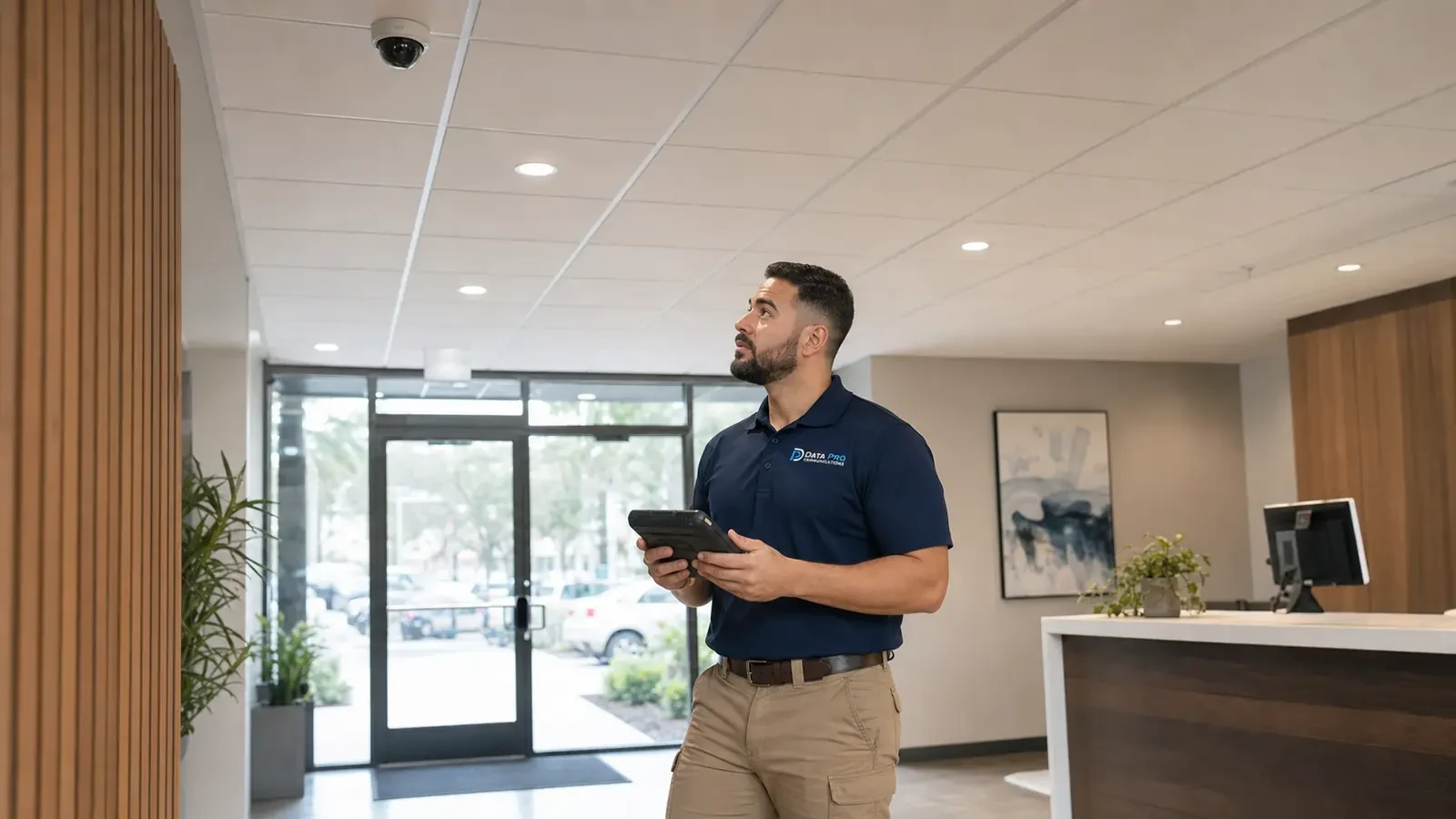
Commercial Camera Resource | Installation planning
Installation services can include survey and design, mounting and cabling, network and recorder configuration, defined system interfaces, commissioning, training and documentation. Buyers should compare proposals by included outcomes and responsibilities, not by device count alone.
One proposal may include cable certification and switch configuration while another assumes both are supplied by the customer's IT team. A broader turnkey scope reduces interface gaps; a narrower labor-only scope can work when the buyer owns design, network and acceptance responsibilities.
Projects are planned around property operations, infrastructure and the people responsible for the system.
Data Pro Communications operates under FL License #EC13016138.
Testing, labeling, credentials and known limitations are organized for the people who will operate and support the system.
Installation services can include survey and design, mounting and cabling, network and recorder configuration, defined system interfaces, commissioning, training and documentation. Buyers should compare proposals by included outcomes and responsibilities, not by device count alone.
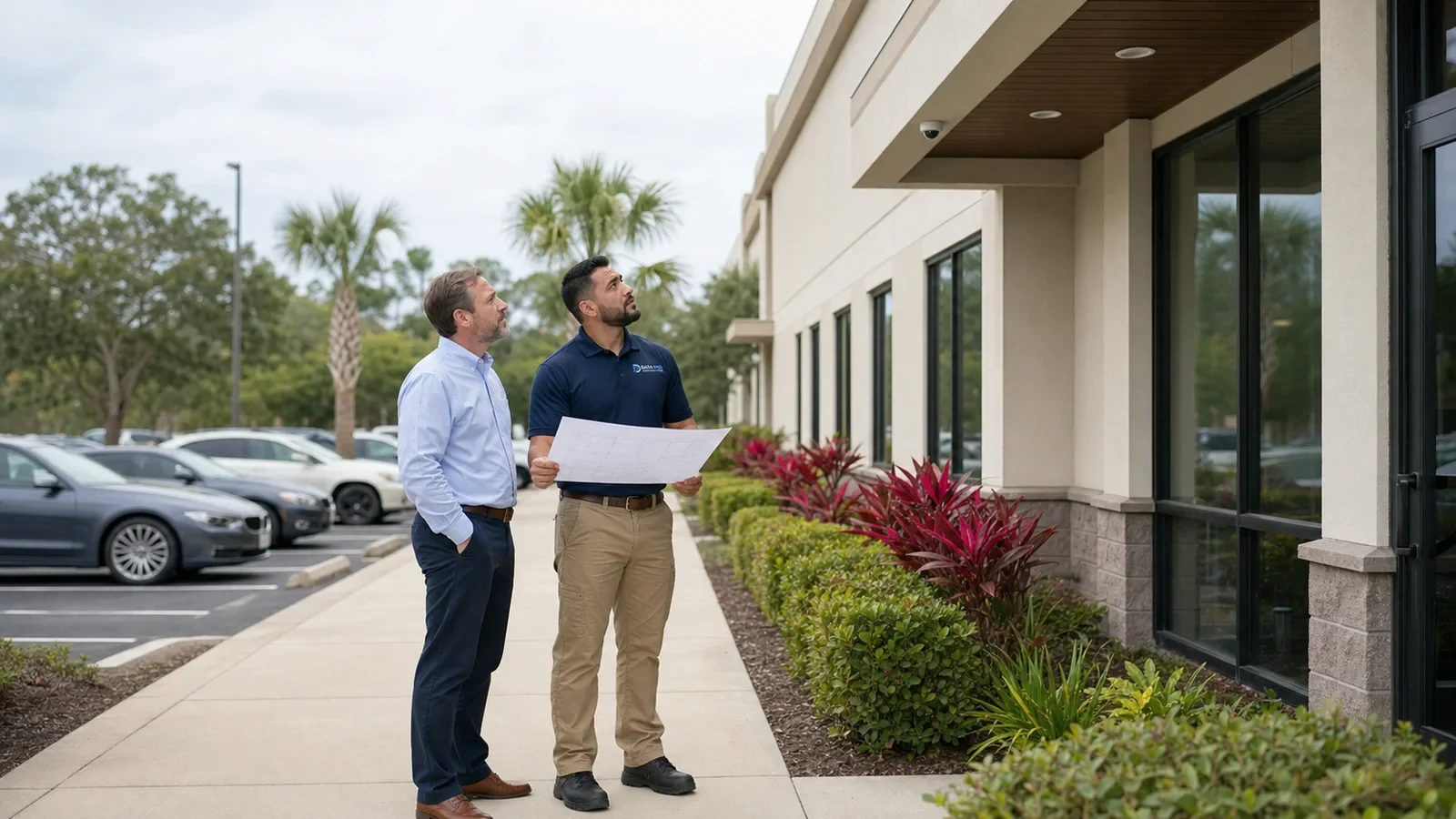
Installation pricing can hide gaps when the survey does not connect required scenes with mounts, pathways, network, recording and work access.
Labor can be understated when camera height, lift access, wall type and cable route difficulty are not included in the installation assumption.
A mismatch between camera addressing, PoE/network path and recorder settings can produce missing channels or inconsistent commissioning results.
Integration work can expand unexpectedly when power, network, events, recording or user administration are assumed to belong to another platform or trade.
A completed installation should not be accepted from live thumbnails alone. Recorded views and system functions need checks under the conditions they are intended to handle.
Training without the installed camera names, account roles and export workflow leaves operators dependent on guesswork after the installer leaves.
Identify the scenes to be reviewed, pathway areas to inspect, infrastructure to test and decisions the survey must resolve before a final design is prepared.
Price labor from mounting height, access equipment, wall/ceiling type and route difficulty at each camera location.
Commission the camera path end to end by checking addressing, PoE or link state, recorder allocation, stream settings and timestamps.
For each integration, identify which platform owns the event, video, network path and user administration so the camera scope does not absorb unrelated system responsibilities.
Verify recorded views, device health, playback, exports, user access and any required integrations under normal operating conditions before closeout.
Leave users with the camera inventory, account ownership, operating instructions, export steps and known limitations they need to run and support the installed system.
One proposal may include cable certification and switch configuration while another assumes both are supplied by the customer's IT team.
Recorder training and account transfer may be included in commissioning or left as a separate service, which changes closeout readiness.
Include recorder and network configuration, camera naming and user roles with the warehouse devices and pathways being installed.
State whether access control, existing networks, electrical work or third-party platforms are included, coordinated or customer-furnished.
Use a matrix of recorded scenes, playback, export, timestamps and permissions as acceptance evidence across each location.
Close the renovated site with labels, training, configuration records, retained-equipment notes and known limitations.
The survey and design scope should identify every area, target detail, mounting condition, route, infrastructure dependency, retained component and unresolved approval.
Approval of mounting and cabling labor requires route length, test results, protection, termination, environmental exposure and service access, plus a test result appropriate to the copper or fiber medium.
Check addressing, PoE or network path, recorder channel allocation, stream settings and time synchronization as part of commissioning rather than treating configuration as a separate afterthought.
State which system supplies power, network, events, recording and user administration for each integration so camera work does not silently absorb unrelated platform responsibilities.
Test each accepted scene, timestamp, recording schedule, retention, playback, export, account role and recovery behavior, and record any exception still open.
Documentation should include device and cable labels, accepted views, account ownership, playback and export steps, configuration records and support contacts.
Implementation of installation-service scope should coordinate mounting and cabling labor, network and recorder configuration and system integration boundaries with the camera and recording platform.
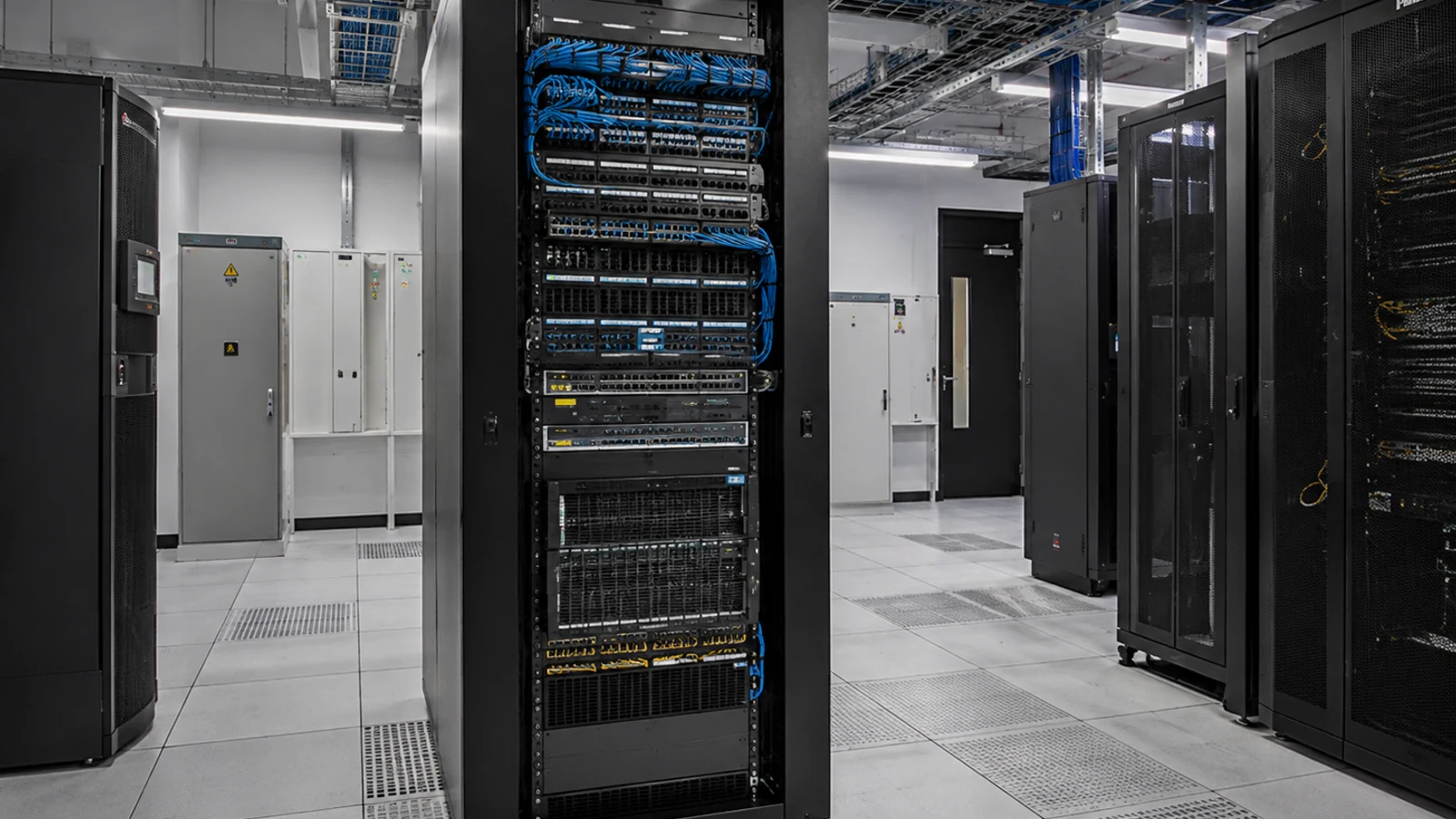
An Orlando installation-services scope should make clear which work is included at the property: survey and design, cabling and pathways, mounting, recorder or network configuration, testing, training and closeout. Existing infrastructure and customer-furnished responsibilities should be identified early so the labor scope matches the system that will actually be delivered.
The library’s design, cabling, network, recorder and commissioning articles explain the individual components that sit inside a complete installation-services scope.
Camera Services covers the device, recorder and troubleshooting work that may sit inside the broader installation-services package described in this article.
A site survey can clarify which mounting, cabling, network and recorder work belongs in the installation scope when existing conditions are incomplete or undocumented.
A buildable project resolves survey and design scope, mounting and cabling labor and network and recorder configuration before field work and closes with verified commissioning tests and training and documentation.
Walk the property with the operational goals in mind and mark the exact scenes that need recording. Note mounting height, target distance, lighting and obstructions before finalizing camera models or quantities.
Confirm cable routes, PoE ports, uplinks, recorder channels and storage assumptions before material is released. Infrastructure decisions should be resolved before installers arrive with a device-only plan.
Install pathways and network dependencies before the cameras that rely on them, then commission devices by area. This reduces rework and makes it easier to isolate a problem to cabling, power, network or recording.
Compare playback with the approved scene objectives, test export and confirm user permissions and labels. Any view that cannot meet its intended purpose should be corrected or documented before closeout.
Cameras Orlando is operated by Data Pro Communications. Florida low-voltage work is performed under FL License #EC13016138.
During survey and design scope, document areas and incidents in scope, target distances, pathways and telecom spaces, existing equipment, operating restrictions and unresolved approvals.
For mounting and cabling labor, trace and label the route, inspect protection and termination, measure distance, use the appropriate copper or fiber test and confirm future service access.
Verify camera switch ports, segmentation, uplinks, recorder channels, codecs, storage settings and user roles. Acceptance should include recorded playback, export, timestamps and restart behavior, not only live thumbnails.
For system integration boundaries, identify the owner on each side, interface or signal exchanged, timing and permissions, power and network boundary, failure behavior and acceptance test.
For commissioning tests, verify the visible scene or system function under representative operation, review recorded playback, complete an export, check authorized accounts and document exceptions.
For training and documentation, provide camera names and locations, account ownership, user roles, playback and export steps, test results, retained equipment and known limitations.
Confirm survey and design scope, mounting and cabling labor, network and recorder configuration and the person who can approve access and field changes.
Confirm camera responsibilities with operations, pathway and access conditions with facilities, and network or recorder assumptions with the technical owner before comparing labor or equipment totals.
They can be divided into survey and design, pathways, device installation, configuration and commissioning. The scope should state what becomes operational in each phase and which earlier assumptions the later work depends on.
During the site survey, the installer should inspect and test cable routes, switching and PoE capacity, available power, recorder compatibility, storage and the physical condition of retained equipment.
If records or a walkthrough cannot resolve survey and design scope, mounting and cabling labor and network and recorder configuration, request a site survey before installation assumptions become committed labor or hidden work.