
Commercial-First Planning
Projects are planned around property operations, infrastructure and the people responsible for the system.
Commercial Camera Resource | Industry planning
Hospitality camera planning should distinguish guest arrival, front-desk context, parking and service lanes, staff-only access and incident review across shifts. Guest privacy and continuous operations shape both placement and permissions.
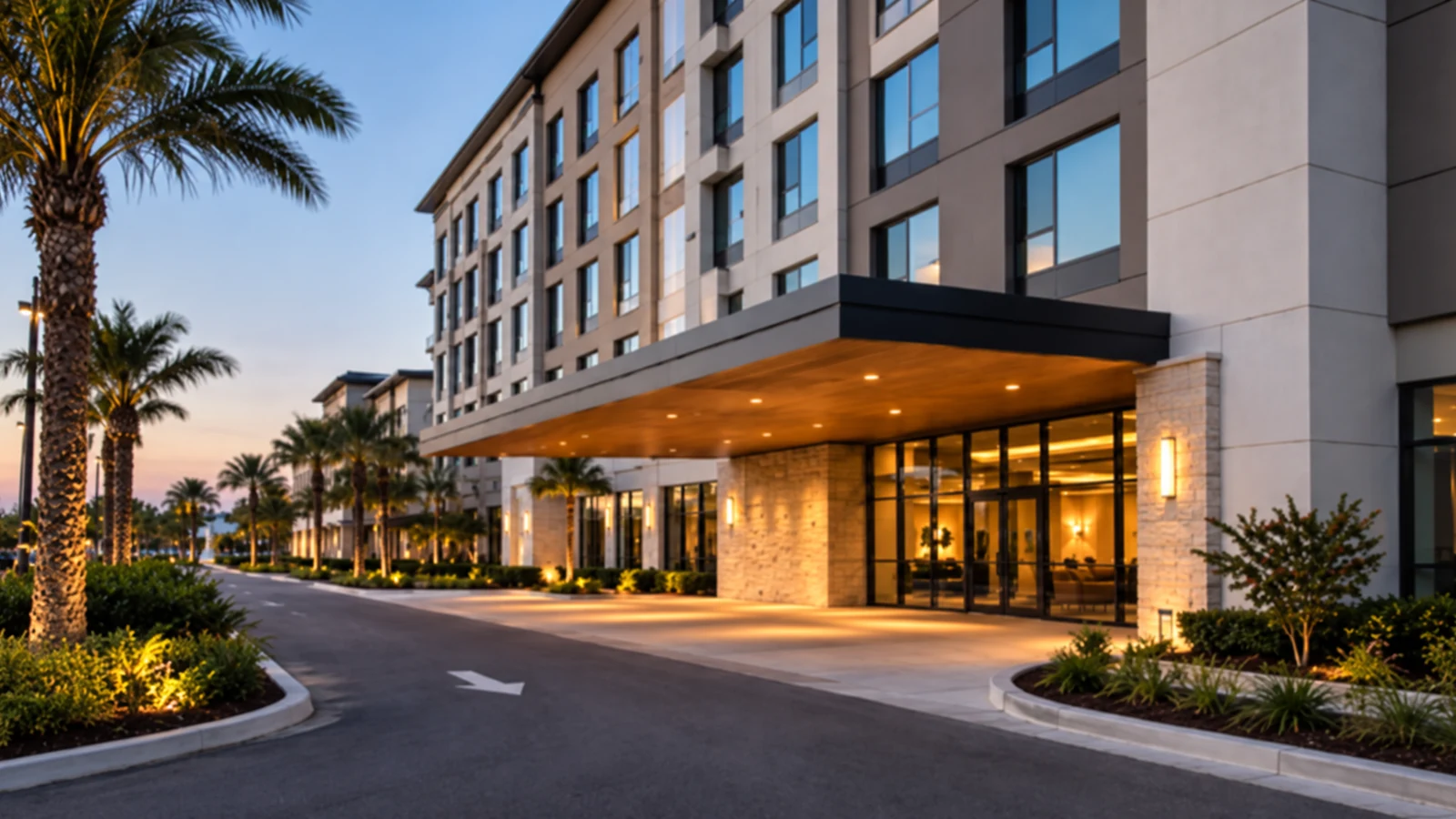
A porte-cochere may need separate vehicle-arrival and pedestrian-entry views because one wide camera cannot preserve both details. Broad common-area context helps reconstruct events, but hotel coverage must avoid guest-room interiors and limit access to staff with a defined operational need.
Projects are planned around property operations, infrastructure and the people responsible for the system.
Data Pro Communications operates under FL License #EC13016138.
Testing, labeling, credentials and known limitations are organized for the people who will operate and support the system.
Hospitality camera planning should distinguish guest arrival, front-desk context, parking and service lanes, staff-only access and incident review across shifts. Guest privacy and continuous operations shape both placement and permissions.
A hotel entrance at a quiet time does not show the vehicle queues and pedestrian congestion that can block cameras during peak arrivals.
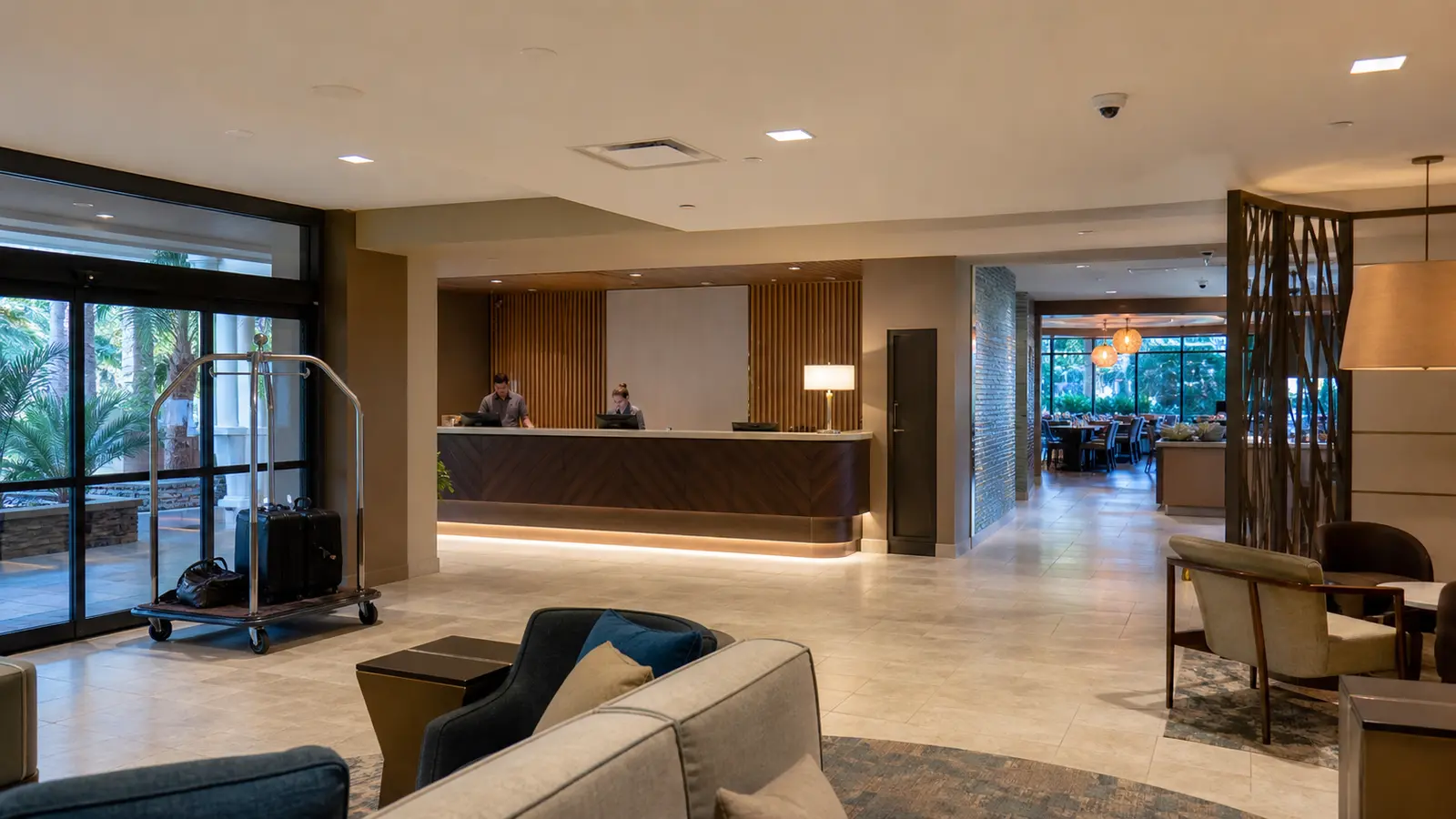
A hotel front-desk view can lose investigative value if it captures only the counter and not the guest approach, staff interaction or surrounding context.
Parked vehicles and active deliveries can obstruct a lane view that looks clear when the property is quiet.
Back-of-house footage can become broadly visible when staff access is not limited to operational need.
Hotel retention should cover the incident-review window the property actually needs across guest and service shifts, based on camera load and usable recorder capacity.
Guest or property incidents take longer to investigate when staff do not know which cameras to review, who can export footage or where the incident record is kept.
Check porte-cochère traffic, luggage activity, front-door approach, valet movement and changing exterior/interior light before selecting the arrival views.
Frame the desk, guest approach and relevant circulation so an interaction can be reviewed without unnecessarily covering unrelated guest areas.
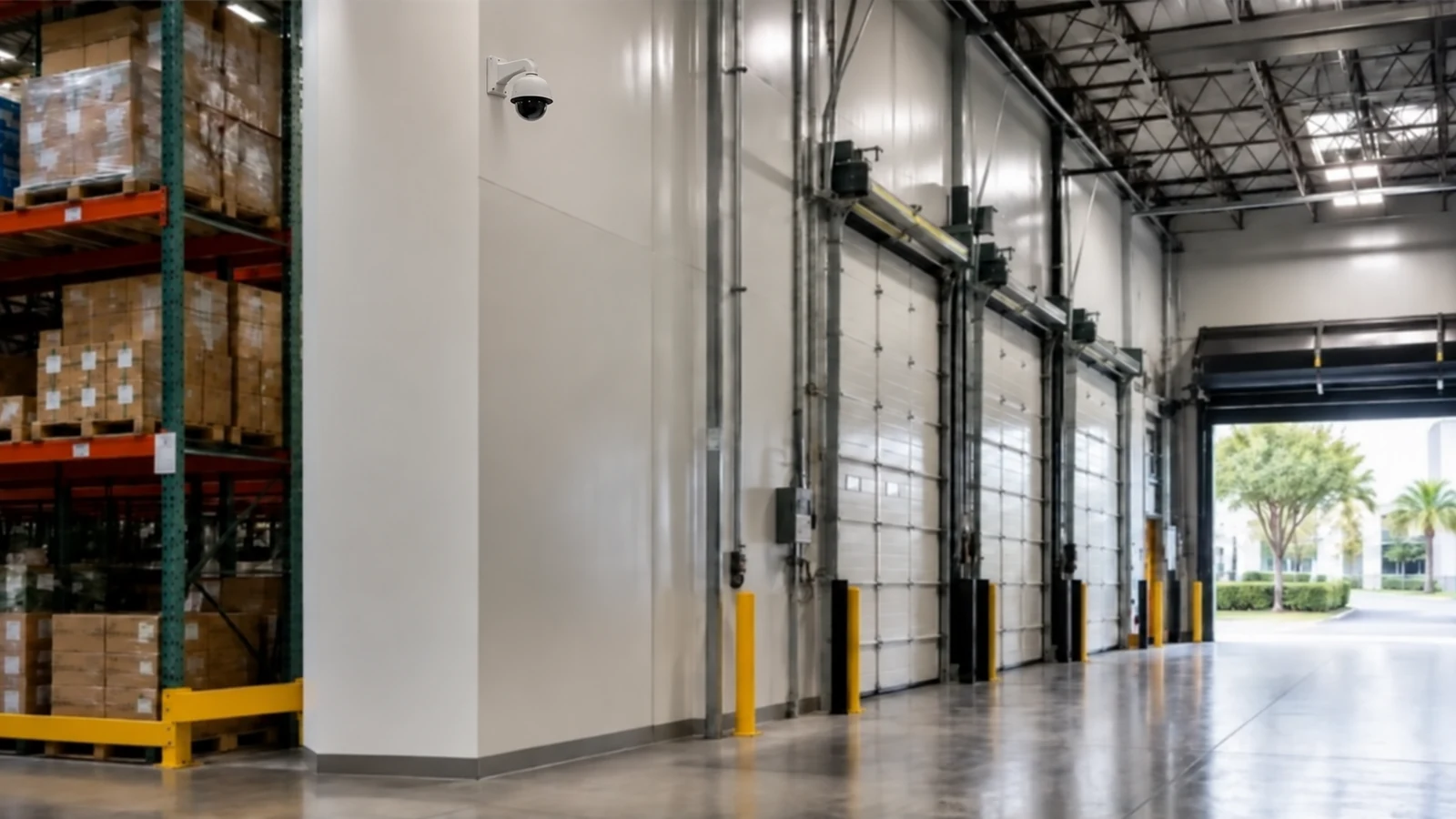
Review vehicle lanes, service doors, loading activity and pedestrian crossings so cameras can separate guest traffic from back-of-house movement.
Keep back-of-house camera access limited to staff roles with an operational reason to view or export the footage.
Set retention long enough for incidents discovered on a later shift or business day to remain available when management begins review.
Hotel incident review should connect lobby, arrival, parking or service-lane footage to a searchable time and location while avoiding unnecessary exposure of unrelated guest areas.
A porte-cochere may need separate vehicle-arrival and pedestrian-entry views because one wide camera cannot preserve both details.
A service corridor camera should show staff and delivery access without extending into guest accommodations.
Use separate arrival and service-lane views where vehicles, guests and vendors follow different paths.
Protect staff-only access while keeping guest rooms and other private spaces outside the camera purpose.
Coordinate interior and parking review across shifts with named roles and consistent camera names.
Test low-light playback, export and the overnight response path with the managers expected to handle an incident.
Check porte-cochère traffic, luggage activity, front-door approach, valet movement and changing exterior/interior light before selecting the arrival views.
Evaluate front-desk context through scene width, target distance, lens, pixel density, light, compression and required detail; the accepted result should come from recorded playback in the actual scene.
Review vehicle lanes, service doors, loading activity and pedestrian crossings so cameras can separate guest traffic from back-of-house movement.
Administration of staff-only access requires account ownership, least-privilege roles, approval, revocation, export rights and audit history, with separate permissions for viewing, export and system changes.
Calculate retention across shifts with camera count, resolution, codec, bitrate, recording schedule, usable capacity and retrieval period, using usable rather than headline capacity and a verification from the running recorder.
Hotel incident review should connect lobby, arrival, parking or service-lane footage to a searchable time and location while avoiding unnecessary exposure of unrelated guest areas.
For security camera planning for hotels and hospitality properties, coordinate camera views with the pathways, power, network and recording services that actually support guest arrival areas and front-desk context.
For Orlando hotels and hospitality properties, camera coverage should follow guest arrival, front-desk context, parking and service access without extending unnecessarily into privacy-sensitive areas. Installation, aiming and playback testing may also need to be sequenced around occupied guest operations and back-of-house work periods.
Hospitality research can branch into parking coverage, remote viewing, retention and staff-access topics when guest-facing and service operations share the same camera system.
Camera Services becomes useful when the property plan for guest arrival areas or front-desk context requires new views, changed recording or an upgrade.
A property assessment is useful when the required views around guest arrival areas and front-desk context cannot be confirmed without observing normal operations.
The property plan should follow normal activity around guest arrival areas, front-desk context and parking and service lanes, with permissions and review workflow shaped by retention across shifts and incident review.
Review entrances, lobby approaches, elevators, parking transitions and other areas where guests move between public and controlled spaces. Views should help reconstruct movement without treating guest rooms or private areas as camera targets.
Identify delivery, back-of-house and employee entrances that may need a different camera angle or retention priority from guest-facing areas. Service activity can be obscured by vehicles, carts or changing door positions.
Plan pathway access, lifts and device installation around check-in periods, events, housekeeping and service operations. Hotels often require smaller work zones because the property cannot simply shut down for installation.
Test playback from representative guest and service areas and confirm authorized managers can retrieve footage across overnight and day shifts. Naming, time synchronization and export should support handoff between staff rather than depend on one administrator.
Cameras Orlando is operated by Data Pro Communications. Florida low-voltage work is performed under FL License #EC13016138.
Coordinate views of the vehicle approach, porte-cochere, pedestrian entry and lobby transition so staff can reconstruct an arrival without aiming cameras into guest rooms or private seating areas.
For front-desk context, review playback under representative distance, lighting, movement and obstruction and compare it with the activity or identification detail the operator needs.
Guest parking often needs vehicle and pedestrian context, while service lanes need delivery doors, vendor movement and staff access. Each area may require a separate identification point and different review permissions.
Use named roles for security, management and authorized incident reviewers. Front-desk awareness does not require the same playback, export or administrative rights as a security investigation.
Retention should cover the time needed for incidents to pass between shifts and reach management, using actual camera bitrates and recording schedules. Verify the oldest available footage and a representative export on the running recorder.
Assign the overnight role, backup manager and escalation threshold before an incident occurs. The reviewer needs the correct camera names, playback access and a documented method for preserving relevant footage.
Link exterior arrival, entrance and front-desk views with synchronized time and consistent names. This lets staff follow an event without giving one wide camera an intrusive view of the entire lobby.
Guest arrivals, front-desk interactions, parking entries and service doors often need a focused view in addition to a broader circulation camera.
Usually not. Front-desk staff may need limited live awareness, while security or management handles playback, export and administrative changes through named accounts.
Schedule view checks around representative arrivals, deliveries and overnight lighting without disrupting guests. Verify playback, export, privacy boundaries and shift-based permissions with the appropriate managers.
If the property needs stronger evidence at guest arrival areas or front-desk context, request a site review built around those scenes, normal operating conditions and the people who use the footage.