
Commercial-First Planning
Projects are planned around property operations, infrastructure and the people responsible for the system.
Commercial Camera Resource | Installation planning
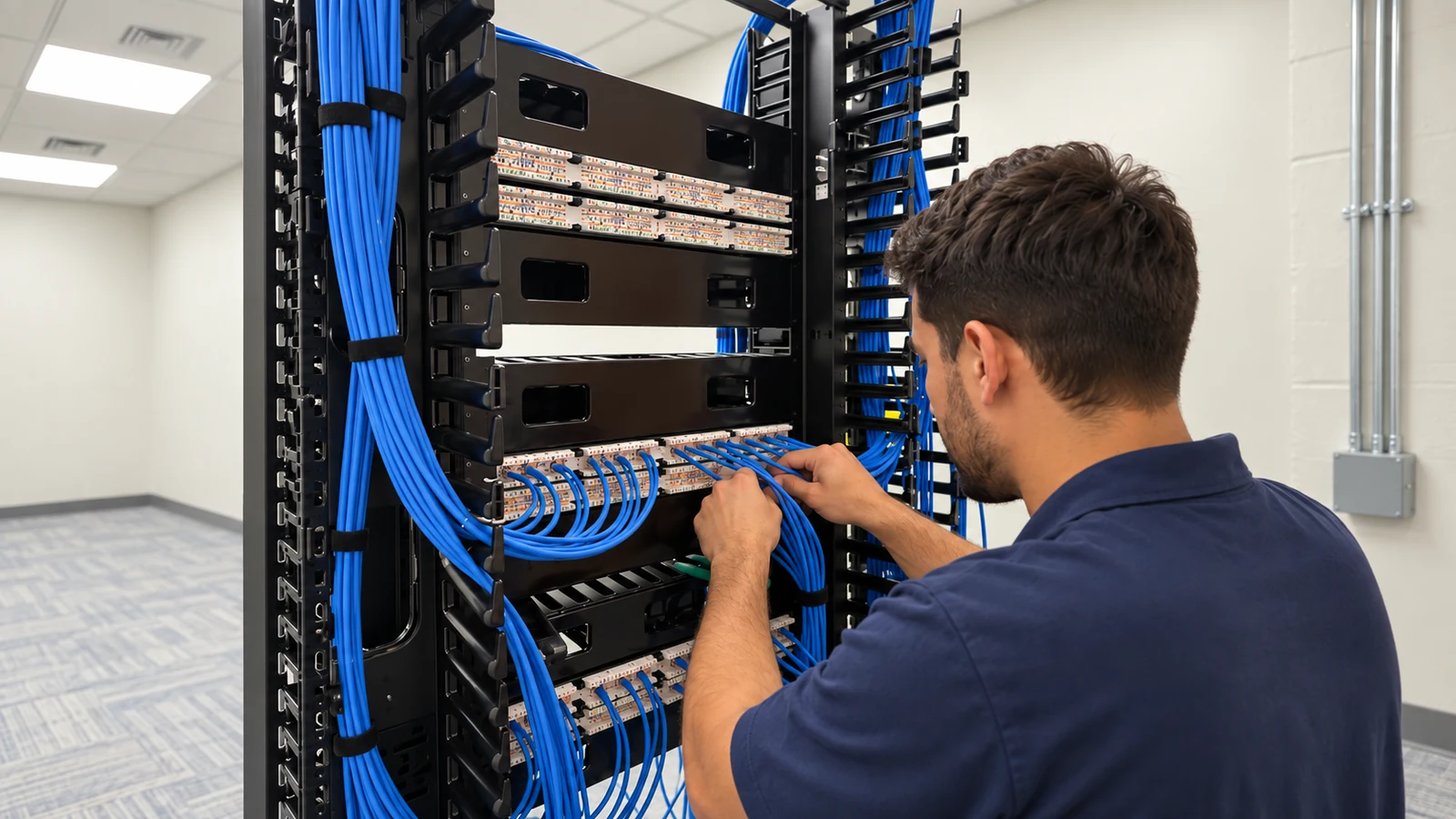
Before installing CCTV, determine whether the system will be analog, IP or hybrid; test coax intended for reuse; confirm recorder and encoder limits; identify camera power; and sequence migration so old and new channels can be accepted without losing required coverage.
A hybrid recorder can keep tested analog cameras online while new IP cameras are added at priority entrances. Reusing coax can reduce construction, but it may limit resolution, power options and future migration if cable condition or recorder compatibility is poor.
Projects are planned around property operations, infrastructure and the people responsible for the system.
Data Pro Communications operates under FL License #EC13016138.
Testing, labeling, credentials and known limitations are organized for the people who will operate and support the system.
Before installing CCTV, determine whether the system will be analog, IP or hybrid; test coax intended for reuse; confirm recorder and encoder limits; identify camera power; and sequence migration so old and new channels can be accepted without losing required coverage.
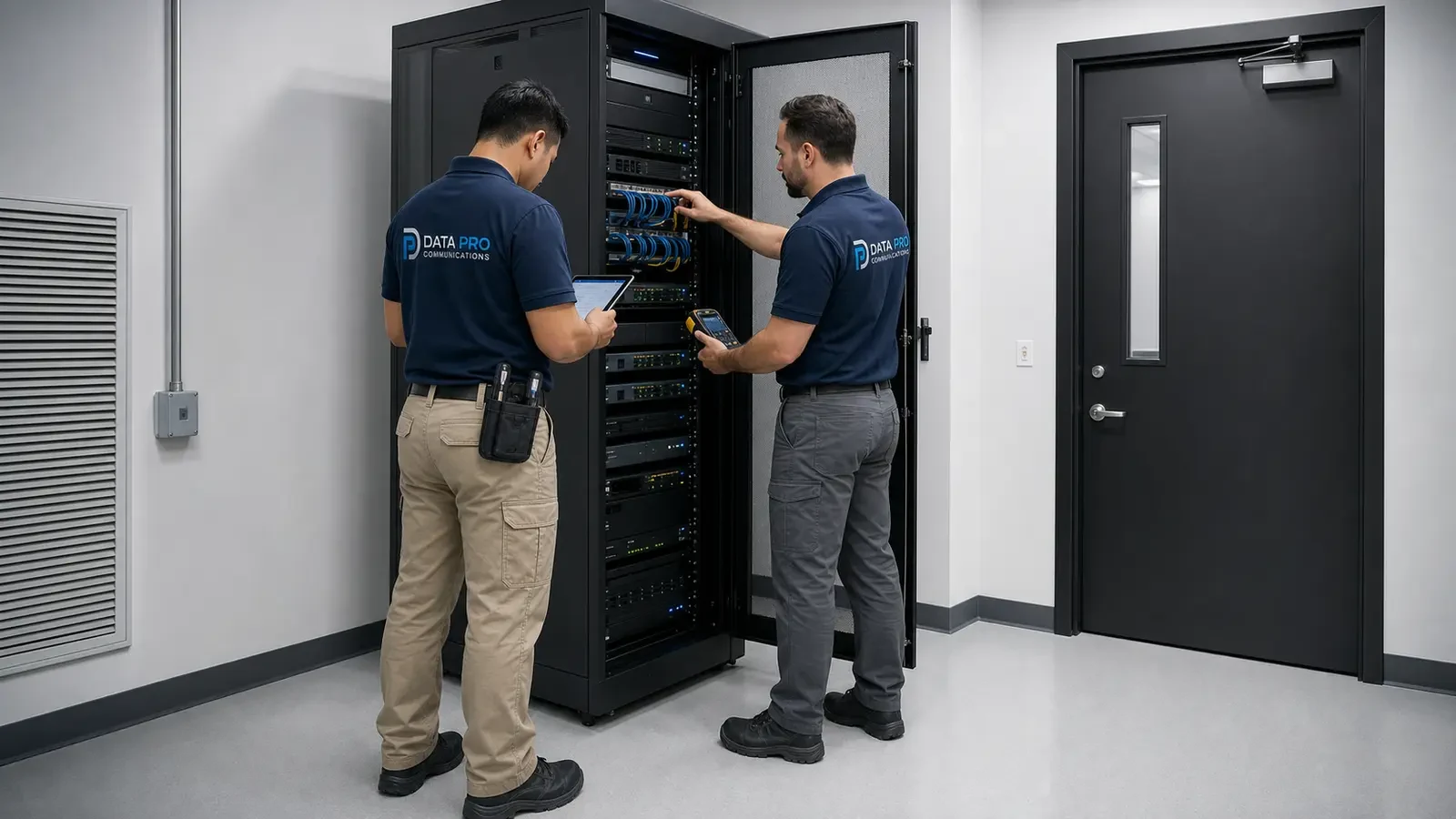
A migration can fail when a field camera is assumed to use Ethernet, coax or conversion hardware that does not match the actual path to the recorder.
Old coax may have damaged shielding, connectors or unknown splices that make reuse unreliable even when continuity is present.
Physical connectors do not guarantee usable capacity; encoder channels, IP licenses and recorder limits can cap how many migrated cameras can operate.
An undersized or unstable camera power method can restart cameras, disable auxiliary features or drop devices after an outage.
A CCTV migration can lose priority coverage when analog channels, encoders, power and recorder capacity are changed in the wrong order.
A mixed analog/IP system can appear complete while timestamps, playback, export or user access behave differently across the two camera types.
Document the owner, signal or data exchanged, timing, permissions, power and network boundary and failure behavior for analog, IP or hybrid signal path; test each system independently and together.
Inspect connectors and cable condition and test each reused coax run before committing it to a new camera or recorder design.
Verify the number of usable analog inputs, encoder channels, IP channels and licenses against the planned camera count before scheduling migration work.
Calculate camera power method from device class, startup and auxiliary load, switch or local capacity, cable loss and backup-power requirements; then test a restart.
Identify which analog, hybrid and IP components change first, how recording remains available during cutover and where temporary compatibility is required between stages.
Play back and export both analog and IP cameras from the hybrid recorder, checking timestamps, user access and expected image quality across the mixed system.
A hybrid recorder can keep tested analog cameras online while new IP cameras are added at priority entrances.
A damaged coax run with unknown splices may cost more to troubleshoot than replacing the path with tested network cabling.
Check analog and IP channel limits, resolution, codec and storage on the recorder before adding warehouse cameras to a hybrid stage.
Confirm whether each retained camera uses local power, PoE, a power supply or an encoder and how that path recovers after interruption.
Move locations or channel groups in controlled stages, verify new recordings and preserve a rollback path for priority coverage.
Test every retained and new channel, timestamp, playback, export and user role after the renovated building's migration stage.
The interface record for analog, IP or hybrid signal path should include system owner, interface, time synchronization, network boundary, power source and acceptance test, ownership on both sides and the response to a failed connection.
Approval of coax condition and reuse requires route length, test results, protection, termination, environmental exposure and service access, plus a test result appropriate to the copper or fiber medium.
Count usable analog inputs, encoder channels and IP licenses or channels before adding migrated cameras; a recorder may have physical connections that exceed its supported active capacity.
Engineering inputs for camera power method include device power class, startup load, switch budget, cable loss, backup power and port behavior; confirm both per-port and total capacity and document restart behavior.
List the channels and signal paths in each stage, temporary dependencies, rollback point and tests required before retired equipment is disconnected.
After a hybrid migration, verify analog and IP cameras together for timestamps, playback, export and user access so the mixed system behaves consistently for the operator.
The comparison for CCTV migration planning should include compatibility with camera power method and migration sequencing only where those systems change reuse, migration or support.
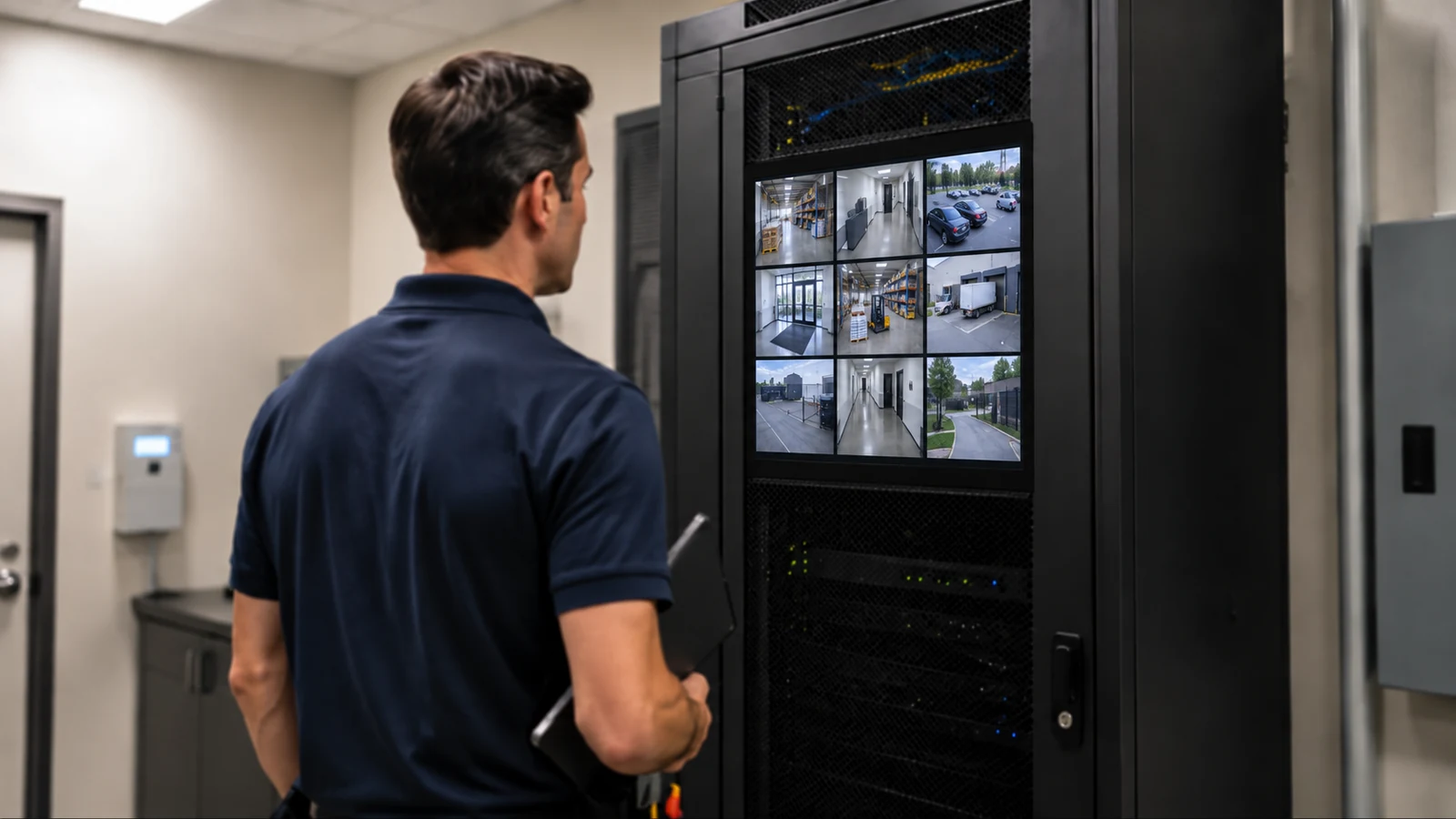
At an Orlando property with existing CCTV, migration planning should begin by tracing the installed signal path and identifying which cameras use coax, IP transport or a hybrid arrangement. Cable condition, camera power, recorder or encoder channel limits and reusable equipment should be verified before deciding which parts can remain and how the cutover should be sequenced.
CCTV migration research often leads to coax reuse, encoder, recorder, PoE and phased-upgrade guidance because hybrid systems depend on what the existing plant can still support.
Camera Services can handle replacement cameras, recorder changes or hybrid configuration after the reuse assessment identifies what the legacy CCTV system can support.
A field assessment can test coax, identify power methods and confirm recorder channel limits before a hybrid migration plan assumes legacy components are reusable.
A buildable project resolves analog, IP or hybrid signal path, coax condition and reuse and encoder or recorder channel limits before field work and closes with verified migration sequencing and hybrid acceptance testing.
Document each camera type, power source, coax or Ethernet path, encoder if present and recorder channel. Hybrid systems need channel-by-channel understanding because similar-looking cameras can depend on different transport.
Verify coax quality, power stability, network links, encoder behavior and recorder compatibility before retaining old infrastructure. Reuse should be based on measured condition and platform support, not simply on the fact that a channel currently displays video.
Plan which channels move first, which remain temporarily on the old recorder and how recording is maintained during the transition. Dependencies such as shared power or encoders should be changed in an order that avoids unnecessary coverage gaps.
Review playback, timestamps and export from both retained and replaced cameras on the final platform. Confirm that hybrid limitations are documented so future service does not assume every channel has the same capabilities.
Cameras Orlando is operated by Data Pro Communications. Florida low-voltage work is performed under FL License #EC13016138.
Analog channels use coax and compatible recorder inputs, IP channels use network transport and often PoE, and hybrid systems require the recorder and acceptance plan to support both.
For coax condition and reuse, trace and label the route, inspect protection and termination, measure distance, use the appropriate copper or fiber test and confirm future service access.
Check supported signal types, channel count, per-channel resolution and codec, aggregate throughput, storage, licensing if applicable and firmware support.
For camera power method, add device and auxiliary load, compare it with switch or local-power capacity, account for cable loss and backup power, and observe restart behavior in CCTV migration planning.
For migration sequencing, move channels or areas in controlled stages, verify each new path before removing the old one and keep a rollback plan for priority views.
Verify every analog and IP channel, camera power, recorder limits, timestamps, playback, export and restart behavior, and confirm that required coverage remained available during migration.
Confirm analog, IP or hybrid signal path, coax condition and reuse, encoder or recorder channel limits and the person who can approve access and field changes.
A migration review should include the person responsible for the legacy recorder, the property contact controlling access and the network or facilities owner who can confirm what infrastructure remains reusable.
Yes. A compatible hybrid recorder or encoder can keep selected analog channels recording while IP cameras are introduced. Verify each new channel and retain a rollback path before disconnecting the older equipment.
Inspect coax condition and connectors, camera power supplies, encoders, DVR or NVR channel limits, supported resolutions and codecs, storage and any network path planned for new IP cameras.
If records or a walkthrough cannot resolve analog, IP or hybrid signal path, coax condition and reuse and encoder or recorder channel limits, request a site survey before installation assumptions become committed labor or hidden work.