
Commercial-First Planning
Projects are planned around property operations, infrastructure and the people responsible for the system.
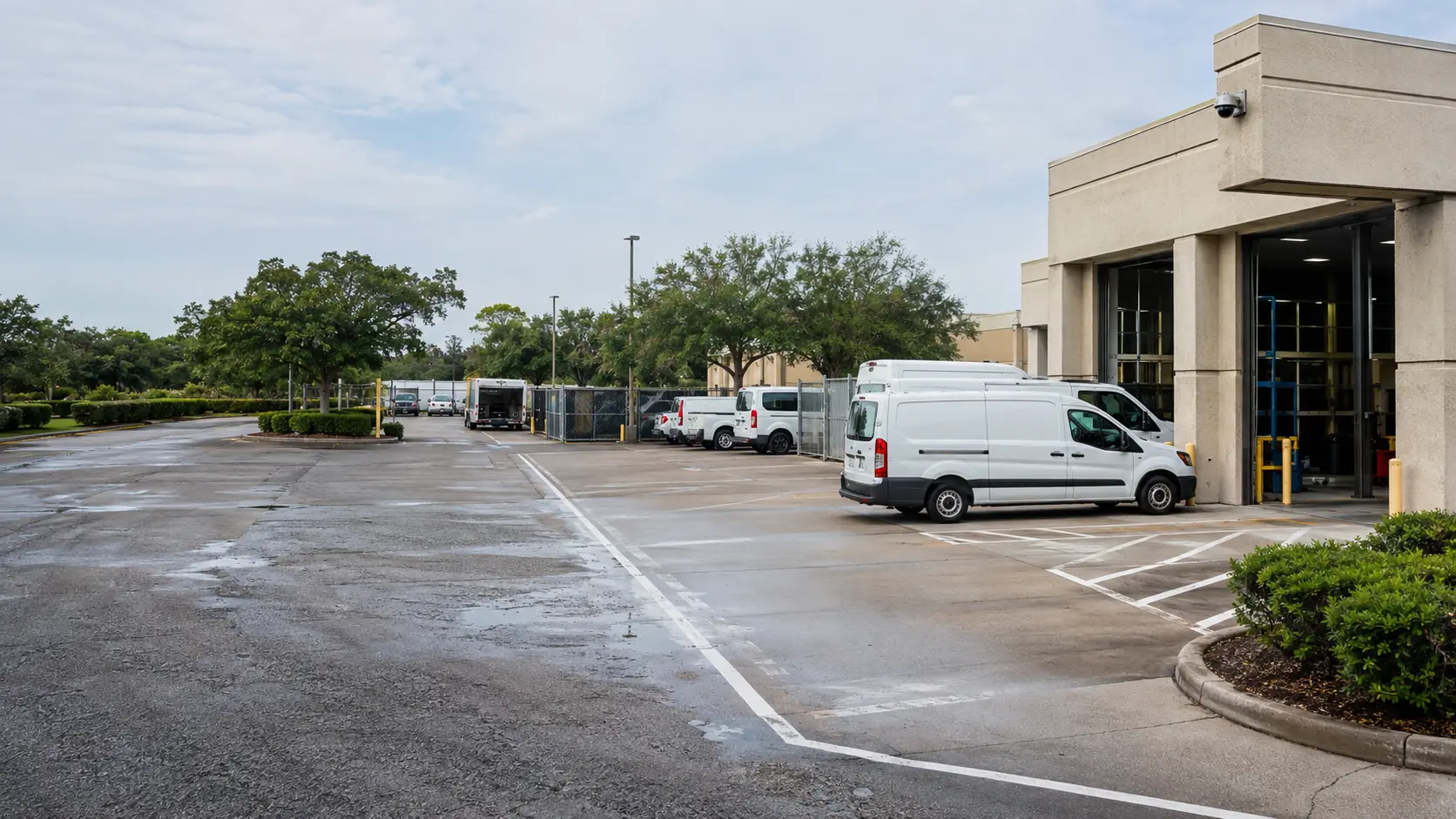
Corridor | Orlando Commercial Security Planning
Plan commercial camera coverage around the property patterns, access points and operating conditions found in and around Holden Avenue. The useful starting point is a site-specific review of property workflow, visibility goals, pathways, recording and the people responsible for the system.
For owners, managers and project teams responsible for service businesses, small warehouses, vehicle-oriented commercial sites, the scope should connect vehicle gates coverage, equipment yards visibility and front-office entries coordination to measurable acceptance checks. Recommendations remain subject to the site survey, compatible infrastructure and the approved project documents.
Projects are planned around property operations, infrastructure and the people responsible for the system.
Data Pro Communications operates under FL License #EC13016138.
Testing, labeling, credentials and known limitations are organized for the people who will operate and support the system.
Holden Avenue properties often involve vehicle gates, equipment yards, customer-facing offices and older exterior pathways. The camera system should remain useful with normal vehicle staging in place and should not depend on damaged conduit, overlength copper or an undocumented hybrid setup.
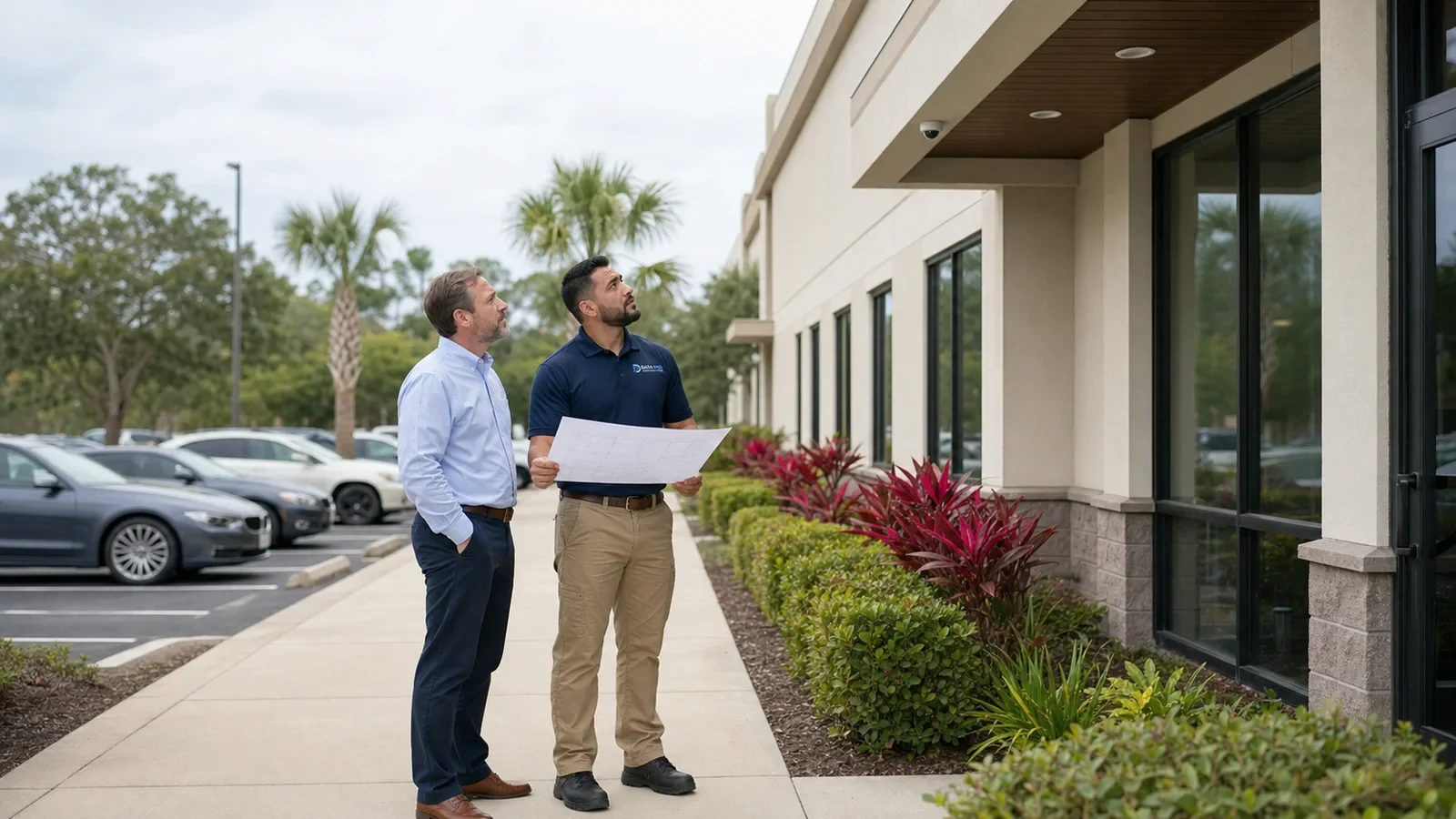
At Holden Avenue, vehicle gates can be missed when a drawing does not reflect vehicle direction, pedestrian crossings, changing light, parked obstructions and the point where identifying detail is required. Walk the approach in use and decide whether the camera must identify a person, follow activity or document an event before fixing the position.
An empty view of equipment yards does not prove it will work during normal activity. Test the Holden Avenue scene with normal equipment positions, stored materials, vehicle movement, lighting and the access point where activity becomes important present and verify that the subject remains usable from entry through exit.
Camera ownership and viewing rights for front-office entries need a named operational owner. At Holden Avenue, confirm door geometry, glazing, customer or staff flow, nearby obstructions and whether the view must identify a person or show general activity, then document who may request footage and who maintains the equipment.
The routes serving storefront and rear access and local network equipment cross conditions typical of service businesses, light-industrial yards, older commercial buildings and vehicle staging. Measure every segment, inspect supports and exposure, and keep junctions reachable for repair.
Recording demand will not be uniform across customer drop-off, work and storage yards and exposed utility paths. Build the Holden Avenue storage estimate from scene activity, bitrate, resolution and recording mode, then test retrieval from the oldest required date.
One convenient corner cannot reliably cover customer drop-off, exposed utility paths and bay and lane activity. At Holden Avenue, place each view around its incident objective and check it with normal obstructions in position.
For Holden Avenue, Map customer and vehicle movement after checking movement, lighting, normal obstructions and the incident detail required along the actual travel path.
At the Holden Avenue property, Keep yard views clear during operations after checking movement, lighting, normal obstructions and the incident detail required along the actual travel path.
The field plan should Inspect existing exterior conduit by relating the work to the property's use, operating schedule and managed areas, then recording the accepted field result.
During design, Connect detached workshops after confirming route length, pathway condition, equipment location, power and service access.
The installation team can Plan a hybrid camera migration by relating the work to the property's use, operating schedule and managed areas, then recording the accepted field result.
Before equipment is finalized, Document outdoor junctions and cabling by reviewing representative scenes and recording the accepted views, camera names, pathways, user roles and known limitations.
Cameras should show vehicle arrival, the service counter approach and the handoff to staff without one distant scene doing every job.
Views need to remain useful when vehicles, materials and equipment occupy their normal positions.
Conduit, fittings and mounting surfaces should be inspected for damage, water exposure and future service access.
Public entry and rear service activity require different detail and may be reviewed by different staff.
Remote work areas may need a protected switch or fiber enclosure rather than an overlength copper run.
Camera positions should be tested with parked vans, open bay doors and active vehicle movement in the scene.
Gate coverage should capture the lane where a vehicle slows, the credential or call point and the gate movement area. Measure camera distance, check headlight and nighttime conditions, and avoid an angle that is routinely blocked by queued vehicles.
Yard views must be tested with trucks, stored materials and equipment in their normal positions. Decide where overview is sufficient and where a closer image is needed, then protect mounts and cabling from vehicle contact and weather.
The customer entrance, service counter approach and staff-only transition may require different views. Confirm storefront light, door geometry, user permissions and a discreet pathway back to the recorder or local switch.
A broad camera at the building may show vehicles entering without preserving identifying detail. Establish a closer capture point based on lane width, speed and lighting, while retaining a separate scene for overall movement when needed.
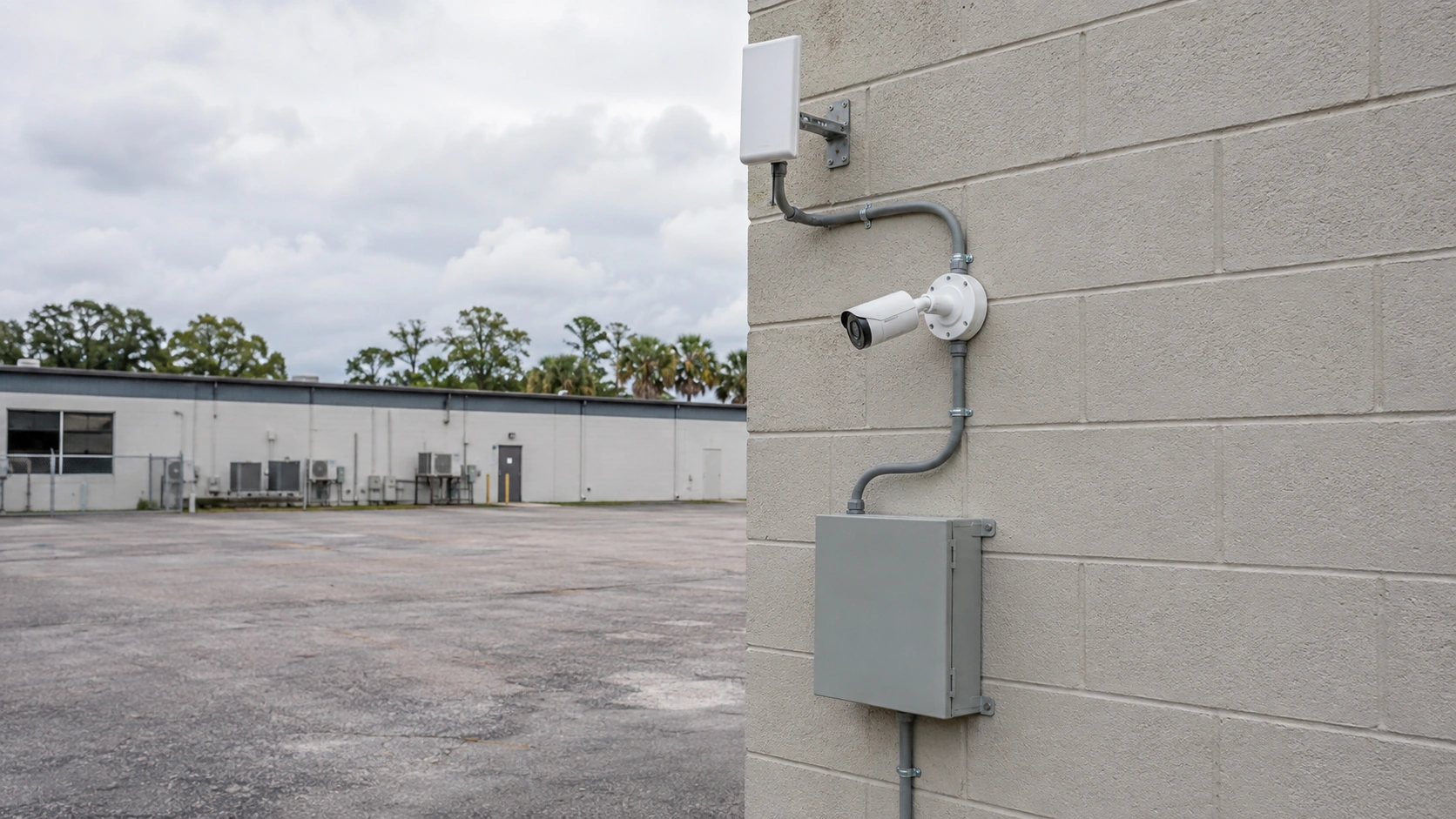
Inspect existing conduit for open fittings, water, impact damage and inaccessible pull points. Where distance or separate structures make copper unsuitable, locate protected power and equipment for a fiber-connected remote switch.
Test gate and yard images with vehicles and equipment in place, then verify front-office playback and any retained analog channels. The handoff should map exterior junctions, remote switches, coax retained for migration and the accounts responsible for exports.
Holden Avenue projects may rely on protected exterior cabling, a switch in a detached workshop or hybrid recording during an analog migration. Integrations should support service operations instead of adding unrelated building systems.
Within the Orlando market, Holden Avenue includes property contexts such as service businesses, small warehouses, vehicle-oriented commercial sites. Camera planning should respond to those actual access, parking, service and infrastructure conditions rather than assuming every property in the area operates the same way.
The Service Areas Hub identifies Holden Avenue as an Orlando corridor and links it to other local commercial contexts.
A site survey can reveal whether older conduit, workshop distance or vehicle staging changes the installation approach.
Camera Services provides hybrid upgrades, recording, troubleshooting and remote viewing for Holden Avenue operations.
The recommendation changes across service businesses, small warehouses, vehicle-oriented commercial sites. Public access, operating hours, vehicle movement, privacy expectations, network ownership and maintenance responsibility should determine which examples and next steps belong on the page.
Review customer drop-off, work yards, bays, rear doors and the condition of exposed pathways along the Holden Avenue property.
Choose camera positions that remain clear during normal vehicle staging and define any detached-workshop network connection.
Coordinate lifts, conduit work and bay access around customer vehicles, shop equipment and active service periods.
Test views with vehicles in place, verify retained coax or switches and document every outdoor junction and remote connection.
Cameras Orlando is operated by Data Pro Communications. Florida low-voltage work is performed under FL License #EC13016138. Final recommendations depend on the approved scope, site conditions and the responsibilities stated in the project documents.
Prioritize customer entry, vehicle drop-off, service counters and the transition to work or storage areas. Each view should answer a defined operational question rather than simply covering the front of the building.
Inspect wall and roof materials, available interior access, exterior conduit condition and the location of electrical or telecom service. Older additions may not share the same pathways as the original building.
Use weather-rated equipment, protected cable routes and mounting positions that remain reachable for service. Lighting, dust, vibration and vehicle movement should be observed before deciding on lens and enclosure.
Yes, but the scenes should be designed separately. The storefront needs customer and entrance detail, while a rear work area may require wider equipment or vehicle context and different user permissions.
Replace it when fittings are open, water intrusion is present, fill is excessive, the route is damaged or access points cannot support a clean pull. New cable should not inherit an unreliable pathway.
A hybrid recorder may support a temporary mix of analog and IP cameras. Check coax condition, power supplies, image quality and the migration schedule so the retained portion does not limit the final system.
Parked vans, trucks and equipment can block low-mounted views. Camera positions should be tested against normal vehicle staging, not an empty lot observed only during the survey.
The answer depends on distance, available power, environmental conditions and the connection back to the main network. A small managed switch or fiber enclosure may be needed in a protected local cabinet.
The work can usually be phased around bays, customer areas and equipment access. Any planned power interruption, lift placement or cable work over active areas should be approved in advance.
Show normal vehicle staging, customer and employee entrances, high-value work or storage zones, existing cable routes and the recorder or network location. Explain which incidents are hardest to investigate today.
Share the property type, your project role, the current condition and the outcome you need. Data Pro Communications can use that context to prepare a focused conversation about vehicle gates coverage, equipment yards visibility and the next responsible field step.