
Commercial-First Planning
Projects are planned around property operations, infrastructure and the people responsible for the system.
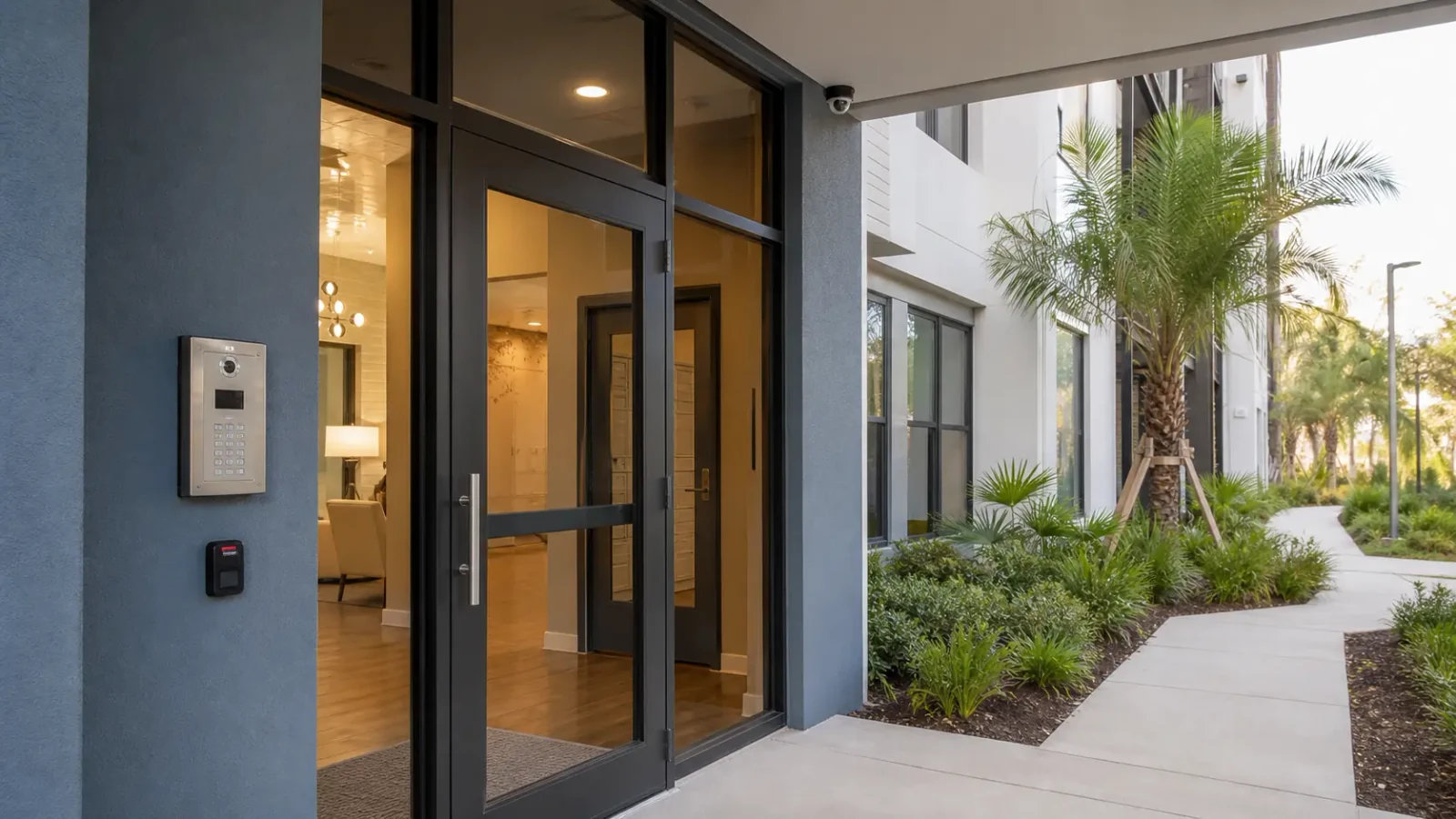
Other Approved Local Context | Orlando Commercial Security Planning
Plan commercial camera coverage around the property patterns, access points and operating conditions found in and around Oak Ridge. The useful starting point is a site-specific review of property workflow, visibility goals, pathways, recording and the people responsible for the system.
For owners, managers and project teams responsible for apartment communities, neighborhood retail, service businesses, the scope should connect community entrances coverage, mail and amenity areas visibility and small commercial lots coordination to measurable acceptance checks. Recommendations remain subject to the site survey, compatible infrastructure and the approved project documents.
Projects are planned around property operations, infrastructure and the people responsible for the system.
Data Pro Communications operates under FL License #EC13016138.
Testing, labeling, credentials and known limitations are organized for the people who will operate and support the system.
Oak Ridge projects may combine community entrances, mail and amenity areas, small commercial lots and equipment accessible from public space. Camera placement should support managed common areas while controlling privacy, vandal exposure and access to recordings.
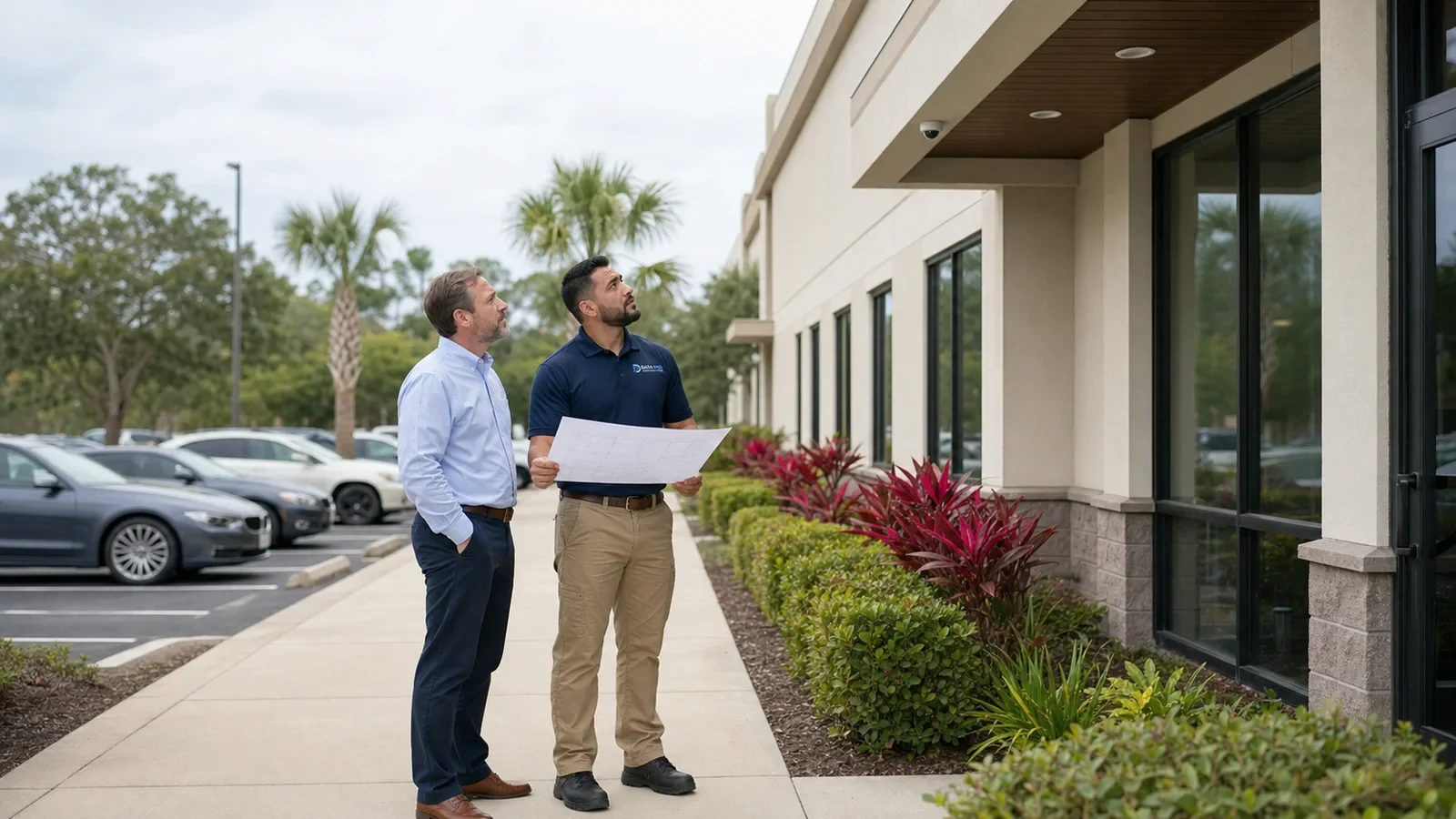
Before approving coverage of community entrances, inspect the scene during representative activity at Oak Ridge. Check door geometry, glazing, customer or staff flow, nearby obstructions and whether the view must identify a person or show general activity, then compare the proposed image with the property's identification or event-review requirement.
Evaluate mail and amenity areas while the area is functioning, because a quiet-site image can hide its weaknesses. At Oak Ridge, check management responsibility, authorized users, privacy boundaries, access times and the specific incident the camera should help review and preserve the required detail across the full travel path.
Before camera positions are finalized for small commercial lots, establish who controls the space and who acts on recorded events. At Oak Ridge, review property ownership, normal movement, lighting, obstructions, access responsibility and the operational detail the camera must preserve and align user permissions with those responsibilities.
Do not assume the existing cable route can support parking and package areas and existing cable routes. The Oak Ridge field review should expose undocumented junctions, weak supports, excessive distance and locations technicians cannot safely reach.
The Oak Ridge team should state how far back it expects to search before recorder capacity is selected. Translate that period into storage using the approved cameras, resolution, bitrate and recording behavior for customer entrances, community entrances and service and staff doors.
At Oak Ridge, the best mounting point is the one that preserves the needed view through real traffic and obstructions. Test separate positions for customer entrances, service and staff doors and role-based video access before settling on quantity or lens choice.
Before equipment is finalized, Focus cameras on managed entrances after reviewing lens, mounting height and direction from the actual approach and confirming the required identification detail.
For Oak Ridge, Cover compact parking and deliveries after checking movement, lighting, normal obstructions and the incident detail required along the actual travel path.
At the Oak Ridge property, Protect residential privacy by defining which areas belong to management, tenants, staff or third parties and assigning viewing rights accordingly.
The field plan should Verify older cable routes after confirming route length, pathway condition, equipment location, power and service access.
During design, Separate commercial and management roles by defining which areas belong to management, tenants, staff or third parties and assigning viewing rights accordingly.
The installation team can Plan phased storefront improvements after reviewing lens, mounting height and direction from the actual approach and confirming the required identification detail.
Close doorway and counter-approach views should support incident review without relying on a broad frontage camera.
Coverage should stay on management-controlled access, parking and shared facilities rather than private homes.
Side and rear doors need usable after-hours detail and a clear relationship to the managed parking area.
Camera angles should show vehicle or delivery approach and the handoff point without collecting unrelated neighboring activity.
Ceiling access, surface conduit and reused telecom closets must be verified before new camera locations are promised.
Retail, property-management and maintenance users should receive only the camera groups tied to their responsibilities.
Determine where vehicles and pedestrians enter, where they slow and what detail management needs from each path. Gate equipment, landscaping, resident queues and nighttime lighting can all affect the usable angle.
Focus cameras on managed entrances, mail equipment and circulation rather than private resident activity. Confirm access hours, privacy boundaries, package or amenity workflows and which property staff may review footage.
A compact lot can be blocked quickly by parked vehicles or neighboring activity. Identify the managed stalls and pedestrian approach, test the scene under normal occupancy and keep the field of view within the business's operational area.
Use separate views when a vehicle entrance and a common pedestrian area require different detail. Establish the decisive point in each scene and avoid spending resolution on open space that does not support an incident review.
Publicly reachable cameras and junctions need impact-resistant housings, protected fasteners and cable routes that cannot be pulled or cut easily. Mounting height must still permit a useful angle and practical maintenance access.
Test vehicle entry, mail or amenity access and small-lot views during normal use. Record privacy boundaries, camera groups, vandal-resistant hardware, user permissions and the locations of any publicly exposed junctions.
Oak Ridge projects may use compact PoE switching, secure remote access and access-control video at management or staff doors. Residential-managed and commercial camera groups should remain separated even when they share a recorder.
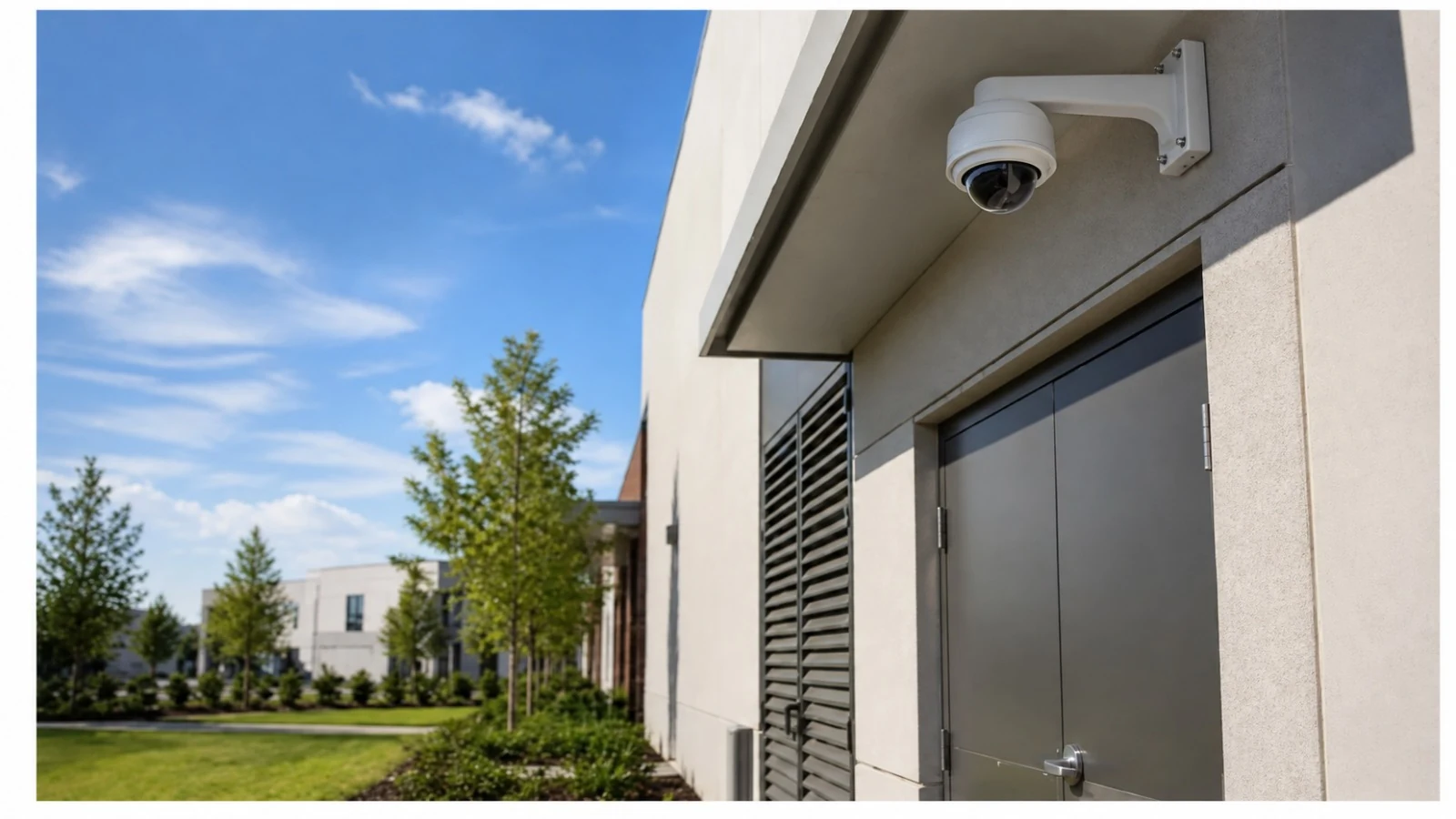
Within the Orlando market, Oak Ridge includes property contexts such as apartment communities, neighborhood retail, service businesses. Camera planning should respond to those actual access, parking, service and infrastructure conditions rather than assuming every property in the area operates the same way.
The Service Areas Hub places Oak Ridge within Orlando's local coverage and links it to nearby corridors and municipalities.
A site survey can resolve compact-property angles, older pathways and boundaries between commercial and managed residential areas.
Camera Services supports recording, remote viewing, upgrades and troubleshooting for Oak Ridge businesses and managed properties.
The recommendation changes across apartment communities, neighborhood retail, service businesses. Public access, operating hours, vehicle movement, privacy expectations, network ownership and maintenance responsibility should determine which examples and next steps belong on the page.
Review Oak Ridge entrances, compact parking, package or service points and the condition of older interior pathways.
Select close operational views and assign user groups for retail, management and maintenance responsibilities.
Phase work by storefront or managed area so customer and resident circulation remains available.
Check delivery, doorway and parking playback, confirm retained cabling and document who controls each camera group.
Cameras Orlando is operated by Data Pro Communications. Florida low-voltage work is performed under FL License #EC13016138. Final recommendations depend on the approved scope, site conditions and the responsibilities stated in the project documents.
Focus on customer entrances, service doors, checkout or counter approaches and the managed parking area. Each view should be close enough for useful detail rather than a broad image of the entire frontage.
Define management-controlled entrances, parking, mail or package areas and shared amenities. Avoid views into homes or private-use areas, and establish who can retrieve footage for documented incidents.
They can when ownership, permissions and camera groups are clearly separated. The recorder and network must support both areas without giving commercial staff access to residential-managed views or the reverse.
Place cameras at vehicle and pedestrian approaches, then confirm whether a second angle is needed for the rear or service side. One high, wide view often loses identification detail near the entrance.
Look for limited ceiling access, reused telecom closets, surface conduit and undocumented cabling. Verify the pathway before assuming a low-cost camera location can be reached cleanly.
Possibly. Confirm recorder support, firmware, secure connectivity, user controls and available upload bandwidth. Remote access should use named accounts rather than shared administrator credentials.
Cover the point where items are left and the path used to enter or exit, while keeping nearby private areas out of view. Lighting and shelf placement should be checked for blocked scenes.
Yes. Work can move by storefront, common area or building section, with ceiling and power interruptions scheduled in advance. Each completed phase should remain functional and documented.
Cable type, length, condition, test results, PoE performance and endpoint labeling determine reuse. Unidentified or damaged cable should not be treated as dependable infrastructure.
Include the address, property type, managed areas, operating hours, current recorder or cameras, recent changes and the specific locations where better visibility is needed.
Share the property type, your project role, the current condition and the outcome you need. Data Pro Communications can use that context to prepare a focused conversation about community entrances coverage, mail and amenity areas visibility and the next responsible field step.