
Commercial-First Planning
Projects are planned around property operations, infrastructure and the people responsible for the system.
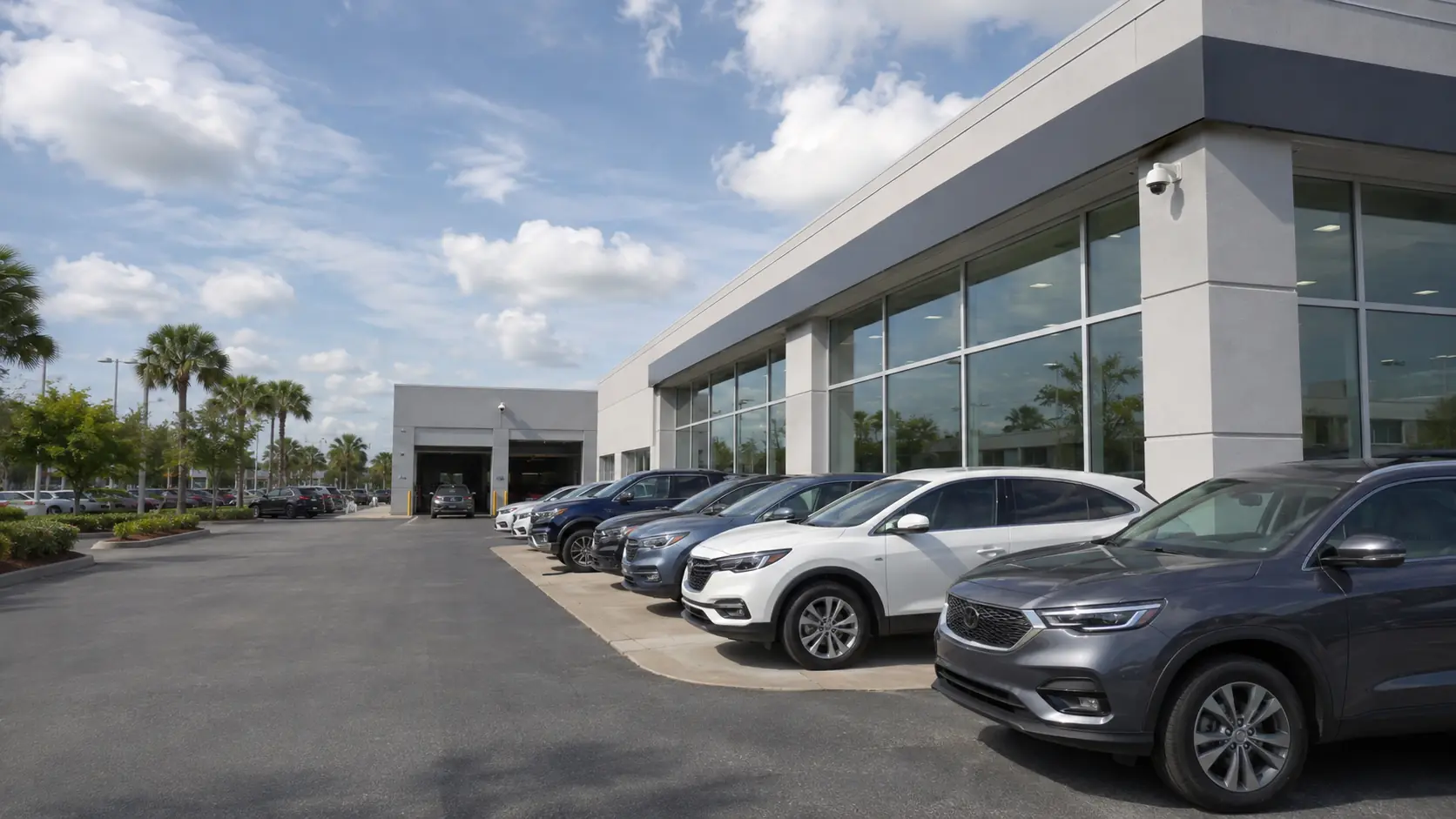
Corridor | Orlando Commercial Security Planning
Plan commercial camera coverage around the property patterns, access points and operating conditions found in and around Orange Blossom Trail. The useful starting point is a site-specific review of property workflow, visibility goals, pathways, recording and the people responsible for the system.
For owners, managers and project teams responsible for auto dealerships, retail strips, lodging and service properties, the scope should connect vehicle displays coverage, motel approaches visibility and rear delivery areas coordination to measurable acceptance checks. Recommendations remain subject to the site survey, compatible infrastructure and the approved project documents.
Projects are planned around property operations, infrastructure and the people responsible for the system.
Data Pro Communications operates under FL License #EC13016138.
Testing, labeling, credentials and known limitations are organized for the people who will operate and support the system.
Orange Blossom Trail properties can involve vehicle displays, lodging approaches, customer parking and rear delivery areas. The design should separate frontage, vehicle-identification and service objectives while accounting for traffic speed, night lighting and exposed exterior pathways.
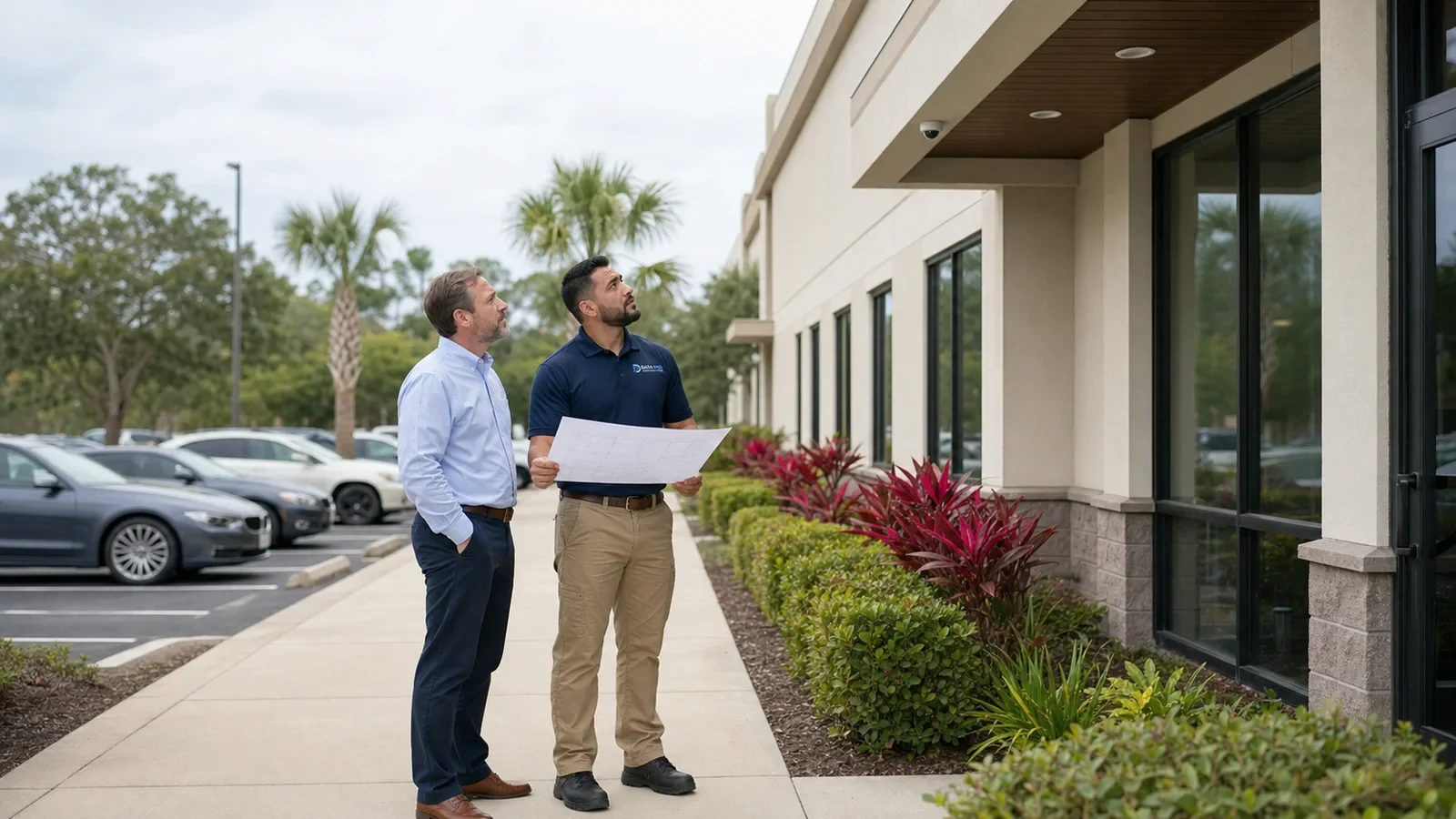
At Orange Blossom Trail, vehicle displays can be missed when a drawing does not reflect vehicle direction, pedestrian crossings, changing light, parked obstructions and the point where identifying detail is required. Walk the approach in use and decide whether the camera must identify a person, follow activity or document an event before fixing the position.
An empty view of motel approaches does not prove it will work during normal activity. Test the Orange Blossom Trail scene with vehicle direction, pedestrian crossings, changing light, parked obstructions and the point where identifying detail is required present and verify that the subject remains usable from entry through exit.
Camera ownership and viewing rights for rear delivery areas need a named operational owner. At Orange Blossom Trail, confirm delivery vehicles, doors, trailers, vendor and staff access, custody handoffs and the people authorized to review footage, then document who may request footage and who maintains the equipment.
The routes serving remote poles and cabinets and parking and pedestrian routes cross conditions typical of long commercial frontages, automotive properties, wide parking lots and outdoor camera positions. Measure every segment, inspect supports and exposure, and keep junctions reachable for repair.
Recording demand will not be uniform across long storefronts, drop-off and service bays and rear yards and gates. Build the Orange Blossom Trail storage estimate from scene activity, bitrate, resolution and recording mode, then test retrieval from the oldest required date.
One convenient corner cannot reliably cover long storefronts, rear yards and gates and central video review. At Orange Blossom Trail, place each view around its incident objective and check it with normal obstructions in position.
For Orange Blossom Trail, Divide long frontages into useful views by relating the work to the property's use, operating schedule and managed areas, then recording the accepted field result.
At the Orange Blossom Trail property, Account for parked vehicles and open bays after checking movement, lighting, normal obstructions and the incident detail required along the actual travel path.
The field plan should Cover gates and rear yards after checking movement, lighting, normal obstructions and the incident detail required along the actual travel path.
During design, Connect remote poles with fiber after confirming route length, pathway condition, equipment location, power and service access.
The installation team can Test headlight and sign glare by relating the work to the property's use, operating schedule and managed areas, then recording the accepted field result.
Before equipment is finalized, Standardize multi-site camera access by defining which areas belong to management, tenants, staff or third parties and assigning viewing rights accordingly.
Entrance identification and frontage context should be split across cameras so detail is not lost over a wide roadside lot.
Views should remain clear with parked vehicles, open bay doors and customer traffic in their normal positions.
Gate, equipment and storage activity needs targeted coverage that does not depend on a distant building corner.
Power, fiber, surge protection and service access must be resolved for cameras away from the main building.
Vehicle approaches and the path to the entrance need complementary views under corridor lighting and headlight glare.
Consistent names, secure links and site-based permissions help operations teams compare events across several OBT properties.
Display inventory and parked vehicles can block one another and change position frequently. Use elevated context views for the lot, reserve closer angles for controlled entry or exit points and protect poles or low equipment from vehicle contact.
Lodging approaches need distinct views for vehicle arrival, pedestrian entry and guest-facing doors. Check canopy lighting, headlight glare, parked obstruction and access permissions for staff responsible for the property.
Rear service coverage should show delivery approach, the receiving door and the handoff zone. Trailer position, waste equipment, staff access and exterior conduit condition determine whether the proposed mount remains useful and serviceable.
Choose an identification point where vehicles slow or stop rather than trying to read detail across a fast roadway. Lane angle, distance, focal length, shutter speed and nighttime illumination should be tested together.
Frontage cameras support customer and inventory context, while rear cameras document delivery and restricted access. Keep their recording settings and user roles aligned with those different purposes and verify the network path to each side of the property.
Test display-lot obstruction, controlled-speed vehicle detail, lodging approaches and an active delivery. Document pole or exterior pathways, recorder settings, representative exports and the staff roles permitted to view frontage and service cameras.
Orange Blossom Trail sites may require fiber to pole cabinets, managed PoE switching and secure multi-site viewing. Gate or staff-door video can be coordinated where useful, but unrelated AV or building systems should remain outside the camera scope.
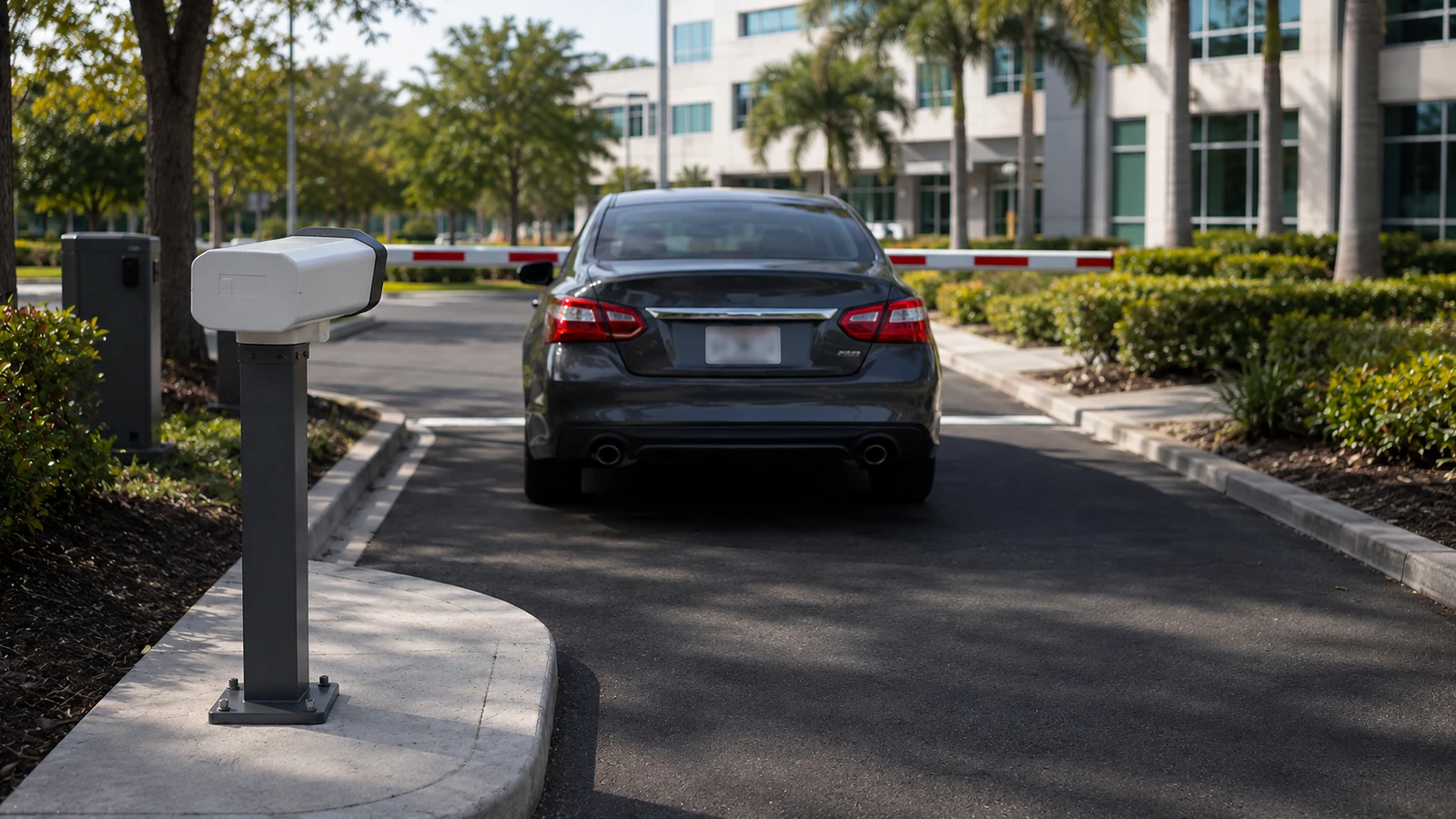
Within the Orlando market, Orange Blossom Trail includes property contexts such as auto dealerships, retail strips, lodging and service properties. Camera planning should respond to those actual access, parking, service and infrastructure conditions rather than assuming every property in the area operates the same way.
The Service Areas Hub identifies Orange Blossom Trail as an Orlando commercial corridor rather than an independent municipality.
A site survey can confirm pole placement, corridor lighting, yard obstructions and fiber requirements across a wide property.
Camera Services supports commercial CCTV, IP cameras, remote viewing and upgrades for OBT retail, automotive and service sites.
The recommendation changes across auto dealerships, retail strips, lodging and service properties. Public access, operating hours, vehicle movement, privacy expectations, network ownership and maintenance responsibility should determine which examples and next steps belong on the page.
Observe Orange Blossom Trail frontage, entries, vehicle staging, bays and yard gates during normal business activity.
Place overview and identification views at predictable vehicle and pedestrian points, then design protected links to remote cameras.
Coordinate pole work, trenching and lifts around customer lanes, service bays and delivery activity.
Test night glare, vehicle blockage and remote-cabinet performance, then record every pole, fiber path and viewing role.
Cameras Orlando is operated by Data Pro Communications. Florida low-voltage work is performed under FL License #EC13016138. Final recommendations depend on the approved scope, site conditions and the responsibilities stated in the project documents.
Divide the frontage into entrance, vehicle approach and parking tasks. A series of purposeful views is more reliable than one camera attempting to identify activity across a wide roadside lot.
Show vehicle entry, customer drop-off, service bays, key or equipment handling and rear-yard access. Parked vehicles and open bay doors should be considered when testing each angle.
Remote mounting may be needed when buildings cannot see the full lot or driveway. Pole ownership, trenching, power, surge protection, fiber and cabinet environment must be resolved before installation.
A camera should view a controlled approach where vehicles slow and occupy a predictable lane. A distant side view of moving traffic is not a substitute for a properly positioned entry camera.
Inspect glare from signs and headlights, dark lot edges and changes between storefront lighting and the roadway. Night testing is important because daytime placement alone cannot show those conditions.
They may support a phased hybrid system if the coax and power are in good condition and the recorder accepts the retained format. Priority views should not be limited by obsolete cameras simply to preserve every run.
Use protected copper within distance limits and fiber for longer backbones or remote cabinets. The network design should keep outdoor links serviceable and isolate camera traffic according to the IT policy.
Schedule trenching, lifts and work near drive lanes in controlled sections, with cones or spotters where required. Service bays and delivery windows should be coordinated with the site manager.
Yes, with secure site connectivity, consistent naming and permissions organized by location. The central team should know who handles local incidents and how footage is exported from each property.
Provide a site plan, normal vehicle staging, entry and exit routes, business hours, outdoor power or conduit information, existing system details and any landlord or shared-parking boundaries.
Share the property type, your project role, the current condition and the outcome you need. Data Pro Communications can use that context to prepare a focused conversation about vehicle displays coverage, motel approaches visibility and the next responsible field step.