
Restaurants Operating Context
Planning follows the way customers, staff, delivery vendors and managers use restaurant and food-service properties, including access patterns, operating periods and the teams responsible for the systems.
Industry Security and Infrastructure Planning
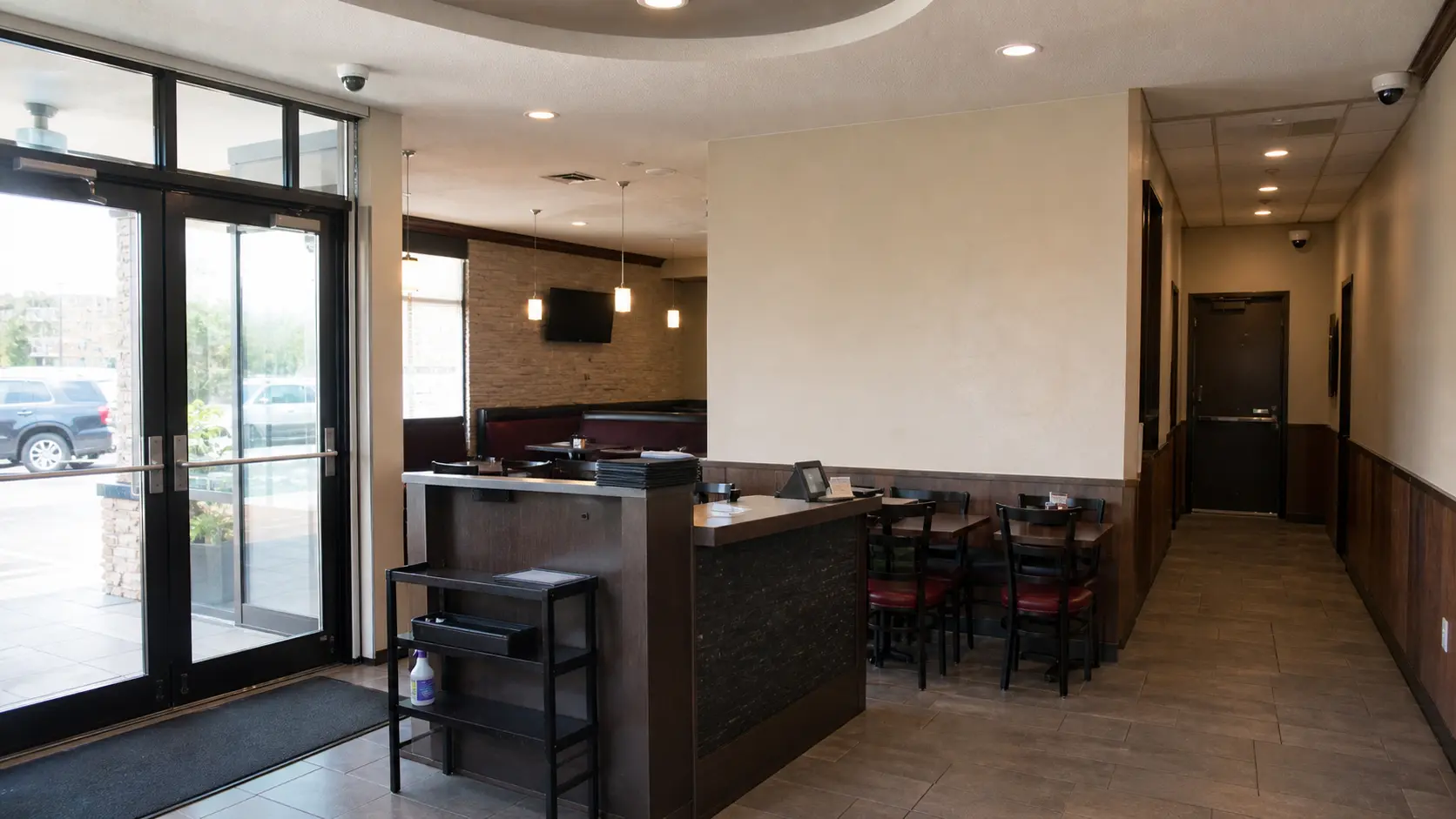
Restaurants projects should reflect how customers, staff, delivery vendors and managers move through and operate restaurant and food-service properties. The useful design starts with the real property areas and workflows, not a generic commercial layout.
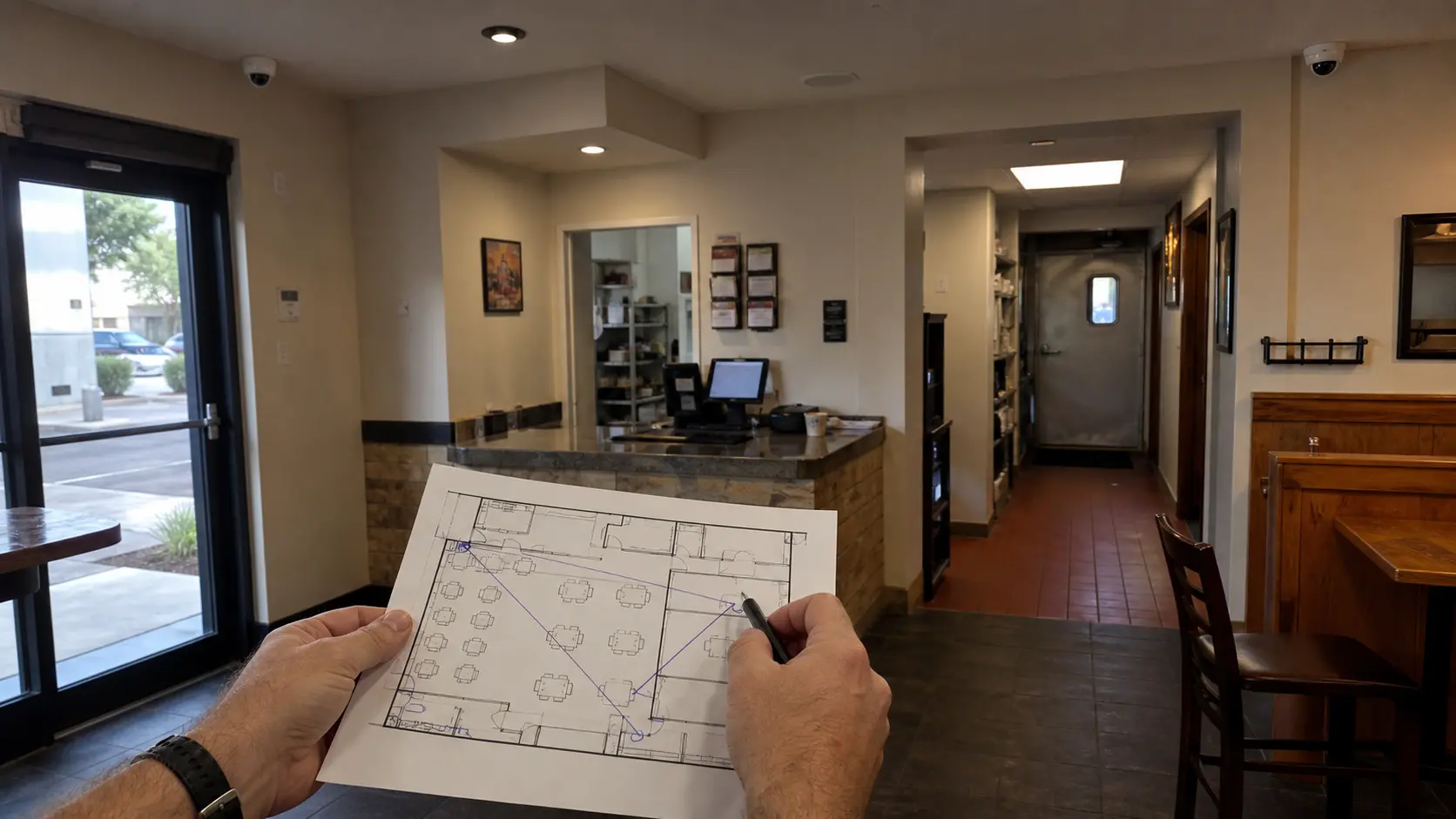
A site survey should verify customer entrances, POS and transaction areas, back doors and deliveries, the supporting infrastructure and the periods when work can occur. The project should also account for late operating hours and heat, grease, steam and cleaning.
Planning follows the way customers, staff, delivery vendors and managers use restaurant and food-service properties, including access patterns, operating periods and the teams responsible for the systems.
Data Pro Communications operates under FL License #EC13016138.
Restaurant handoff records should identify entrances, dining, service and exterior camera locations in terms the operations team uses, with clear notes on recording access and network ownership.
Restaurant and food-service properties require different decisions around customer entrances, POS and transaction areas and back doors and deliveries. The technical plan should also confirm parking or drive-through, kitchen-adjacent conditions and business network and recording while accounting for late operating hours and installation around prep and meal service.
Customer entrances can shift between dine-in, takeout and delivery traffic, especially during peak periods. Check the doorway and host-area view while the restaurant is busy so waiting guests, open doors or promotional displays do not block the context needed at entry.
POS and transaction areas need useful incident context without creating unnecessarily intrusive views. Confirm terminal locations, cashier orientation, customer queues and the detail management expects to review before camera positions are finalized.
Back doors and delivery entrances are used by staff, vendors and couriers outside the customer flow. Verify delivery times, door hardware, exterior lighting and where goods are staged so these openings have appropriate coverage and controlled access.
Parking or drive-through areas can be obscured by vehicles and are often more challenging after dark. Review approach lanes, menu-board or canopy obstructions, pedestrian routes and lighting at operating hours rather than relying on daytime empty-lot views.
Kitchen-adjacent locations expose devices and cabling to heat, grease, steam and frequent cleaning. Confirm environmental exposure and maintenance access before selecting a mounting point, and keep equipment out of locations where normal sanitation will repeatedly contaminate it.
Business networks and recording systems often share limited infrastructure with POS, guest Wi-Fi or back-office devices. Confirm bandwidth, switch capacity, remote-access ownership and retention requirements with the restaurant's IT or service provider before adding surveillance traffic.
Use Customer Entrances as a defined operating requirement, not a generic checklist item. The restaurant operator should be able to point to the location, user group and expected result. For restaurants, relate the decision to customer flow, POS context, back-door activity, kitchen-adjacent exposure and late-hour exterior conditions.
Tie Pos And Transaction Areas to customer/service movement. That means confirming the physical location, supporting pathway or network and the person responsible after turnover. For restaurants, relate the decision to customer flow, POS context, back-door activity, kitchen-adjacent exposure and late-hour exterior conditions.
For Back Doors And Deliveries, start with the people who use quick-service restaurants, full-service dining, multi-unit food-service locations: owners, district managers, loss-prevention teams and operations leaders. The implementation should support their real workflow and remain serviceable after installation. For restaurants, relate the decision to customer flow, POS context, back-door activity, kitchen-adjacent exposure and late-hour exterior conditions.
Make Parking Or Drive-Through specific enough to test in the field. Record the approved location or configuration, then verify it under representative property conditions. For restaurants, relate the decision to customer flow, POS context, back-door activity, kitchen-adjacent exposure and late-hour exterior conditions.
Coordinate Kitchen-Adjacent Conditions with the existing infrastructure and the restaurant operator. If a field condition changes the approved approach, document the decision before concealed or irreversible work continues. For restaurants, relate the decision to customer flow, POS context, back-door activity, kitchen-adjacent exposure and late-hour exterior conditions.
The project should leave Business Network And Recording understandable to operations, not only to the installer. Use clear naming, ownership and acceptance criteria tied to the property. For restaurants, relate the decision to customer flow, POS context, back-door activity, kitchen-adjacent exposure and late-hour exterior conditions.
Customer Entrances matters differently in quick-service restaurants when the area is busy, obstructed or used after hours. The field review should reproduce those conditions before final acceptance. For restaurants, relate the decision to customer flow, POS context, back-door activity, kitchen-adjacent exposure and late-hour exterior conditions.
Full-Service Dining And Multi-Unit Food-Service Locations should use Pos And Transaction Areas to answer a specific operational question. Define that question first, then choose the view, pathway, permission or network interface needed to support it. For restaurants, relate the decision to customer flow, POS context, back-door activity, kitchen-adjacent exposure and late-hour exterior conditions.
Quick-Service Restaurants can change how Back Doors And Deliveries is used because access patterns and staffing are not identical across the property. The design should reflect customer/service movement. For restaurants, relate the decision to customer flow, POS context, back-door activity, kitchen-adjacent exposure and late-hour exterior conditions.
Parking Or Drive-Through matters differently in full-service dining and multi-unit food-service locations when the area is busy, obstructed or used after hours. The field review should reproduce those conditions before final acceptance. For restaurants, relate the decision to customer flow, POS context, back-door activity, kitchen-adjacent exposure and late-hour exterior conditions.
Quick-Service Restaurants should use Kitchen-Adjacent Conditions to answer a specific operational question. Define that question first, then choose the view, pathway, permission or network interface needed to support it. For restaurants, relate the decision to customer flow, POS context, back-door activity, kitchen-adjacent exposure and late-hour exterior conditions.
Full-Service Dining And Multi-Unit Food-Service Locations can change how Business Network And Recording is used because access patterns and staffing are not identical across the property. The design should reflect customer/service movement. For restaurants, relate the decision to customer flow, POS context, back-door activity, kitchen-adjacent exposure and late-hour exterior conditions.
Check Customer Entrances before procurement or concealed work. A mismatch here can change mounting, cabling, network capacity, storage or service access at quick-service restaurants, full-service dining, multi-unit food-service locations. For restaurants, relate the decision to customer flow, POS context, back-door activity, kitchen-adjacent exposure and late-hour exterior conditions.
Validate Pos And Transaction Areas under representative customer/service movement, not only from drawings. The final record should capture the installed condition and any limitation that remains. For restaurants, relate the decision to customer flow, POS context, back-door activity, kitchen-adjacent exposure and late-hour exterior conditions.
For Back Doors And Deliveries, document the supporting infrastructure and acceptance method so a future technician can distinguish a design choice from an unresolved field condition. For restaurants, relate the decision to customer flow, POS context, back-door activity, kitchen-adjacent exposure and late-hour exterior conditions.
Before installation, verify the physical and technical requirements behind Parking Or Drive-Through: location, pathway, power/network interface and the person who owns changes after handoff. For restaurants, relate the decision to customer flow, POS context, back-door activity, kitchen-adjacent exposure and late-hour exterior conditions.
Confirm Kitchen-Adjacent Conditions in the field against prep, meal and cleaning windows. Record any distance, capacity, environmental or access condition that can change the proposed design. For restaurants, relate the decision to customer flow, POS context, back-door activity, kitchen-adjacent exposure and late-hour exterior conditions.
Business Network And Recording needs an explicit technical owner. The restaurant operator should know which infrastructure it depends on and what test will show that the requirement is satisfied. For restaurants, relate the decision to customer flow, POS context, back-door activity, kitchen-adjacent exposure and late-hour exterior conditions.
Restaurant cameras, Wi-Fi and POS equipment may occupy the same telecom area, but security traffic should follow an IT-approved segment and switch plan. Guest Wi-Fi and administrative security access should remain operationally separated.
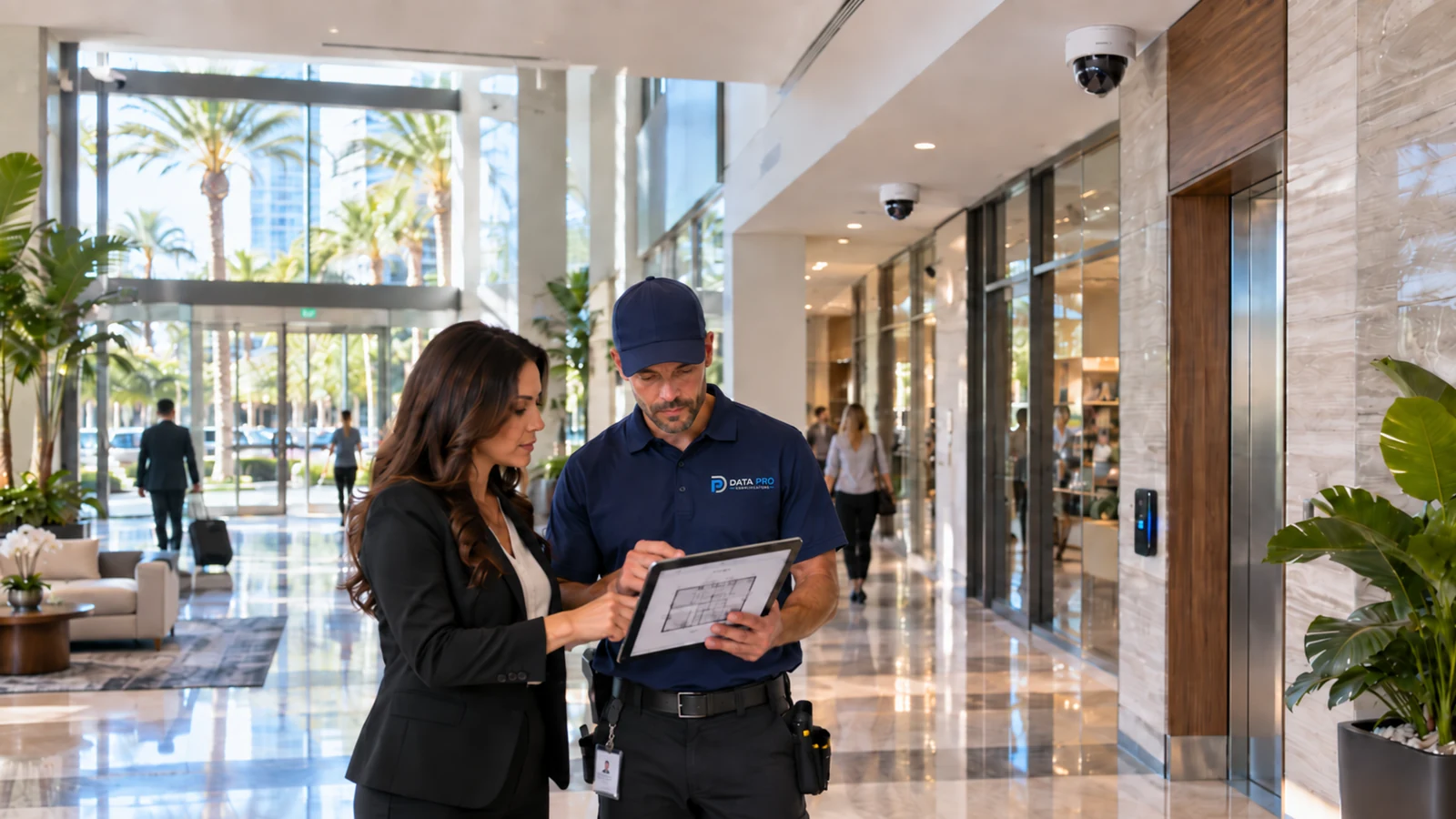
For Orlando restaurant and food-service properties, the meaningful design inputs come from the property itself: customer entrances, POS and transaction areas, back doors and deliveries, infrastructure ownership and operating schedule. Orlando identifies the service market; it does not replace a field review.
Use the hub to compare restaurant operations with retail, hospitality and other customer-facing properties.
A restaurant survey can verify POS context, service doors, parking or drive-through conditions, kitchen-adjacent exposure and IT ownership.
Camera and Network services are relevant when recording, remote access, switching or PoE requires deeper technical work.
Quick-service restaurants, full-service dining and multi-unit food-service locations can use similar equipment but differ in layout, operating schedule and infrastructure ownership. The recommendation should follow those differences, especially late operating hours and installation around prep and meal service.
Walk the property with the responsible restaurants stakeholders and document customer entrances, POS and transaction areas, back doors and deliveries and the existing systems that may be reused.
Confirm the technical plan for parking or drive-through, kitchen-adjacent conditions and business network and recording, including ownership, pathways and the acceptance checks needed before field work begins.
Schedule work around meal periods, deliveries, kitchen activity and late operating hours. Cabling or network changes near POS and back-of-house systems should be coordinated so restaurant operations remain available.
Validate customer entrances, pos and transaction areas and representative back doors and deliveries conditions, then confirm recording or connectivity, user permissions and the documentation the restaurants operating team will use after turnover.
Data Pro Communications - South Orlando is operated by Data Pro Communications. Florida low-voltage work is performed under FL License #EC13016138. Final recommendations depend on the approved scope, site conditions and the responsibilities stated in the project documents.
Review customer arrival, host or counter positions, lighting and after-hours use. The goal should be a useful view of the entrance workflow without relying on one camera to cover the entire dining operation.
Define the operational reason for coverage and position cameras to provide context without obstructing staff or relying on unreadable screen detail. Network and recording systems should remain separated from POS responsibilities unless explicitly approved.
Review delivery schedules, staff access, dumpsters or service alleys, lighting and door hardware. These areas often operate differently from the customer entrance and need their own view and access workflow.
Vehicle paths, queue direction, menu or pickup areas, exterior lighting and property boundaries all matter. The camera position should be selected for the event the operator needs to review.
Yes. Heat, grease, steam, cleaning practices and physical obstructions can make some mounting locations unsuitable. Cameras should not be placed where the environment will quickly degrade the view or serviceability.
They may share switching or telecom space when approved, but network segmentation, bandwidth and account ownership should be defined. Guest Wi-Fi and POS environments should not be treated as interchangeable with surveillance.
Yes. Cabling, ceiling work and network changes can be planned outside meal peaks or after closing. Delivery and kitchen schedules should also be considered when selecting work windows.
Trying to cover the entrance, dining room, POS, back door and parking with too few viewpoints can leave important events ambiguous. Each area should be tied to a specific review need.
Verify representative views in daytime and evening conditions, recording, playback, remote access and user permissions. Confirm that staff know which account owns the system and how to request service.
Review customer entrances, transaction areas, back doors and deliveries, parking or drive-through, kitchen-adjacent conditions, telecom infrastructure and the operating windows available for installation.
Tell us the restaurant format, operating hours, entrances, parking or drive-through areas and any existing camera or network issues. We can use those details to plan the survey around real food-service operations.