Commercial Security Camera Systems for Security Guards in Orlando
Security Guards projects should reflect how guards, supervisors, visitors, vendors and property staff move through and operate guarded and monitored commercial properties. The useful design starts with the real property areas and workflows, not a generic commercial layout.
A site survey should verify guard posts, patrol routes, entrances and parking, the supporting infrastructure and the periods when work can occur. The project should also account for defined escalation procedures and role-based permissions.
Planning follows the way guards, supervisors, visitors, vendors and property staff use guarded and monitored commercial properties, including access patterns, operating periods and the teams responsible for the systems.
Florida Low-Voltage License
Data Pro Communications operates under FL License #EC13016138.
Documented System Handoff
Guard-support documentation should identify which camera views, door events and playback tools support posts, patrols and incident review, while keeping staffing and escalation procedures under the security provider’s own operating plan.
Planning Security and Low-Voltage Systems for Security Guards
Guarded and monitored commercial properties require different decisions around guard posts, patrol routes and entrances and parking. The technical plan should also confirm incident verification, recording search and permissions and remote monitoring ownership while accounting for defined escalation procedures and camera coverage that complements patrols.
Operational Risks to Address for Security Guards
Unclear Guard Posts
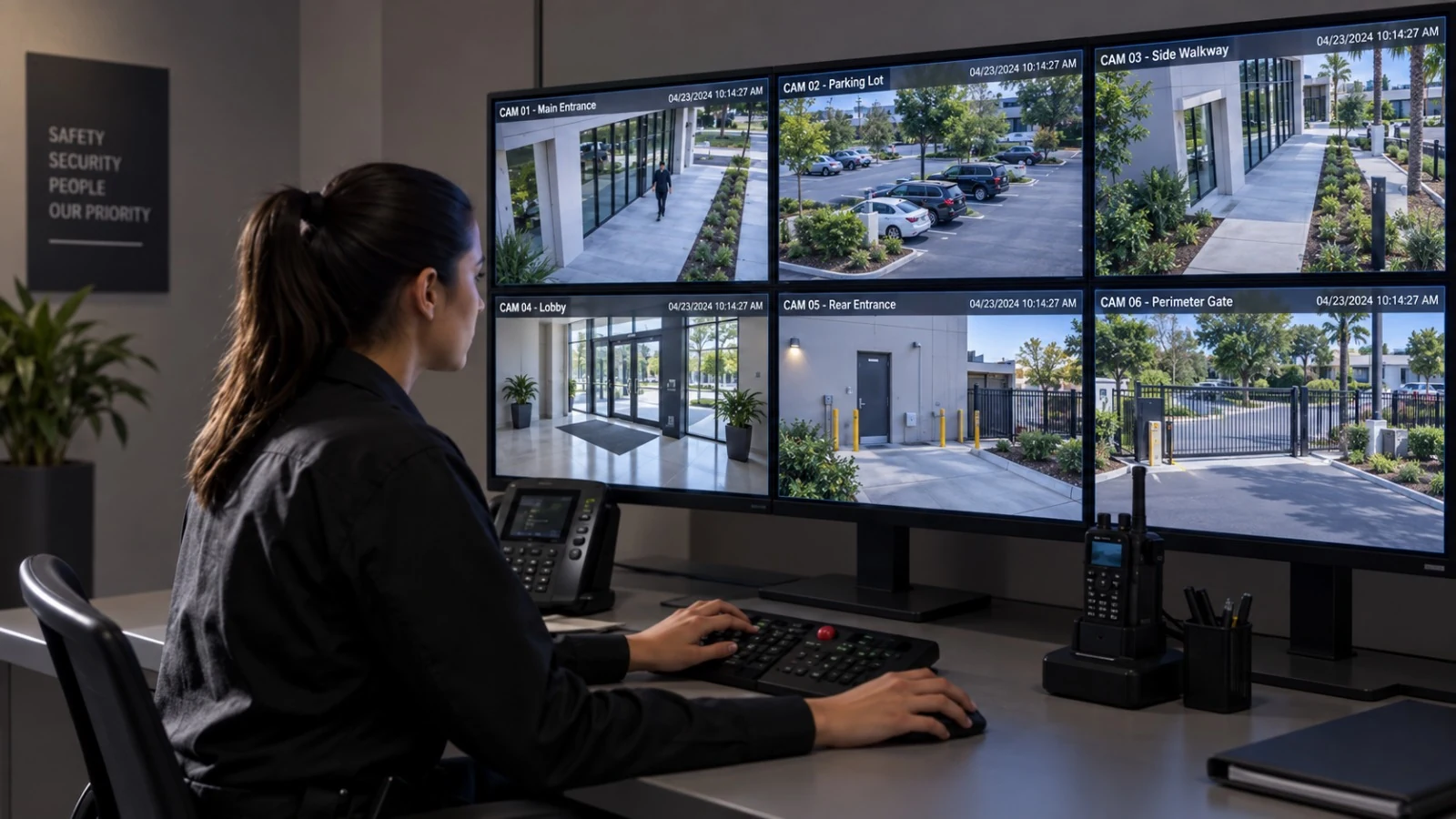
A guard post is only useful as a technology point if the officer can see and retrieve the information needed during an incident. Confirm monitor placement, live-view layouts, radio or dispatch workflow and account permissions at each post before deciding what systems should be presented there.
Incomplete Patrol Routes
Patrol routes change the value of fixed cameras because officers may need to verify areas before entering them or review what happened between rounds. Walk typical patrol paths and identify the locations where remote video, intercom or access information would materially support the guard workflow.
Uncoordinated Entrances And Parking
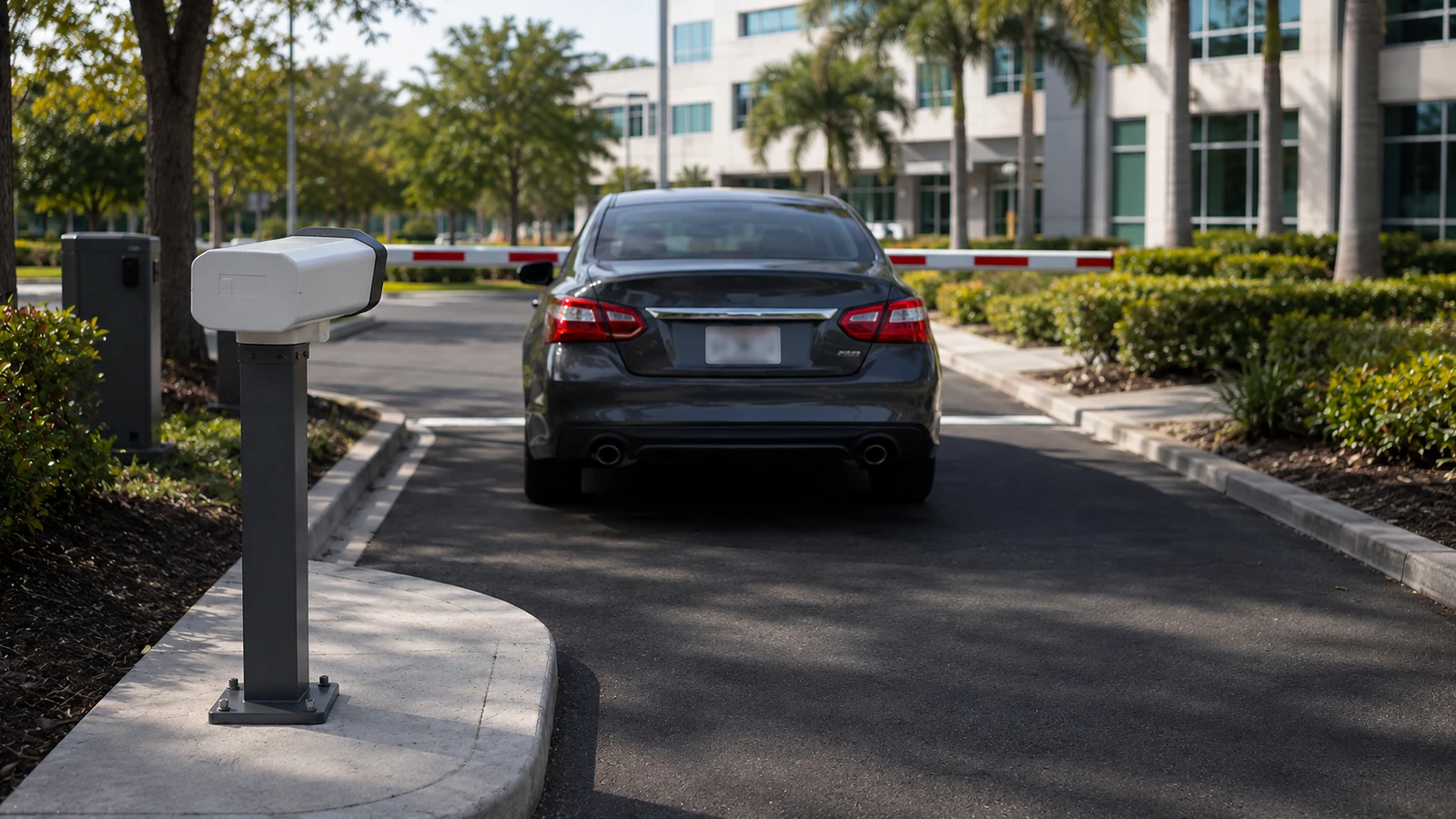
Entrances and parking areas should support both routine observation and incident follow-up. Check how guards monitor vehicle and pedestrian movement, where handoffs occur between posts and patrols, and whether exterior lighting allows useful review after dark.
Unsupported Incident Verification
Incident verification breaks down when guards cannot quickly match an alarm, door event or report to the correct camera. Standardize device names, map related views and verify search steps with the officers who will use the system under time pressure.
Poorly Located Recording Search And Permissions
Recording search and permissions can delay response if guard accounts cannot access the needed footage or if too many users share administrator credentials. Confirm role-based access, export rights, retention and escalation paths before the system is handed over.
Undocumented Remote Monitoring Ownership
Remote monitoring needs a clearly identified owner for contacts, schedules and escalation rules. Verify who maintains the monitoring roster, who can authorize changes and what happens when property staff, guard vendors or management contacts change.
What the Security Guards Project Should Coordinate
Plan Guard Posts
Coordinate Guard Posts with the existing infrastructure and the security manager. If a field condition changes the approved approach, document the decision before concealed or irreversible work continues. For guard-supported properties, the result should help a guard or supervisor verify an event, search recording and follow the defined escalation procedure.
Validate Patrol Routes
The project should leave Patrol Routes understandable to operations, not only to the installer. Use clear naming, ownership and acceptance criteria tied to the property. For guard-supported properties, the result should help a guard or supervisor verify an event, search recording and follow the defined escalation procedure.
Coordinate Entrances And Parking
Use Entrances And Parking as a defined operating requirement, not a generic checklist item. The security manager should be able to point to the location, user group and expected result. For guard-supported properties, the result should help a guard or supervisor verify an event, search recording and follow the defined escalation procedure.
Define Incident Verification
Tie Incident Verification to guard and patrol workflow. That means confirming the physical location, supporting pathway or network and the person responsible after turnover. For guard-supported properties, the result should help a guard or supervisor verify an event, search recording and follow the defined escalation procedure.
Test Recording Search And Permissions
For Recording Search And Permissions, start with the people who use commercial offices, multi-tenant buildings, managed business properties: business owners, facility managers, security leaders and project teams. The implementation should support their real workflow and remain serviceable after installation. For guard-supported properties, the result should help a guard or supervisor verify an event, search recording and follow the defined escalation procedure.
Document Remote Monitoring Ownership
Make Remote Monitoring Ownership specific enough to test in the field. Record the approved location or configuration, then verify it under representative property conditions. For guard-supported properties, the result should help a guard or supervisor verify an event, search recording and follow the defined escalation procedure.
Security Guards Use Cases and Operating Areas
Guarded Offices: Guard Posts
For guarded offices, treat Guard Posts as part of the operating environment. Check sightlines, access, infrastructure and serviceability under the conditions that occur during normal use. For guard-supported properties, the result should help a guard or supervisor verify an event, search recording and follow the defined escalation procedure.
Managed Properties And Monitored Parking Or Service Areas: Patrol Routes
At managed properties and monitored parking or service areas, a useful plan for Patrol Routes connects location and system behavior to an owner workflow. Avoid copying the same placement from another property type. For guard-supported properties, the result should help a guard or supervisor verify an event, search recording and follow the defined escalation procedure.
Guarded Offices: Entrances And Parking
In guarded offices, Entrances And Parking should support a recognizable operating task rather than broad surveillance. Place or configure it around the people and activity the security manager actually needs to review. For guard-supported properties, the result should help a guard or supervisor verify an event, search recording and follow the defined escalation procedure.
Managed Properties And Monitored Parking Or Service Areas: Incident Verification
For managed properties and monitored parking or service areas, treat Incident Verification as part of the operating environment. Check sightlines, access, infrastructure and serviceability under the conditions that occur during normal use. For guard-supported properties, the result should help a guard or supervisor verify an event, search recording and follow the defined escalation procedure.
Guarded Offices: Recording Search And Permissions
At guarded offices, a useful plan for Recording Search And Permissions connects location and system behavior to an owner workflow. Avoid copying the same placement from another property type. For guard-supported properties, the result should help a guard or supervisor verify an event, search recording and follow the defined escalation procedure.
Managed Properties And Monitored Parking Or Service Areas: Remote Monitoring Ownership
In managed properties and monitored parking or service areas, Remote Monitoring Ownership should support a recognizable operating task rather than broad surveillance. Place or configure it around the people and activity the security manager actually needs to review. For guard-supported properties, the result should help a guard or supervisor verify an event, search recording and follow the defined escalation procedure.
Technical Conditions to Confirm Before Installation
Guard Posts
Before installation, verify the physical and technical requirements behind Guard Posts: location, pathway, power/network interface and the person who owns changes after handoff. For guard-supported properties, the result should help a guard or supervisor verify an event, search recording and follow the defined escalation procedure.
Patrol Routes
Confirm Patrol Routes in the field against verification and escalation ownership. Record any distance, capacity, environmental or access condition that can change the proposed design. For guard-supported properties, the result should help a guard or supervisor verify an event, search recording and follow the defined escalation procedure.
Entrances And Parking
Entrances And Parking needs an explicit technical owner. The security manager should know which infrastructure it depends on and what test will show that the requirement is satisfied. For guard-supported properties, the result should help a guard or supervisor verify an event, search recording and follow the defined escalation procedure.
Incident Verification
Check Incident Verification before procurement or concealed work. A mismatch here can change mounting, cabling, network capacity, storage or service access at commercial offices, multi-tenant buildings, managed business properties. For guard-supported properties, the result should help a guard or supervisor verify an event, search recording and follow the defined escalation procedure.
Recording Search And Permissions
Validate Recording Search And Permissions under representative guard and patrol workflow, not only from drawings. The final record should capture the installed condition and any limitation that remains. For guard-supported properties, the result should help a guard or supervisor verify an event, search recording and follow the defined escalation procedure.
Remote Monitoring Ownership
For Remote Monitoring Ownership, document the supporting infrastructure and acceptance method so a future technician can distinguish a design choice from an unresolved field condition. For guard-supported properties, the result should help a guard or supervisor verify an event, search recording and follow the defined escalation procedure.
System Integration and Ownership Boundaries
Guard operations can use live video, playback and door-event context, but technology should not redefine staffing or escalation procedures. The customer must own the response workflow, account permissions and any remote-monitoring connection.
Planning for Orlando Properties
For Orlando guarded and monitored commercial properties, the meaningful design inputs come from the property itself: guard posts, patrol routes, entrances and parking, infrastructure ownership and operating schedule. Orlando identifies the service market; it does not replace a field review.
Operational Recommendations
Prioritize guard posts and patrol routes first, then confirm recording search and permissions before equipment is finalized. Plan installation around role-based permissions so the project fits normal operations.
Document responsibilities for incident verification and remote monitoring ownership so operations, IT and service teams know who owns changes after handoff.
Related Services and Next Decisions
Explore Industry Solutions
Use the hub when the guarded property also needs industry-specific guidance for its actual business type.
Request a Site Survey
A security-operations survey can map guard posts, patrol routes, incident areas, entrances and parking to the camera views staff need.
View Camera and Integrated Solutions
Camera Services is relevant for recording, remote viewing, analytics, upgrades or troubleshooting that support the guard workflow.
Property Contexts That Change the Recommendation
Guarded offices, managed properties and monitored parking or service areas can use similar equipment but differ in layout, operating schedule and infrastructure ownership. The recommendation should follow those differences, especially defined escalation procedures and camera coverage that complements patrols.
A Four-Step Project Path
1. Review Property Workflows
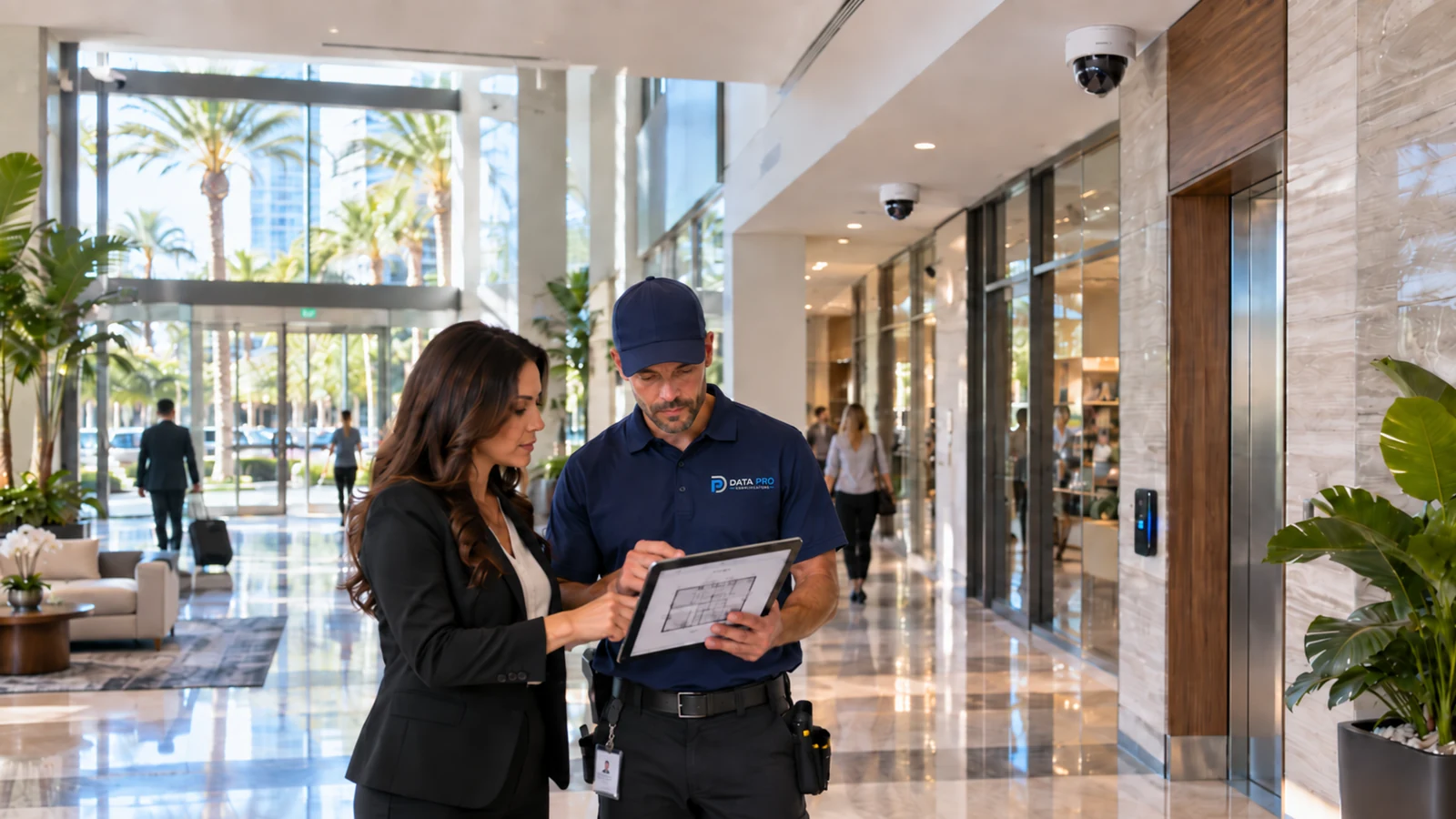
Walk the property with the responsible security guards stakeholders and document guard posts, patrol routes, entrances and parking and the existing systems that may be reused.
2. Confirm Technical Requirements
Confirm the technical plan for incident verification, recording search and permissions and remote monitoring ownership, including ownership, pathways and the acceptance checks needed before field work begins.
3. Coordinate Installation
Changes to cameras, monitoring views or access events should be introduced with the guard team’s post coverage and escalation workflow in mind. Test the information guards actually receive before making it part of daily operations.
4. Test and Hand Off
Validate guard posts, patrol routes and representative entrances and parking conditions, then confirm recording or connectivity, user permissions and the documentation the security guards operating team will use after turnover.
Licensed Low-Voltage Planning and Installation
Data Pro Communications - South Orlando is operated by Data Pro Communications. Florida low-voltage work is performed under FL License #EC13016138. Final recommendations depend on the approved scope, site conditions and the responsibilities stated in the project documents.
Security Guards Project Questions
How can cameras support security guard operations?
Video can help guards verify alarms, review incidents and understand conditions at posts or patrol areas. It should support the approved guard workflow rather than replace staffing or escalation procedures.
What should be considered when planning views around guard posts?
Identify the entrances, parking, gates or common areas guards are responsible for and what information they need during an event. Screens and camera groups should be organized around those duties.
Can video help with patrol-route incident review?
Yes. Cameras at key transition points can provide context before or after a patrol event, but camera coverage should not be represented as continuous proof of every patrol location.
How should entrances and parking be coordinated with guard coverage?
Review where guards are stationed, when areas are unattended and how incidents are escalated. Camera and access-control information can be positioned to support those decision points.
Who should have access to recorded video?
The property or security organization should define authorized roles. Use named accounts and permissions appropriate to supervisors, investigators or other approved users rather than shared credentials.
Can guards receive remote or live camera views?
They can when the network, platform, permissions and operating procedure support it. The customer should define which views are appropriate and what action a guard is expected to take.
How should technology be introduced into an existing guard program?
Start with current posts, patrols, incident types and escalation steps. Configure camera groups, access events or remote views to support those workflows, then train and test with the guard team.
What is a common mistake when combining guards and surveillance?
A common mistake is installing technology without defining who will watch, review or respond to it. The operating procedure should state when the guard uses live video, playback or access information.
What should be tested before the system is used by guards?
Test the exact views, playback searches, permissions and event information guards or supervisors will use. Confirm that the workflow is understandable during a representative incident scenario.
What should a site assessment cover for a guarded property?
Review posts, patrol routes, entrances, parking, existing cameras and access systems, incident-verification needs, remote-viewing ownership and the security team’s escalation workflow.
Plan Your Security Guards Project
Describe the property, guard posts or patrol areas, current camera and access systems and the incident-verification workflow you want to support. That will help define where technology can assist without replacing guard procedures.