
Warehouse Operating Context
Planning follows the way warehouse staff, drivers, vendors and logistics teams use warehouses and distribution facilities, including access patterns, operating periods and the teams responsible for the systems.
Industry Security and Infrastructure Planning
Warehouse projects should reflect how warehouse staff, drivers, vendors and logistics teams move through and operate warehouses and distribution facilities. The useful design starts with the real property areas and workflows, not a generic commercial layout.
A site survey should verify dock doors, aisles and racks, yards and gates, the supporting infrastructure and the periods when work can occur. The project should also account for trailers blocking dock views and long cable distances.
Planning follows the way warehouse staff, drivers, vendors and logistics teams use warehouses and distribution facilities, including access patterns, operating periods and the teams responsible for the systems.
Data Pro Communications operates under FL License #EC13016138.
Warehouse turnover records should tie cameras and network devices to dock doors, aisles, yard zones and telecom rooms so operations and service teams can quickly trace the correct device and pathway.
Warehouses and distribution facilities require different decisions around dock doors, aisles and racks and yards and gates. The technical plan should also confirm high-bay views, IDF and fiber paths and recording and camera naming while accounting for trailers blocking dock views and forklift and shipping activity.
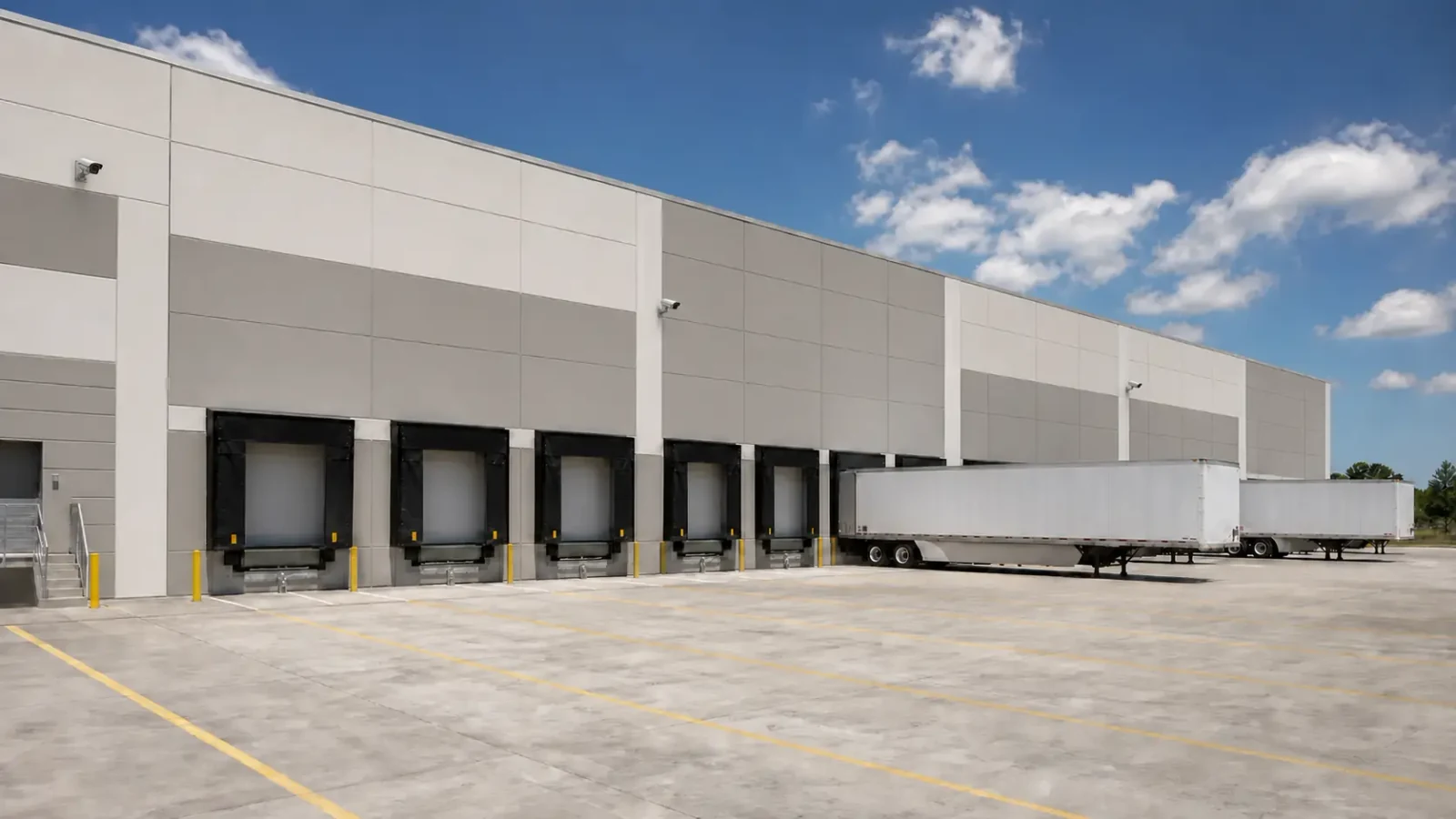
Dock-door views can disappear behind trailers, raised doors or staged pallets during normal shipping activity. Check camera positions with trailers at the dock and confirm whether the required view is the vehicle approach, trailer opening, dock face or all three before finalizing coverage.
Aisles and rack rows create long, narrow sightlines that change as inventory height and lift traffic vary. Verify the target area from the proposed mounting height and account for rack end-caps, cross-aisles and stored material that can block a view deeper into the row.
Yards and gates combine trailers, employee vehicles, tractors and pedestrian movement over large exterior areas. Review gate approaches, trailer parking, lighting and perimeter routes during active operations so exterior coverage reflects how the yard is actually used.
High-bay camera positions can provide useful overview coverage but may be difficult to aim, clean or replace once the warehouse is operating. Confirm lift access, rack clearance and the detail required at floor level before approving an elevated mounting point.
IDF and fiber-path decisions directly affect long runs to docks, yards and high-bay devices. Measure cable distances, verify available rack and PoE capacity, and confirm where fiber or an additional telecom location is needed rather than stretching copper beyond practical limits.
Recording and camera naming become operational problems when dozens of similar dock, aisle or yard views are difficult to find. Agree on a naming convention, retention target, user permissions and export workflow so supervisors can locate the correct footage without guessing which camera number covers an area.
Coordinate Dock Doors with the existing infrastructure and the warehouse team. If a field condition changes the approved approach, document the decision before concealed or irreversible work continues. For warehouses, test the result with trailers, racks and normal logistics activity present, and verify high-bay service access plus camera-to-IDF distance.
The project should leave Aisles And Racks understandable to operations, not only to the installer. Use clear naming, ownership and acceptance criteria tied to the property. For warehouses, test the result with trailers, racks and normal logistics activity present, and verify high-bay service access plus camera-to-IDF distance.
Use Yards And Gates as a defined operating requirement, not a generic checklist item. The warehouse team should be able to point to the location, user group and expected result. For warehouses, test the result with trailers, racks and normal logistics activity present, and verify high-bay service access plus camera-to-IDF distance.
Tie High-Bay Views to dock, aisle and yard flow. That means confirming the physical location, supporting pathway or network and the person responsible after turnover. For warehouses, test the result with trailers, racks and normal logistics activity present, and verify high-bay service access plus camera-to-IDF distance.
For Idf And Fiber Paths, start with the people who use distribution centers, high-bay warehouses, last-mile logistics sites: logistics managers, operations leaders and fleet or facility teams. The implementation should support their real workflow and remain serviceable after installation. For warehouses, test the result with trailers, racks and normal logistics activity present, and verify high-bay service access plus camera-to-IDF distance.
Make Recording And Camera Naming specific enough to test in the field. Record the approved location or configuration, then verify it under representative property conditions. For warehouses, test the result with trailers, racks and normal logistics activity present, and verify high-bay service access plus camera-to-IDF distance.
Distribution Centers should use Dock Doors to answer a specific operational question. Define that question first, then choose the view, pathway, permission or network interface needed to support it. For warehouses, test the result with trailers, racks and normal logistics activity present, and verify high-bay service access plus camera-to-IDF distance.
High-Bay Warehouses And Last-Mile Logistics Sites can change how Aisles And Racks is used because access patterns and staffing are not identical across the property. The design should reflect dock, aisle and yard flow. For warehouses, test the result with trailers, racks and normal logistics activity present, and verify high-bay service access plus camera-to-IDF distance.
Yards And Gates matters differently in distribution centers when the area is busy, obstructed or used after hours. The field review should reproduce those conditions before final acceptance. For warehouses, test the result with trailers, racks and normal logistics activity present, and verify high-bay service access plus camera-to-IDF distance.
High-Bay Warehouses And Last-Mile Logistics Sites should use High-Bay Views to answer a specific operational question. Define that question first, then choose the view, pathway, permission or network interface needed to support it. For warehouses, test the result with trailers, racks and normal logistics activity present, and verify high-bay service access plus camera-to-IDF distance.
Distribution Centers can change how Idf And Fiber Paths is used because access patterns and staffing are not identical across the property. The design should reflect dock, aisle and yard flow. For warehouses, test the result with trailers, racks and normal logistics activity present, and verify high-bay service access plus camera-to-IDF distance.
Recording And Camera Naming matters differently in high-bay warehouses and last-mile logistics sites when the area is busy, obstructed or used after hours. The field review should reproduce those conditions before final acceptance. For warehouses, test the result with trailers, racks and normal logistics activity present, and verify high-bay service access plus camera-to-IDF distance.
Check Dock Doors before procurement or concealed work. A mismatch here can change mounting, cabling, network capacity, storage or service access at distribution centers, high-bay warehouses, last-mile logistics sites. For warehouses, test the result with trailers, racks and normal logistics activity present, and verify high-bay service access plus camera-to-IDF distance.
Validate Aisles And Racks under representative dock, aisle and yard flow, not only from drawings. The final record should capture the installed condition and any limitation that remains. For warehouses, test the result with trailers, racks and normal logistics activity present, and verify high-bay service access plus camera-to-IDF distance.
For Yards And Gates, document the supporting infrastructure and acceptance method so a future technician can distinguish a design choice from an unresolved field condition. For warehouses, test the result with trailers, racks and normal logistics activity present, and verify high-bay service access plus camera-to-IDF distance.
Before installation, verify the physical and technical requirements behind High-Bay Views: location, pathway, power/network interface and the person who owns changes after handoff. For warehouses, test the result with trailers, racks and normal logistics activity present, and verify high-bay service access plus camera-to-IDF distance.
Confirm Idf And Fiber Paths in the field against high-bay and logistics constraints. Record any distance, capacity, environmental or access condition that can change the proposed design. For warehouses, test the result with trailers, racks and normal logistics activity present, and verify high-bay service access plus camera-to-IDF distance.
Recording And Camera Naming needs an explicit technical owner. The warehouse team should know which infrastructure it depends on and what test will show that the requirement is satisfied. For warehouses, test the result with trailers, racks and normal logistics activity present, and verify high-bay service access plus camera-to-IDF distance.
Warehouse cameras, Wi-Fi and access devices often share IDFs, fiber backbones and PoE switches. Capacity should be sized for the combined endpoint load, while camera and wireless segments retain the administrative separation required by IT.
For Orlando warehouses and distribution facilities, the meaningful design inputs come from the property itself: dock doors, aisles and racks, yards and gates, infrastructure ownership and operating schedule. Orlando identifies the service market; it does not replace a field review.
Use the hub to compare warehouse operations with manufacturing, industrial and transportation properties.
A warehouse survey can verify docks, racks, aisles, yards, high-bay mounting, IDFs and long cable paths.
Fiber and Network solutions become relevant when warehouse size requires backbone links, distributed switching or additional PoE capacity.
Distribution centers, high-bay warehouses and last-mile logistics sites can use similar equipment but differ in layout, operating schedule and infrastructure ownership. The recommendation should follow those differences, especially trailers blocking dock views and forklift and shipping activity.
Walk the property with the responsible warehouse stakeholders and document dock doors, aisles and racks, yards and gates and the existing systems that may be reused.
Confirm the technical plan for high-bay views, IDF and fiber paths and recording and camera naming, including ownership, pathways and the acceptance checks needed before field work begins.
Coordinate installation with receiving, shipping, lift traffic and dock schedules. High-bay work and long pathway pulls should be planned around safe access to aisles, racks and active loading areas.
Validate dock doors, aisles and racks and representative yards and gates conditions, then confirm recording or connectivity, user permissions and the documentation the warehouse operating team will use after turnover.
Data Pro Communications - South Orlando is operated by Data Pro Communications. Florida low-voltage work is performed under FL License #EC13016138. Final recommendations depend on the approved scope, site conditions and the responsibilities stated in the project documents.
Review trailer positions, open and closed door conditions, pedestrian paths and the receiving or shipping events the team needs to investigate. Dock equipment should not routinely block the selected view.
High racks create long, narrow sightlines and frequent obstructions. Camera height, lens choice and mounting position should reflect aisle direction, cross-aisles and the specific activity the view is meant to capture.
Evaluate truck approaches, gate lanes, trailer storage, fencing, lighting, weather exposure and the network path back to the building. Yard coverage often needs different equipment and mounting than indoor aisles.
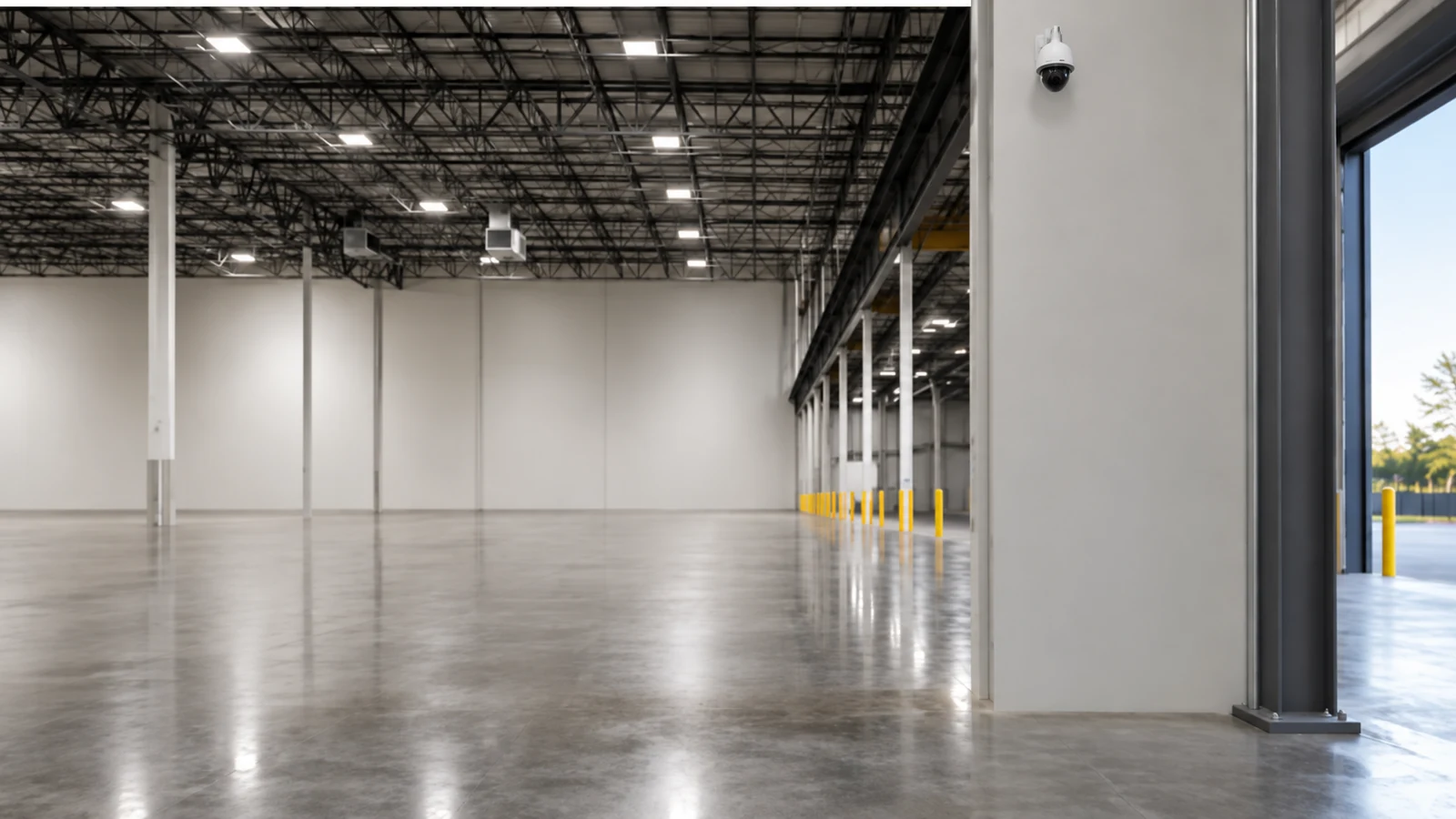
High ceilings affect view angle, lens selection, lift requirements and future maintenance. A camera should not be placed only for maximum height if it makes the target activity too small or servicing impractical.
Fiber can connect distant IDFs, separate buildings or remote yard infrastructure when copper distance or capacity is unsuitable. Strand count, route, optics and test requirements should be defined before installation.
They can share structured pathways and switching architecture where designed for the combined load, but VLANs, PoE budgets, bandwidth and administration should be planned for both systems rather than assumed.
Coordinate lifts, aisle access and dock work with receiving, shipping and shift schedules. Cable pulls across active areas may require temporary access controls or off-peak work.
The warehouse or corporate security/IT team should define naming and authorized users. Names should correspond to docks, aisles, yard zones and buildings so incident review and service are straightforward.
Check dock, aisle, yard and gate views with representative trailers, rack conditions and lighting, then verify recording, playback, permissions and network connectivity.
Review dock doors, aisles and racks, yard/gate areas, high-bay conditions, MDF/IDF locations, fiber or copper pathways, switch capacity and the operating schedule for safe field access.
Share the warehouse size, dock and yard priorities, ceiling conditions, telecom-room locations and shift schedule. The site survey can then evaluate coverage, access and the network paths required across the facility.